


A war in the Middle East is never geographically distant for Bangladesh. It reaches the country through the price of fuel, the cost of rice, the fate of migrant workers, and the shrinking purchasing power of the urban middle class. Although thousands of miles away, Bangladesh remains structurally tied to the region through energy imports, labour migration, maritime trade routes, and global commodity markets.
The latest escalation involving Iran, Israel, the United States, and their allied networks has combined with renewed insecurity in the Red Sea region has transformed a regional conflict into a global economic shock. Disruptions in the Strait of Hormuz and surrounding sea lanes have pushed up oil prices, freight charges, and insurance premiums, sending inflationary waves across import-dependent economies. For Bangladesh – still struggling with post pandemic inflation, the aftershocks of the Russia-Ukraine war, Dollar shortages, and pressure on foreign exchange reserves – this is not merely geopolitics. It is a domestic economic crisis unfolding in slow motion. This is not about diplomacy. It is about the kitchen market, the garment worker’s wage, and the fertiliser cost for a farmer in Bangladesh.
Bangladesh imports the overwhelming majority of its fuel, LNG, and refined petroleum. Every increase in global energy prices directly inflates the national import bill and widens macroeconomic stress. The transmission mechanism is immediate and brutal in higher electricity generation costs, increased transport fares, rising industrial production expenses, and escalating food prices. Inflation, which has hovered around 8.5-9 percent in recent periods, has already eroded real income for fixed wage earners. Now the renewed energy shock threatens to reverse even the fragile stabilisation achieved through contractionary policies.
In a country where roughly one fifth of the population still lives near or below the poverty line, and where wage growth consistently lags behind price increases, fuel inflation is not an abstract macroeconomic issue; it is a question of nutrition, healthcare access, and school dropout rates. That is why a war in the Gulf becomes hunger in Bangladesh.

Bangladesh’s economic stability rests on three pillars: export earnings, remittance inflows, and manageable import payments. All three are now exposed. The current-account deficit, which once reached alarming levels, narrowed only through import compression and strong remittance growth. Foreign exchange reserves recovered to just above $32 billion, but this recovery remains fragile. A prolonged Middle Eastern conflict will raise the fuel import bill, increase freight and insurance costs, and weaken export competitiveness. The result is predictable; renewed pressure on the Dollar, depreciation of the Taka, and further inflation. This is the classic external shock trap of a structurally import dependent economy.
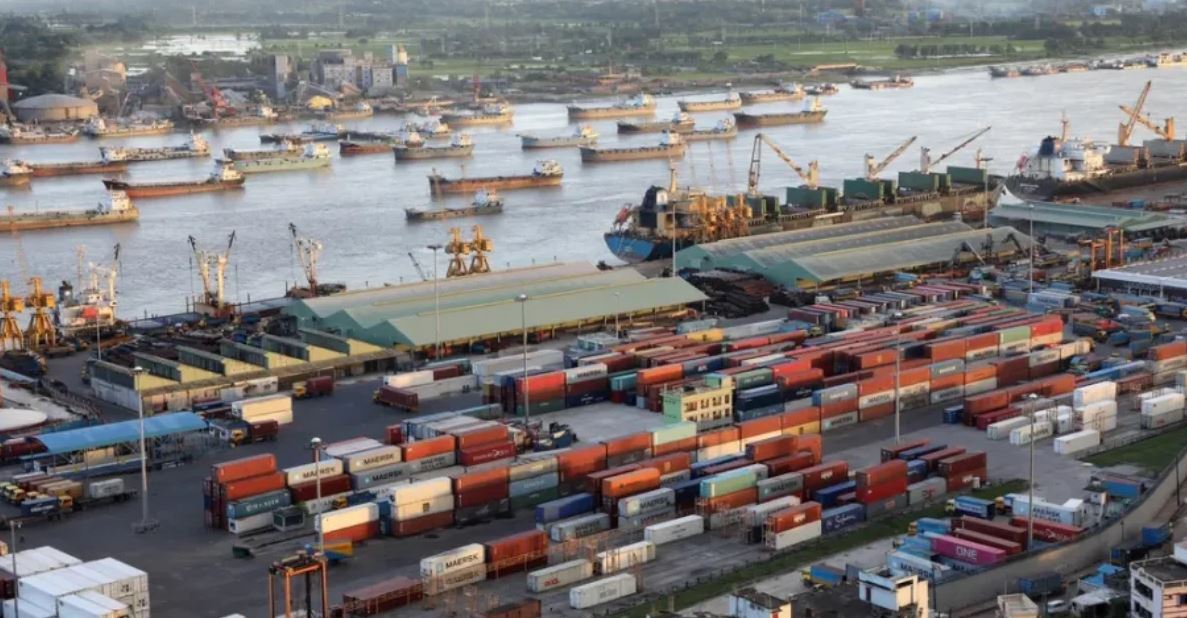
Bangladesh’s readymade garment sector is the backbone of its economy and the largest employer of women, and it depends on timely maritime connectivity with Europe and North America. Red Sea insecurity has forced shipping lines to reroute around Africa, leading to 10–15 days longer delivery times, higher freight costs, increased insurance premiums, and the risk of order cancellations. In the fast fashion supply chain, time is money. Delay means lost contracts. With economic growth already slowing from over 5.7 percent to below 4 percent in recent years, another external trade disruption could turn slowdown into structural stagnation. On the import side, higher freight costs inflate the prices of industrial raw materials, fertiliser, and consumer goods, reducing industrial output while increasing inflation.




Remittances remain the single strongest stabilising force in the economy, with inflows exceeding $13 billion in the first five months of FY2025-26, driven largely by the Middle East. But this dependence is also a vulnerability. Regional instability can trigger job contraction for migrant workers, wage reduction, and forced repatriation. If remittance growth slows, rural consumption collapses, the balance of payments crisis deepens, and poverty expands. For Bangladesh, the Middle East is not a foreign region but it is an extension of the rural economy.
Bangladesh’s recent success in maintaining food supply is built on imported fertiliser and fuel-based irrigation. Any increase in global prices raises production costs and reduces fertiliser use. The consequences are immediate because lower crop yields, higher food and vegetable prices, and increased rural poverty. That is how a Gulf war determines the price of food in Bangladesh.
Disruptions in Middle Eastern airspace affect labour migration, air cargo exports, and passenger travel. Higher travel costs reduce migrants’ net remittance income, while delayed cargo undermines high value export potential.
Macroeconomic aggregates hide social reality. The present economic structure produces profit recovery for large capital, real income decline for workers, and a shrinking middle class. When inflation outpaces wages, development becomes statistically visible but socially invisible. This is not just an economic issue. It is the central political question of the crisis.
Bangladesh cannot control global war. But it can control its structural vulnerabilities. Strengthen energy sovereignty by accelerating renewable expansion, investing in domestic gas exploration, and reducing reliance on volatile LNG spot markets. Improve trade infrastructure by fast-tracking deep-sea port operations, building direct shipping links, and diversifying exports beyond the EU and US. Protect real incomes through inflation-indexed minimum wages, targeted food subsidies, and stronger open market sales of essentials. Boost remittances by securing Gulf labour agreements, upgrading migrant skills, and incentivising formal transfer channels. Enhance agriculture via greater fertiliser production, efficient irrigation, and strategic food reserves. Above all, pursue institutional reform: without stronger banking stability, reduced capital flight, and better revenue mobilisation, governance weaknesses will keep turning external shocks into domestic crises.
The Middle Eastern war did not create these weaknesses; rather it merely revealed them. This is the real editorial truth that Bangladesh is not suffering because there is a war abroad. But Bangladesh is suffering because of its development model is externally dependent, energy-import driven, and socially unequal.
The choice is stark to keep continue crisis management economics or move toward structural economic sovereignty. History will not judge how Bangladesh reacted to this war. It will judge whether the country used this shock to transform its economic foundations.
The writer is a columnist and political analyst