The arrests of two key operatives linked to fugitive crime boss Sajjad Ali Khan alias Boro Sajjad have marked a significant breakthrough for law enforcement.
But they also raise a crucial question: can authorities finally dismantle an alleged criminal network that has repeatedly survived arrests, crackdowns and leadership changes?
Mobarak Hossain Emon, alias “David Emon”, was arrested in Jashore on 29 July, followed weeks later by the capture of Mohammad Mobarak Hossain, alias “Golakata Mobarak”, a suspected contract killer and close associate of Emon, in Fatikchhari.
Police say both men were key operatives of the crime ring linked to Sajjad in Chattogram.
In the port city, where criminal groups have historically intersected with business, land disputes, transport, construction and sand extraction, dismantling an armed gang is a test of whether law enforcement can break the cycle of violence, extortion and territorial control.
According to police, Sajjad remains a fugitive abroad. Investigators say his absence from Chattogram has not necessarily weakened his influence. Police records show that he is accused in at least 17 criminal cases, including murder, firearms offences and extortion.
According to police, Sajjad continues to direct activities through associates inside Bangladesh, with investigators identifying David Emon as one of his principal operatives.

Police officials said Emon was preparing to flee to India on Sajjad’s instructions when he was arrested in Jashore and that an Indian identification document was seized from him. They added that the remote command structure of the syndicate presents a significant challenge for law enforcement.
Officials said that arresting foot soldiers or even individual leaders may disrupt operations temporarily, but the network can recruit replacements and rebuild unless its underlying financial, logistical and communication systems are dismantled.
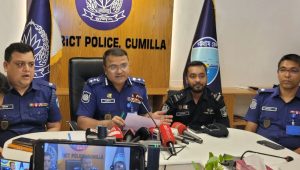
Chattogram Superintendent of Police Md Masud Alam has acknowledged the challenge posed by Sajjad’s alleged operations from abroad.
Police are considering seeking assistance from Interpol to locate and arrest him, with authorities exploring international cooperation to bring the fugitive back to Bangladesh if detained, he said.
The murder that intensified the investigation
The investigation into the alleged network gained renewed urgency following the murder of Jubo Dal leader Masud Chowdhury in Raozan on 29 August 2024.




Masud was ambushed and shot dead in broad daylight by masked attackers allegedly linked to the group. The killing highlighted how organised crime can overlap with political rivalries, commercial interests and territorial disputes.
The case names 11 suspects, including Mohammad Raihan, whom police describe as an associate of Sajjad. Several suspects have already been arrested.
For investigators, the case represents a key test of whether the alleged network can be held accountable through the courts.
“Our primary focus is to complete a thorough investigation rapidly, submit a flawless charge sheet in the Masud Chowdhury murder case, and ensure a speedy trial so that every perpetrator faces maximum legal penalties,” SP Masud Alam told TIMES of Bangladesh.
A wider criminal economy
The alleged activities linked to Sajjad reflect a broader challenge facing Chattogram. Over the years, rival criminal groups have competed for control over extortion, land disputes, sand extraction, transport routes and other profitable local activities.
Investigations into recent killings have repeatedly revealed connections between criminal violence and commercial disputes.
In the Masud Chowdhury case, investigators have examined conflicts surrounding the lucrative sand trade as a possible motive. A senior police officer previously told TIMES that extortion from sand quarries in the Raozan-Rangunia area was allegedly collected on Sajjad’s behalf.
This suggests that the alleged organisation is not merely a collection of armed individuals but a wider structure involving money, weapons, local influence, territorial control and criminal intermediaries.
The weapons trail
The recovery of firearms during recent operations has added another dimension to the investigation.
During the operation against “Golakata” Mobarak in Fatikchhari, police recovered four firearms and ammunition, including a foreign-made pistol allegedly looted from a police station during the political unrest of August 2024. Police said Mobarak was implicated in several murder cases.
Following the interrogation of David Emon, police also reported recovering additional firearms.
For investigators, tracing the weapons supply chain could prove as important as solving individual crimes. Identifying the source of firearms, their funding, transport routes and ammunition suppliers could help dismantle the infrastructure supporting organised violence.
The legal challenge ahead
Despite the arrests, convictions are far from guaranteed. David Emon, Golakata Mobarak and other accused have been sent to jail after being shown arrested in several murder and firearms cases.
The next major test lies with the criminal justice system: whether investigators can build strong cases and prosecutors can secure convictions.
Advocate Abdur Razzak, Public Prosecutor of Chattogram District, said such cases must be supported by credible evidence, forensic findings, witness testimony, digital evidence and documented financial trails.
“Any weakness in the investigation or prosecution could ultimately undermine otherwise significant arrests,” he said.
For victims’ families, arrests are only the beginning. Justice depends on charge sheets, trials and convictions.
“A criminal group can survive the arrest of individual members, but it becomes much harder to survive when its money, weapons, command structure, recruitment channels and legal cases are systematically dismantled,” said Pearul Haque Chowdhury, brother of slain Jubo Dal leader Masud Chowdhury.
Investigators believe the alleged Sajjad network may have links with other criminal groups operating across Raozan, Rangunia, Hathazari and Fatikchhari. Police have found connections with the Alam Dakat group in Rangunia, the Fazal group in Raozan and the Kamal group, indicating a wider regional criminal structure.