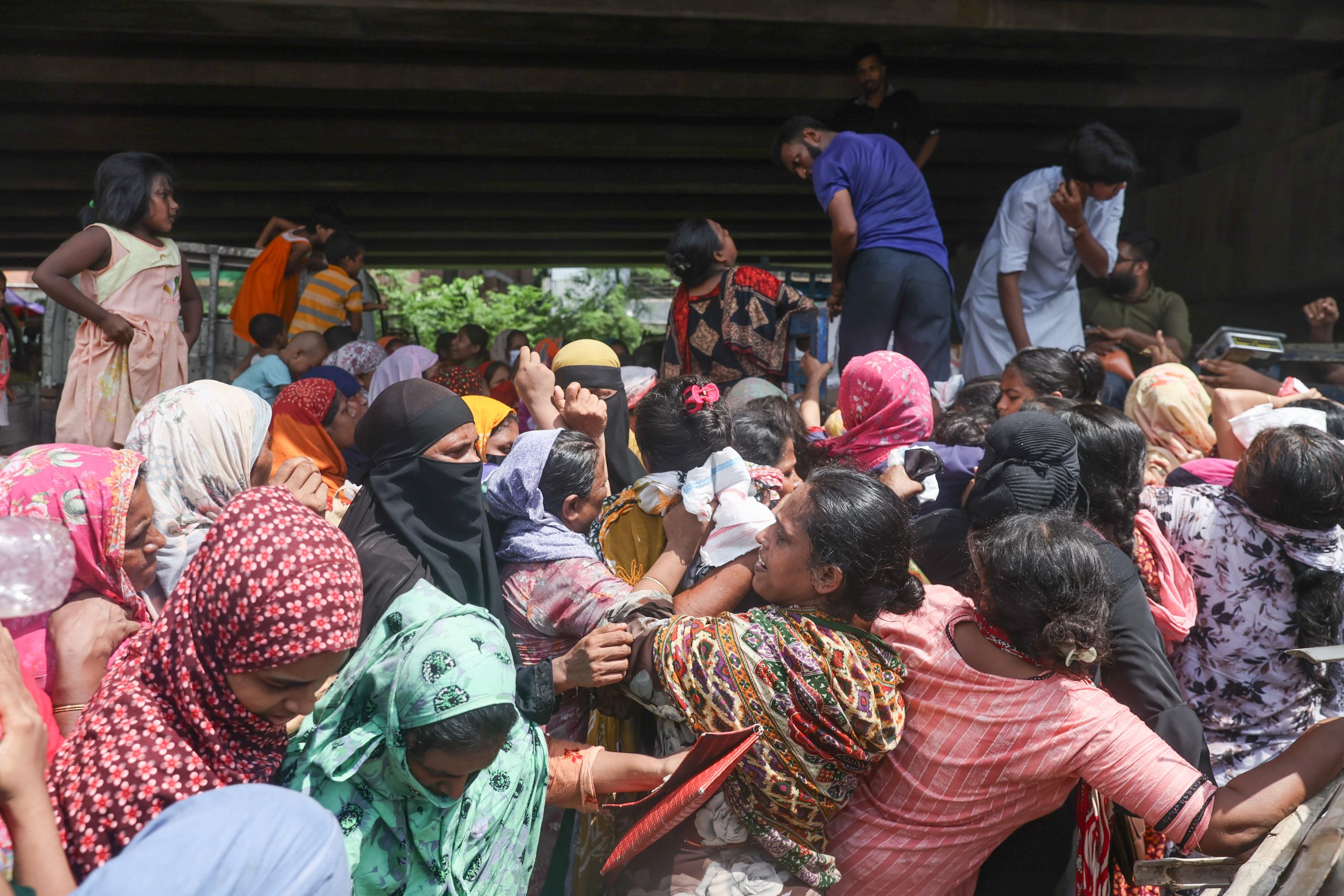

On a humid afternoon in Banani, a government truck carrying sacks of rice, lentils and cooking oil pulls into a designated roadside stop. The vehicle belongs to the state-run Trading Corporation of Bangladesh, or TCB, which sells essential commodities at subsidised prices to help families weather the rising cost of living. Within minutes, a crowd forms — garment workers, rickshaw-pullers, day labourers, most of them from Korail, the sprawling slum wedged between Banani and Mohakhali.
For many, the discounted staples are the only way to keep food on the table. But in recent weeks, desperation has deepened. Several garment factories in Banani and Kuril have shuttered abruptly, their owners vanishing to avoid paying months of back wages. Workers left jobless now flock to the TCB trucks, hoping at least for a sack of rice.
Yet, according to residents, even this lifeline is slipping beyond reach. Salma Akter, a jobless RMG worker who stood in line for hours on Wednesday, described a scene of quiet fury. “The men who come with the truck call their people from the crowd, or some people phone them ahead of time,” she said. “They go behind the fence, skip the line, and take as much as they want. We wait all day and still return empty-handed.”

The resentment is sharpened by the sight of others — men arriving on motorcycles, seemingly well-off, who leave with bags of discounted rice and oil. To slum dwellers who scrape by on irregular wages, the scene feels like yet another betrayal. “It does not add up,” Salma said. “They are not like us, but they get everything.”

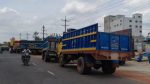


The TCB’s mission is to provide a safety net for Bangladesh’s poorest households, but reports of mismanagement and petty corruption have dogged the program for years. Rights groups say that without strict oversight, middlemen and insiders manipulate the system, diverting subsidised food to those who can afford market prices.
For the people of Korail, the consequences are immediate. With wages withheld and essentials slipping from their grasp, families are rationing meals and sending children to bed hungry. “We are left in the corner of society. No one is looking out for us,” Salma said in a crying tone.
As inflation continues to bite, the lines at the TCB trucks stretch longer. But for many of Dhaka’s working poor, the wait has become a cruel ritual: standing in hope, only to return home with nothing.