


Prime Minister Tarique Rahman’s visit to Malaysia has marked the beginning of what both countries hope will become a long-term strategic partnership, with economic cooperation emerging as the central pillar of bilateral relations.
The visit also represents a departure from Bangladesh’s traditional diplomatic practice. Tarique is the first elected prime minister of Bangladesh to choose Malaysia as the destination of his first overseas visit. Previous leaders generally chose neighbouring countries or Middle Eastern nations as their first foreign destinations.
The decision is widely seen as signalling the new government’s emphasis on economic diplomacy, investment and development opportunities as key priorities of its foreign policy.
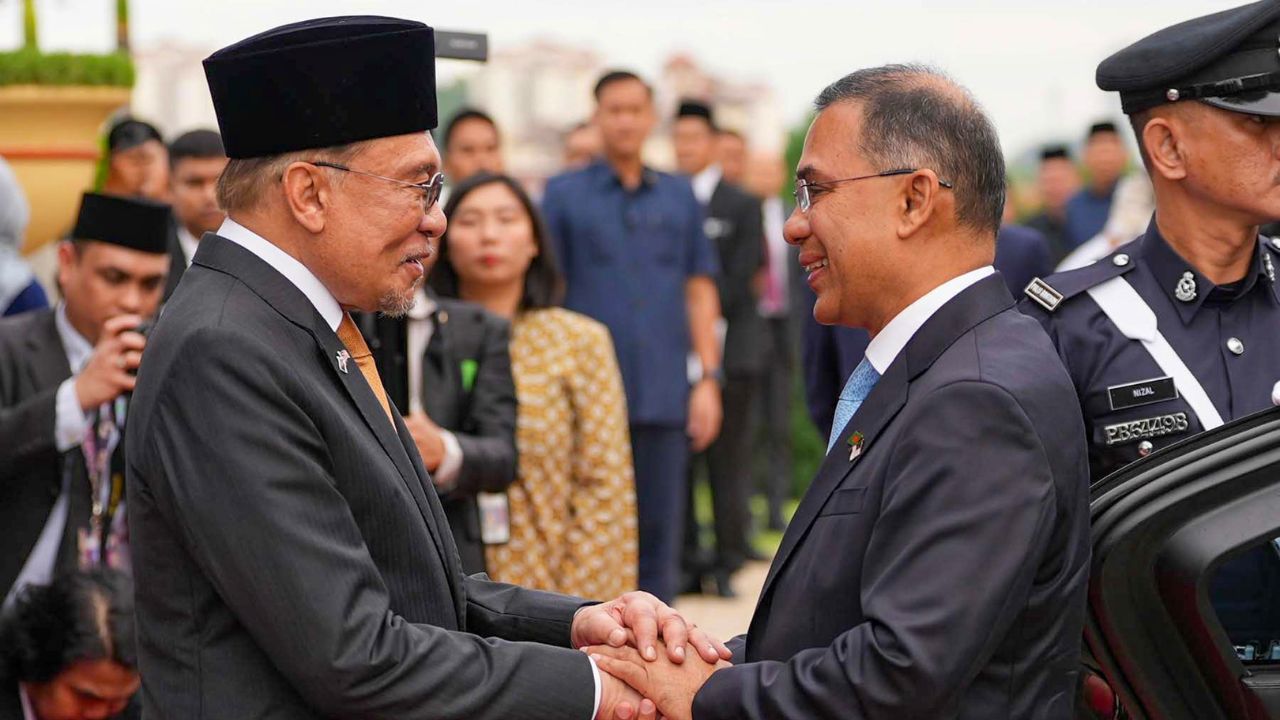
During the two-day visit, Tarique held one-to-one and delegation-level talks with Malaysian Prime Minister Anwar Ibrahim. He also met the King of Malaysia and held discussions with senior executives of several leading Malaysian companies.
The 33-point joint statement issued after the visit provides a comprehensive roadmap for expanding bilateral cooperation. It covers political engagement, economic partnership, human resource development, regional and multilateral cooperation, as well as emerging sectors such as semiconductors, the digital economy, artificial intelligence and the halal industry.
The statement also places emphasis on cooperation in energy, defence, education and efforts to address the Rohingya crisis.
Former Bangladesh high commissioner to Malaysia Md Shameem Ahsan told TIMES of Bangladesh, “It is a very good start. The gesture, the protocol, the ceremony and the body language were all highly positive.”
“No previous prime minister chose Malaysia for the first official visit. Bangladesh has created an opportunity, and now it must leverage this important diplomatic gesture,” he said.
Political relations
Although Bangladesh and Malaysia have long enjoyed cordial ties, the visit has injected fresh momentum into the relationship.
The meetings enabled the two prime ministers to establish personal rapport, an important element in strengthening bilateral cooperation.

Both leaders agreed to institutionalise political engagement by holding regular ministerial-level political dialogues. They also decided to revive the long-pending Joint Commission Meeting (JCM) and Bilateral Consultations (BC), providing structured mechanisms to review and expand cooperation.
Expanding economic partnership
Economic cooperation dominated the discussions.
Trade, investment, energy, the halal industry and regional economic integration featured prominently in the talks.
Malaysia is currently the ninth-largest foreign investor in Bangladesh. Around 386 Malaysian companies operate in the country, while cumulative foreign direct investment from Malaysia stands at about $773 million.
One of the most significant outcomes of the visit was the commitment to conclude negotiations on a Free Trade Agreement (FTA) by 2027. Malaysia also reaffirmed its support for Bangladesh’s bid to join the Regional Comprehensive Economic Partnership (RCEP), the world’s largest trading bloc.
Shameem Ahsan described the decision to conclude FTA negotiations by 2027 as “an important milestone”.



He also noted that Malaysia’s expertise in smart manufacturing presents opportunities for Bangladesh to upgrade its industrial base.
He suggested that Malaysian companies could invest in edible oil refining in Bangladesh, enabling the country to import crude oil instead of refined products, thereby reducing import costs and saving foreign currency.
Labour cooperation beyond migration
Labour cooperation remains a key pillar of bilateral relations.
The existing labour cooperation memorandum of understanding, signed in 2021, expires this year. Both governments agreed to review the agreement and prepare a modernised framework that better reflects the needs of both countries.
The two sides reaffirmed their commitment to ensuring that recruitment remains transparent, fair and competitive, with only credible recruitment agencies participating in the process.

The leaders also stressed the importance of aligning academic programmes with labour market demands, particularly through graduate mobility and skills development initiatives.
Nearly 11,000 Bangladeshi students are studying in Malaysia, and both countries can explore ways to integrate more graduates into the Malaysian labour market.
Shameem Ahsan cautioned, however, that overseas employment should not remain the defining feature of bilateral relations.
“It is important, but Bangladesh-Malaysia relations should move well beyond manpower exports,” he said.
Emerging areas of cooperation
The visit also opened the door to cooperation in several high-value sectors.
Both governments identified the digital economy, artificial intelligence and semiconductor manufacturing as priority areas for future collaboration.
Malaysia agreed to share expertise in digital transformation and encouraged greater investment in Bangladesh’s digital infrastructure, technology parks and special economic zones.
Bangladesh is also keen to benefit from Malaysia’s strengths in semiconductor packaging, testing and outsourced semiconductor assembly and test (OSAT).
With a growing pool of technically trained graduates, Bangladesh believes the sector offers significant opportunities for mutually beneficial investment.
“It would be a major breakthrough if Malaysia partners with Bangladesh in the semiconductor industry,” Shameem Ahsan said.
He also noted that Malaysian investors already benefit from bilateral agreements on investment protection and the avoidance of double taxation, while existing investments span telecommunications, software, textiles, construction, chemicals and power generation.
Energy cooperation
Energy cooperation also received renewed attention.
The two countries agreed to deepen collaboration on LNG supply, LNG infrastructure and petroleum products under the existing memorandum of understanding.
The leaders also encouraged direct discussions between PETRONAS and Petrobangla to identify new areas of cooperation.
Bangladesh invited Malaysian companies to invest in offshore oil and gas exploration in the Bay of Bengal, mineral extraction, including coal and limestone, and renewable energy projects.
Defence and security
Building on the defence cooperation memorandum signed last year, the two countries agreed to operationalise the agreement through structured military cooperation.
The leaders expressed their commitment to convening the Joint Committee on Defence Cooperation (JCDC) to develop a long-term roadmap covering military science, technical cooperation and defence industries.
They also reaffirmed their shared commitment to combating terrorism and violent extremism through intelligence sharing, training, information exchange and capacity-building initiatives.
The real challenge: turning commitments into action
While the visit has laid a strong political and institutional foundation, diplomats say its ultimate success will depend on implementation.
The 33-point joint statement offers an ambitious roadmap, but translating those commitments into tangible outcomes will require sustained political engagement, regular follow-up through institutional mechanisms and close coordination between the two governments.
Reviving the Joint Commission Meeting and Bilateral Consultations will be critical to maintaining momentum. Progress on the proposed FTA, Malaysia’s support for Bangladesh’s RCEP membership, semiconductor cooperation, labour market reforms and energy investment will all require continuous engagement rather than one-off diplomatic exchanges.
The Malaysia visit has opened an important new chapter in bilateral relations. The challenge now is to ensure that the goodwill generated by the visit is converted into long-term economic partnerships and concrete results that benefit both countries.