Children at the Dhaka Shishu Hospitals are currently at high risk of contracting measles while seeking treatment for unrelated ailments.
A worrying picture has emerged where parents and their children stand in the same crowded lines as patients displaying active measles symptoms.
This lack of segregation means that the same doctors are frequently examining both sets of patients using the same medical equipment.
Despite both parents and medical staff identifying this as a significant risk, hospital authorities have yet to take initiative to change the procedure, citing the “reality” of their current operational constraints.
The severity of the situation is underscored by official figures reporting that eight children have died and approximately 1,500 have been infected nationwide within the last 24 hours. Professor M Atiqul Islam, who oversees the hospital’s measles unit, warned TIMES of Bangladesh about the extreme contagiousness of the virus.
He explained that a single infected person can transmit the disease to up to 18 others through coughing or sneezing.
While the risk is generally lower for healthy adults, the situation can become life-threatening for those with diabetes, cancer, or weakened immune systems.

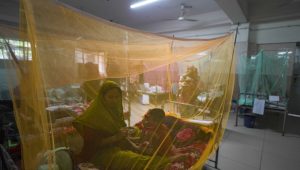
The scene at the hospital is one of visible distress and overcrowding.
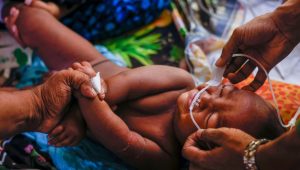
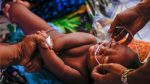
On Wednesday morning, a three-day-old infant born with a heart defect was seen waiting in a long queue among other children who were coughing and sneezing in the sweltering heat.
Hygiene measures are largely absent; few parents were observed using tissues or towels for their children, and the vast majority of adults and children were not wearing masks. When asked why separate lines have not been established to mitigate these risks, Professor Islam noted that the sheer volume of patients has made it impossible to separate them under such extreme pressure.
Since the beginning of March, this facility in Agargaon has become the preferred treatment center for families from both the capital and surrounding districts.
The hospital is currently operating well beyond its intended capacity; while the specialised measles unit contains 66 general beds and 14 ICU beds, 83 children were admitted by Wednesday, with 12 new admissions arriving between morning and noon alone.
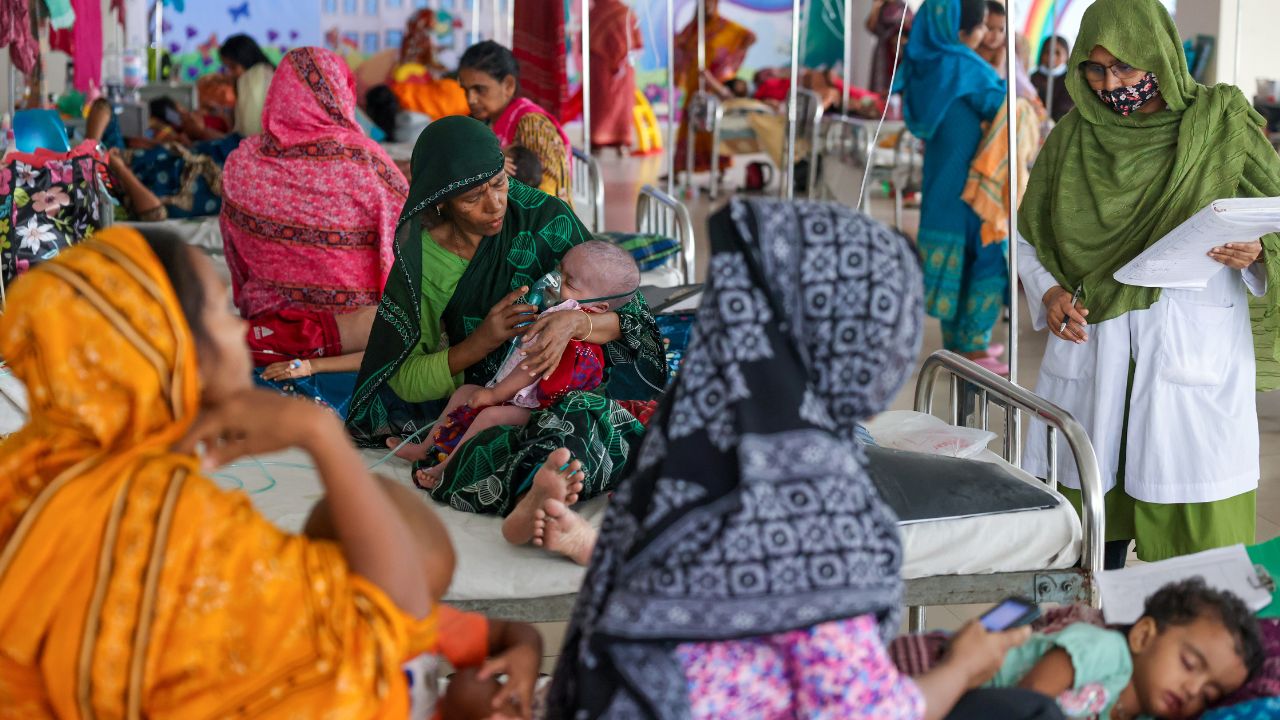

Dr Selina Rahman, the physician in charge of the unit, emphasised that the current setup was not designed for this volume, forcing doctors and nurses to work under exhausting conditions.
Even security staff, such as Ansar member Anwar Hossain, reported that the flow of patients is so relentless that they cannot find a moment to sit, even when attempting to prioritise the most critical cases.
Cry for ICU
As measles infections deplete the immunity of young patients, complications such as pneumonia are becoming widespread, creating a desperate need for Intensive Care Unit (ICU) support.
However, the Shishu Hospital lacks a sufficient number of ICU beds to meet this demand. Hospital authorities noted that while critical cases are being referred from across the country, the shortage of specialised space means many serious patients are being treated in ordinary ward beds, relying on supplemental oxygen and makeshift facilities.
The scarcity of beds has also given rise to a predatory environment.
Professor Atiqul highlighted the growing nuisance of brokers who exploit panicked families. Many parents, unable to secure a bed, find themselves moving from one hospital to another under the guidance of these brokers, losing significant amounts of money to fraud without ever finding the medical solution their children require.
The human cost of this crisis is reflected in the story of Taslima Begum, who traveled from Noakhali with her three-year-old daughter, Maliha. After being sent home from a local upazila hospital with basic medicine, Maliha’s condition worsened, leading to an emergency referral to Dhaka.
Upon arrival, Taslima was told her daughter had developed pneumonia and required an ICU, only to find none were available. “If I had realised it was measles at the beginning,” she lamented, “we might not have faced this danger.”
On the front lines, the situation is equally grim. Nurse Shiuli Begum explained that most admitted children suffer from severe respiratory distress, leaving staff with the impossible task of deciding who receives priority for the few available resources. “The doctors have put oxygen masks on regular beds because there is simply no other option,” she said.
Professor Atiqul added that any ICU bed that becomes vacant is typically filled again within five minutes.
A significant factor in these deteriorating conditions is the delay in seeking professional medical help. Professor Atiqul pointed out that children arriving from distant villages often present with advanced complications because families initially seek treatment from local “Kabiraj” or unqualified doctors.
By the time these patients reach Dhaka, their conditions have often progressed to life-threatening stages, placing an even greater strain on the hospital’s limited life-support facilities.
8 more deaths in 24 hours
According to the latest press release from the Directorate of Health Services, eight new measles-related deaths were recorded across the country in the 24-hour period ending at 8am on Wednesday.
Among these fatalities, seven were suspected cases, while one has been laboratory-confirmed.
During this same period, 1,489 new suspected cases were identified, with 126 of these already confirmed through laboratory testing.
These figures contribute to a staggering climb in infections since March 15; the total number of suspected patients has now reached 53,056, with 7,150 cases officially confirmed.
Hospitalisation rates remain high, as 1,173 new patients were admitted nationwide in the last 24 hours alone.
Since the outbreak intensified on March 15, a total of 38,054 patients have required hospital treatment.
Of those, 33,832 have recovered and been discharged, leaving thousands still fighting the disease in medical facilities across the country.