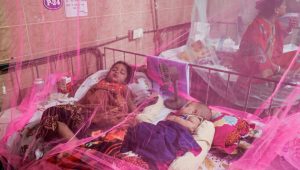
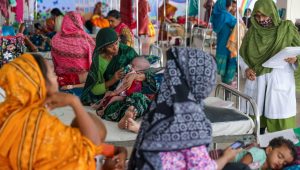
Healthcare facilities across the capital, including Dhaka Medical College Hospital (DMCH), have been overwhelmed with dengue patients from all over the country, as the mosquito-borne disease has surged dramatically in recent days.
Moreover, inadequate services at the hospitals are causing immense suffering for both patients and their attending relatives.
In the 24 hours leading up to 8am on Monday, two more deaths were reported from dengue, bringing this year’s death toll to 181, alongside 678 new cases.
On Sunday, Bangladesh recorded its highest single-day death toll of 2025, with 12 fatalities and 740 new infections, according to data from the Directorate General of Health Services (DGHS).
DGHS analysis showed that more than half of the patients who died from dengue this year passed away within 24 hours of being admitted to hospitals.
Experts have warned that the high density of Aedes mosquitoes, combined with worsening weather in October, could further exacerbate the outbreak this year. Without immediate action, the healthcare system may soon reach a breaking point.
Dr Mohammad Shafiul Alam, Scientist, Enteric and Respiratory Infections, icddr,b, told TIMES of Bangladesh that dengue cases are likely to rise as rainfall continues, emphasising the strong link between rain and the spread of the disease.
“I believe the number of cases could increase further, as you can see, it is still raining. This trend is closely tied to rainfall patterns, and there is a strong correlation,” he said.
Alam highlighted three main concerns – the rising number of cases due to rainfall, patients arriving late with severe infections, and the need for improved treatment management.

Dengue patients surge at DMCH
According to DMCH, 29 dengue patients were admitted to the hospital and 29 discharged on Sunday, with one death in the ICU. Currently, 129 patients remain hospitalised. Since January 2025, DMCH has admitted 1,889 dengue patients, with 46 fatalities.
On Monday morning, the dengue ward at DMCH was full, with patients and their families occupying beds and floors.
“Being the busiest hospital, it should have more beds and better facilities to properly care for the patients,” said Tuhin, a relative of a patient, speaking to TIMES of Bangladesh.
The ward was overcrowded, with patients spilling into the corridors, a severe shortage of beds, and poor sanitation, underscoring the immense strain on the healthcare system.
The area around DMCH is in poor condition too, with waterlogged potholes that provide an ideal breeding ground for dengue mosquitoes. Flooding after continuous tropical rain makes it difficult for patients to access the hospital.

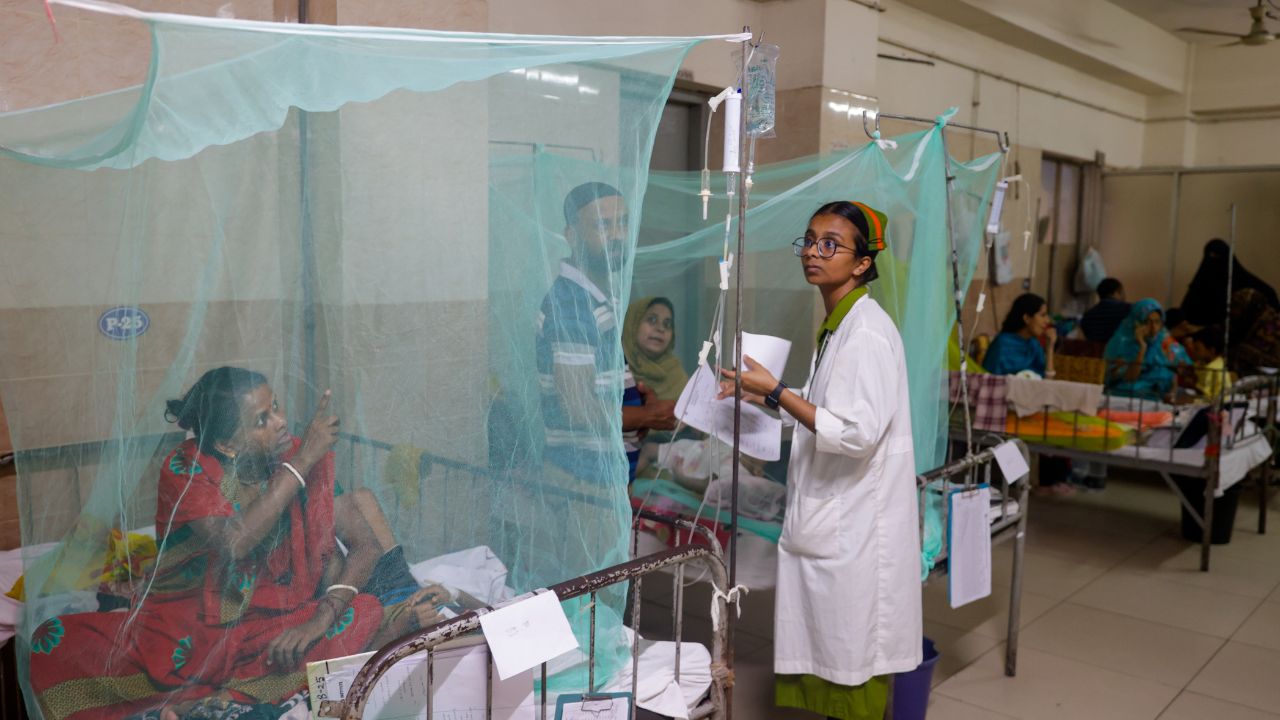


Azizul Haque from Bongshal, who came seeking treatment for dengue, expressed his concern, “People who come here with their families to treat dengue might end up getting infected themselves.”
The TIMES attempted to contact DMCH Director Brigadier General Md Asaduzzaman for comment, but he remained unavailable despite initially promising to respond within an hour and thirty minutes, citing a busy Zoom meeting, according to his personal secretary.
Sufferings at Mugda Hospital
The situation at Mugda Medical College Hospital (MMCH) offers little comfort. While it is less crowded than DMCH, patients and their families were still seen lying on beds, many visibly distressed by the lack of adequate care on Monday.
Several family members voiced concerns over the nurses’ inattentiveness at MMCH.
Abul Kashem, whose relative is receiving treatment for dengue, said, “They only come during their rounds. When we ask them to visit the patient in critical or urgent situations, they refuse and tell us to bring the sick person to their chamber or room.”
“Since not every patient is well enough to move, this causes a big problem for us,” he added.
Patients also raised concerns about the hospital’s slow and inefficient management.
One patient, speaking anonymously to TIMES, shared their concerns, “The main issue is the slow response from the nursing management. They often cause distress to patients and their families by unnecessarily delaying treatment procedures.”
“For instance, even something as routine as blood sampling can take a long time to get done because of this.”
Adding to the concerns is the irregular transfer process for dengue patients between different floors of the hospital. Those admitted to the 8th floor and confirmed positive are supposed to be moved to the 11th floor, yet many remain where they are.
When asked about the issue, the duty doctor responded, “That’s not my concern. My job is to care for patients in the initial phase. After that, it’s not my responsibility.”
As dengue cases continue to climb, Mugda Medical College Hospital is preparing for an even more severe surge in the coming weeks by bringing in some bunk beds.
Healthcare system may reach breaking point
Facilities like DMCH and MMCH are already stretched thin, with overcrowded wards, bed shortages, and delayed treatment.
They say that amid the ongoing rainfall, tackling the dengue outbreak requires action from not just hospitals but also city corporations.
According to sources, the Dhaka South City Corporation uses a mixture of 8 ml of Deltamethrin 1.25 ULV with 1 litre of diesel and other necessary ingredients to control mosquito populations across the city.
Deltamethrin is a fast-acting insecticide commonly used to control mosquito-borne diseases like dengue and malaria. While effective, it poses health risks through direct exposure and harms non-target species such as bees and fish. Overuse can also lead to mosquito resistance, reducing its long-term impact.
International groups like PAN Europe are calling for restrictions or bans, citing concerns over neurotoxicity, environmental damage, and weak regulations.
Professor Dr Kabirul Bashar, Entomologist and Public Health Specialist at Jahangirnagar University, emphasised the need for urgent action. “Hotspot management means eliminating all mosquitoes within a 200-metre radius of a dengue patient’s home. Even a few surviving mosquitoes can cause further spread.”
He also urged people to clear standing water to help prevent infections.
At a press conference on Monday, Professor Dr Abu Jafar, Director General of the Directorate General of Health Services (DGHS), said, “No matter how many measures are taken, if people are not aware, it is very difficult to get rid of infectious diseases like dengue.”
The country experienced its deadliest dengue outbreak in 2023, with 1,705 lives lost, marking the highest death toll on record.