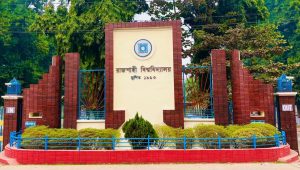
On 12 February 2025, K M Mahfuzur Rahman received a phone call that no parent should ever hear.
His son, Fahim Monaem, a student at the University of Dhaka, had been involved in a fatal accident. By the time Rahman reached Midfort Hospital in the capital, Fahim was already gone.
Fahim’s motorcycle had collided with a Laguna from Bahadur Shah Paribahan, a vehicle that had unlawfully entered a restricted area of the road.
“As my son fell, the bus ran over his chest. He died on the spot,” Mahfuzur Rahman recounted.
Local residents pointed to sand scattered from a nearby construction site and the lack of effective traffic management as contributing factors.
For Rahman, his son’s death was not just a tragic accident – it was a preventable loss that highlighted the ongoing road safety crisis in Dhaka.

Fahim’s story is far from unique. Every month, hundreds of lives are lost across the country in road accidents – many of which could be prevented with proper adherence to road safety regulations.
In its latest report on September’s road accident data, the Road Safety Foundation identified systemic issues as the primary causes behind the high accident rate. These included reckless speeding, faulty vehicles and infrastructure, and poor working conditions for drivers.
According to the foundation, September 2025 saw 446 accidents, resulting in 417 fatalities and 682 injuries nationwide. In August 2025, 451 accidents claimed 428 lives and injured 791 people.
The nature and locations of these accidents underscore deep-rooted problems. National highways were responsible for nearly half of August’s crashes, but by September, city roads accounted for almost 20% of the accidents.




In Sylhet, Monzu Ahmed still carries the physical and emotional scars from a reckless bus crash on Jaflong Road in 2023. The collision fractured his skull, jaw, and temple, requiring titanium plates and several months of hospitalisation.
“I don’t remember much,” he said. “I was unconscious for a minute or two.” His recovery cost nearly one lakh taka. “Speed control, protective gear – these are lessons learned too late,” Monzu reflected. “But proper lane segregation could save countless lives.”
Even those who survive minor accidents often face long-term consequences. In May 2025, 38-year-old Biswajit Mitra crashed his motorcycle into a pothole near Dhaka’s Hatirjheel. His right leg was severely skinned, and he spent over a month bedridden.
“I wasn’t speeding,” he said, his frustration clear. Dhaka’s roads failed him, and police oversight was nearly nonexistent.
In September, among the deceased, 143 people died in motorbike accidents alone, accounting for 33.85% of the total fatalities.
Highway Police Additional Inspector General Md Delwar Hossain Mia acknowledged that faulty vehicles and defective roads are major contributors to accidents. On the Dhaka-Chattogram highway, only a 662-foot stretch of service road exists along the 250-500 km route.
“If these roads were functional, three-wheelers wouldn’t enter highways,” Mia said.
He also highlighted the role of reckless young riders and the importance of parental guidance.
However, he noted that some progress has been made, citing the implementation of automated traffic tickets for vehicles exceeding 90 km/h on the Dhaka-Mawa highway, which has led to a reduction in serious accidents. Additionally, 15 out of 16 checkpoints on the Dhaka-Chattogram route now digitally enforce traffic violations.
According to the Road Safety Foundation, loss of vehicle control has been the leading cause of accidents, while pedestrian incidents have surged, corresponding with a sharp rise in pedestrian fatalities.
The Road Safety Foundation (RSF) prepared the report based on the reports of nine national dailies, seven online news portals, and electronic media.
According to the report, in September, 28.69% of accidents occurred in Dhaka division, 18.83% in Rajshahi, 22% in Chattogram, 6.72% in Khulna, 3.58% in Barishal, 3.35% in Sylhet, 8.87% in Rangpur, and 5.38% in Mymensingh division.
Govt drafting new law
The government is drafting a new road safety law grounded in the “Safe System Approach,” aiming to modernise transport governance and align with global standards.
Professor Sohel Mahmud of BUET’s Accident Research Institute noted that the legislation addresses critical gaps in the Road Transport Act, particularly regarding speed management, pedestrian protection, and post-crash response.
Dr Abdul Awal Rizvi of the Road Safety Injury and Prevention Programme added that even a 1% reduction in vehicle speed could lower injuries by 2%, serious injuries by 3%, and deaths by 4%.