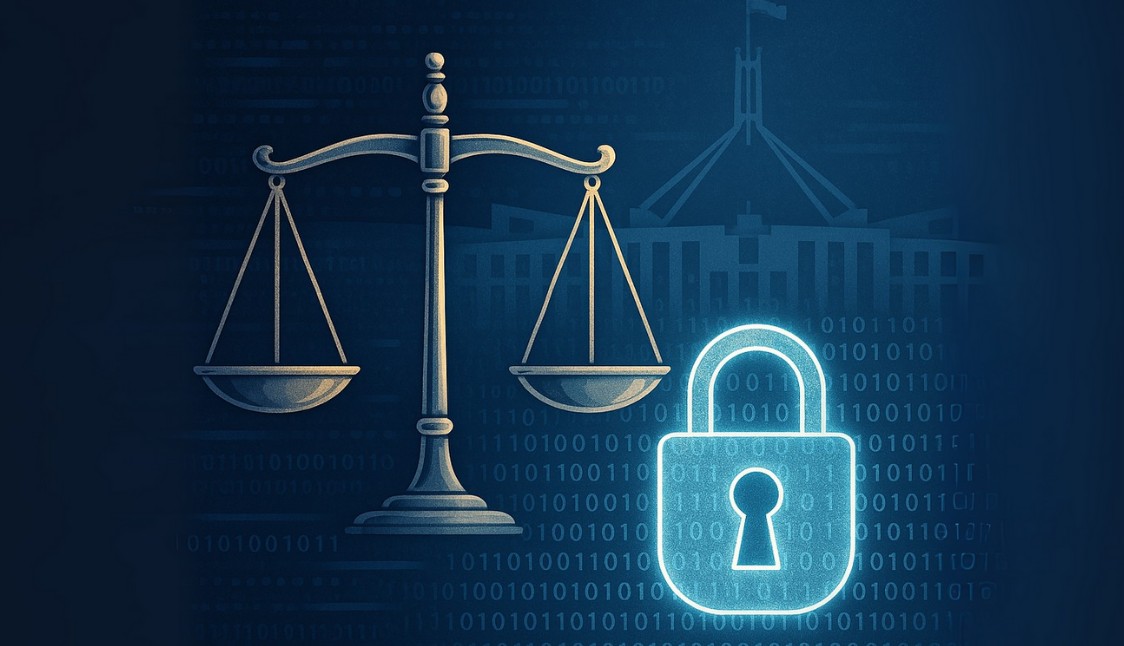



In digital civilisation, a mirror has been placed in our hands through which we see our face. We see a thousand faces of society, opinions, fears, aspirations, conflicts. However, this mirror has another hidden side to it – someone could be watching and recording information and building a map of our digital footprints. In this world information is light and shadow, it is liberation and control. The discussion over the Cyber Security Law is really a discussion of where this light and shadow meet, where a wall of security is required and where that same wall could be a barrier to the sky of citizens’ freedoms. Information is not just a means of message passing; information is a source of power. Information that reaches people, lost, and recognised as ‘true’ or ‘false’ greatly influence the thoughts of society, politics and public opinion. So, the question of cyber law is not only a technological one; it is also a question of power, control, citizens’ rights and the future of digital society.
The need for recent efforts in the field of Cyber Security Law has been reiterated due to lack of a robust legal mechanism to regulate rumours, misinformation, misleading pictures and videos generated by Artificial Intelligence, defamatory information and cybercrime in the digital realm. The state’s concern is legitimate, to say the least. Today, information that is false not only damages a person, but it can create social unrest, communal conflict, a crisis of public trust, or even pose a threat to national security. But what is the cost of building a wall of security for the sake of security, and how does it become a wall of surveillance?
In terms of communication studies, social media has emerged as a new public sphere. Here, opinions are expressed, news exchanged, political debate engages in, and people join social movements. But this public sphere is not completely free. The state, together with technology companies, algorithms and users, form a complex information flow system. In this system the most significant is who’s going to control information? State, corporations, or civil society Currently, the major tech firms decide which information stays, is limited and is taken away themselves based on their content policies. This system has a significant role in the control of hate speech, fraud, incitement to violence and harmful content on one hand; and on the other hand, it plays a role in complying with data privacy regulations.

The challenge gets more complicated when the state takes the action of trying to force such technology to take down content within a set period of time. This results in a clash between two strong sides: the state side for security reasons, and the technology companies’ content policies. The middle is the common man who suffers the most from the infringement of his or her right to freedom of expression and right to privacy.
The idea of a ‘surveillance society’ is relevant here. The eyes of cameras are no longer the only eyes to be used for surveillance; it is now a data-based, algorithm-driven and digital identity-based surveillance. An invisible monitoring structure is built by analysing data on the activities citizens watch, write and share. Technology can be a tool for security, but it can also be a means of control. It is here that the fundamental conflict around the cyber laws in Bangladesh is the rooting.




The name of the law has been altered in each of the Digital Security Act-2018 and the Cyber Security Act-2023 as well as the Cyber Security Ordinance and the current Cyber Security Law, with some provisions deleted and others amended. Since the enactment of the Digital Security Act, there have been concerns about certain sections of the Act, namely 8, 25, 28, 29, 31 and 32. The ambiguity in the wording of these sections led to a fear among critics of independent journalism, investigative reporting, and criticism of the government. Digital laws can be enforced in ways other than through court decisions, such as through arrest, seizure of devices, and social pressure.
The same issue has arisen with the new Cyber Security Law. Section 25 of the Cyber Security Act-2023 has been merged into section 23 of the new law. On the other hand, Section 25 includes offences such as sexual harassment, blackmailing and the publication of obscene content. These provisions are essential to ensure personal security and protect women in the digital space. At the same time, however, the lack of clarity on terms like defamatory, offensive or intimidating can open the door to abuse of the law. The single provision that is most talked about is Section 26. The old law had been controversial on the issue of hurting religious sentiments. The new law has substituted this with clauses about the dissemination of information that incites an act of violence, hatred or hostility towards religion or ethnicity. It is a huge change, but still there are difficulties. In society, it is not always clear where criticism, satire, opinion and hate speech end.
Further, the government has declared that there are measures in the law to avoid false cases and has even taken steps to set up a National Cyber Security Council. But experience has proven that a legal battle can effectively be a punishment. An individual’s social standing, work life and mental health can be impacted before the conclusion of a trial. So, it is essential to ensure that there are measures in place after a crime has been committed and also measures in place to ensure that it is not taken up until it has been verified, an independent investigation, transparency of content removal and opportunity for appeal.
The Cyber Security Law is a law that must be remembered that it is an open window, not a locked room. A window can be closed to keep a storm out, but at the same time neither light nor fresh air can enter the window. So, there is a need for a law that can protect against any damaging information without being a wall against citizens’ voices. Too much control for security reasons could ultimately erode the confidence of the system that the law is in place to secure. Hence, the Cyber Security Law of the future must not be considered only as a weapon of crime suppression but as a social contract in the creation of a trust society in the digital world.
The views expressed in this article are solely those of the author
The writer is an Associate Professor, Department of Communication and Journalism, University of Chittagong. Email: [email protected]