


Inspector General of Police (IGP) Md Ali Hossain Fakir could face removal following his controversial remarks on “crossfire”, with discussions underway at the highest levels of government over a possible replacement and several senior police officers now being considered for the country’s top law enforcement post.
The debate emerged after the IGP said police would not hesitate to carry out “crossfire” if the government authorised it, triggering a wave of criticism from political parties, human rights groups and civil society representatives. Calls for his removal have since intensified, prompting discussions within government circles over the future of the police chief.
A final decision may be taken after Prime Minister Tarique Rahman returns to Bangladesh on Thursday (29 October) following an official visit to Japan.
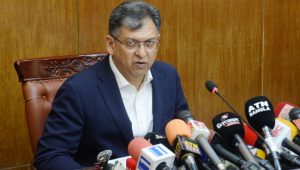
Speaking at the Secretariat on Tuesday, PM’s Information and Broadcasting Adviser Zahed Ur Rahman said the prime minister would decide the IGP’s future after returning to the country.
Later in the day, Home Minister Salahuddin Ahmed told reporters that the police chief had made the remarks inadvertently. The minister’s comments were interpreted by many within the police administration as an indication that the incumbent IGP could retain his position despite the controversy.
The controversy stems from remarks made by Ali Hossain Fakir at an event organised by Community Bank in Chawkbazar, Old Dhaka, on Monday.
“If the government gives permission, the police will not hesitate to resort to crossfire, if necessary,” the IGP said.

During the same programme, he argued that police officers are often criticised regardless of their actions, saying they are labelled “fascists” when they use force and “weak” when they refrain from doing so. He also stressed the importance of creating an environment in which police can effectively perform their duties and maintain law and order.
The comments quickly sparked criticism from across the political spectrum and drew condemnation from human rights organisations.
Later that night, Police Headquarters issued a clarification, saying the IGP had not used the term “crossfire” to refer to extrajudicial killings or punishments. Instead, he had used the term figuratively to refer to the strict enforcement of the law against criminals.
Despite the clarification, the remarks continued to reverberate through both political and administrative circles. BNP Acting Secretary General and the prime minister’s political adviser Ruhul Kabir Rizvi described the comments as “embarrassing” for the government.
Several senior officers under consideration
Three senior police officials holding the ranks of additional inspector general and deputy inspector general told TIMES on condition of anonymity that candidates for the post of IGP are assessed on the basis of professional competence, integrity, personal conduct and political outlook. Intelligence assessments prepared by multiple agencies are also reviewed before a final decision is made.



Sources said the Prime Minister’s Office is currently examining files containing the service records, professional achievements and background information of several senior police officers.
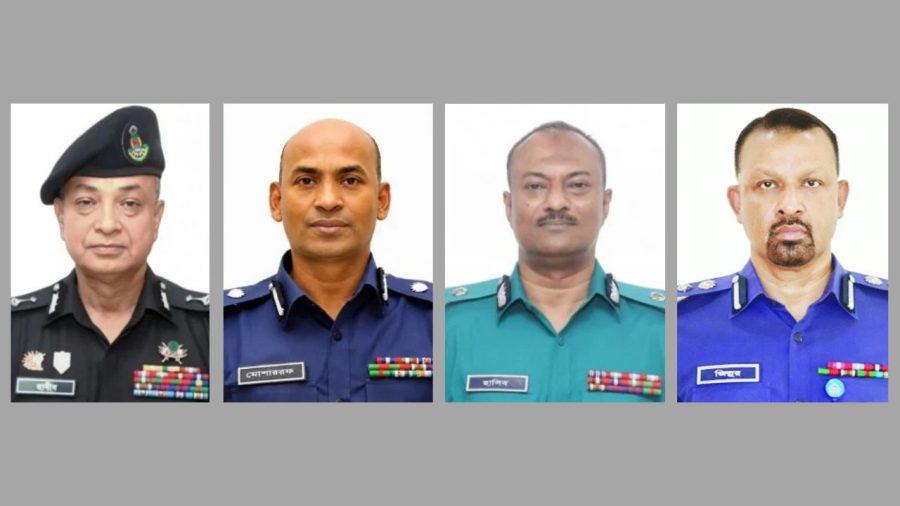
They include Additional IGP Md Ahsan Habib Palash, director general of the Special Response Battalion (SRB); Additional IGP Hasib Aziz, chief of the Armed Police Battalion (APBn); Additional IGP Barrister Mohammad Mosharraf Hossain, chief of the Criminal Investigation Department (CID); and Additional IGP Barrister Md Zillur Rahman, who currently heads the Railway Police in an acting capacity.
Sources familiar with the process said the four officers were deprived of promotions and other career benefits during the Awami League rule.
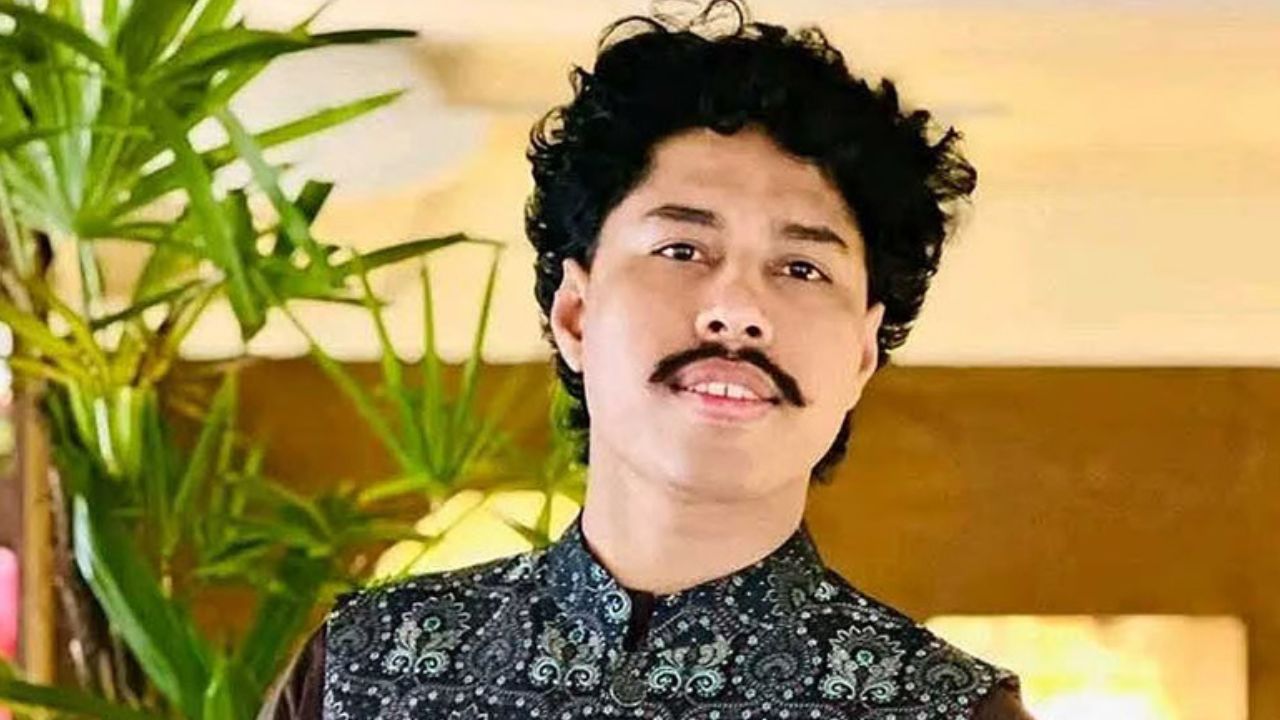
Another name being discussed is Dhaka Metropolitan Police Commissioner Mosleh Uddin Ahmed.
However, officials said the selection process remains ongoing and that the final decision will depend on intelligence reports, service records, professional reputation and each candidate’s perceived ability to lead the force.
Ahsan Habib Palash
Additional IGP Md Ahsan Habib Palash currently serves as director general of the Special Response Battalion, the country’s newest elite law enforcement unit. Prior to that, he was the last director general of the Rapid Action Battalion (RAB).
A member of the 15th BCS police cadre, Palash joined the Bangladesh Police as an assistant superintendent of police in 1995. He earned both bachelor’s and master’s degrees in sociology from the University of Dhaka and received professional training in the United States, the United Kingdom, Australia, Vietnam and Malaysia.
Hasib Aziz
Additional IGP Hasib Aziz is serving as chief of the Armed Police Battalion.
After joining the Bangladesh Police through the 15th BCS police cadre in 1995, he held a range of operational and training assignments. He became commissioner of Chattogram Metropolitan Police in September 2024 before being appointed APBn chief in March 2026.
His previous responsibilities included serving as commandant of the CID’s Detective Training School, heading the Interpol desk, and serving as commandant of the Tangail Police Training Centre. He also held various positions at APBn headquarters.
Born in Shariatpur in 1971, Hasib Aziz is the son of former IGP M Azizul Haque, who later served as an adviser to the caretaker government in 2006.
Mosharraf Hossain
Additional IGP Mosharraf Hossain took charge as CID chief on 29 July 2026.
A member of the 15th BCS police cadre, he joined the force as an ASP in 1995. He earned a master’s degree in economics from Islamic University in Kushtia and later pursued legal studies in the United Kingdom.
Before becoming CID chief, he served as a director of the National Security Intelligence (NSI), where he was promoted to the rank of additional IGP.
During his career, he has served as superintendent of police in Pirojpur and Chapainawabganj, and held key positions at CID headquarters as well as its Chattogram and Cumilla units. His service record also includes postings at the Bangladesh Police Academy, Dhaka Metropolitan Police, and Chattogram Metropolitan Police.
Zillur Rahman
Barrister Zillur is serving as chief of Bangladesh Railway Police in an acting capacity at the rank of additional inspector general (IGP).
He has previously served as principal of the Bangladesh Police Academy in Rajshahi and as superintendent of police in Moulvibazar and Jhenaidah districts.
A member of the 15th Bangladesh Civil Service (BCS) police cadre, he earned a Barrister-at-Law degree from Lincoln’s Inn in the United Kingdom and an MBA from the Institute of Business Administration (IBA) at the University of Dhaka. He is also a PhD fellow.
The Awami League government dismissed him from service in 1997 and placed him on compulsory retirement in 2022. He was subsequently forced to leave the country. He directly participated in the movement that led to the fall of the government on 5 August 2024.