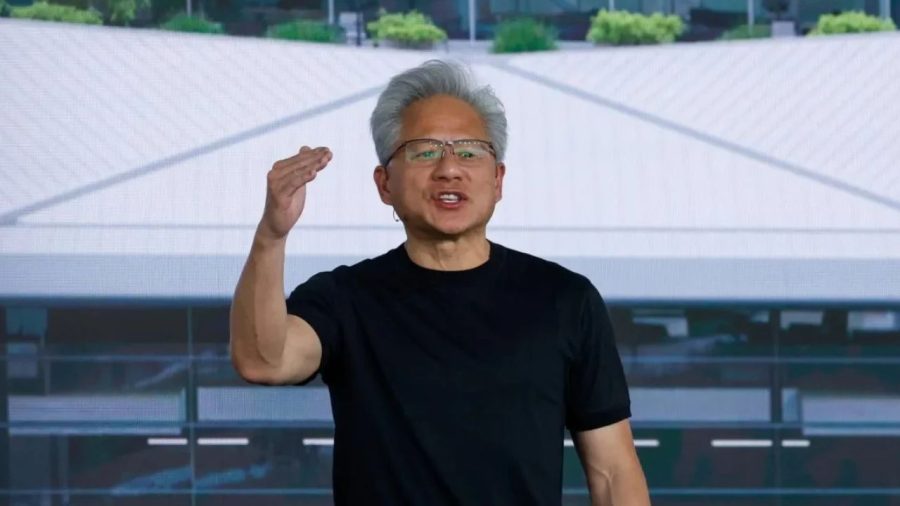



Jensen Huang, chief executive officer and co-founder of Nvidia, has stepped down from his position and resigned from the board of directors following mounting pressure over allegations of personal misconduct and ties to a foreign intelligence asset.
The sudden exit of the 63-year-old executive leaves the artificial intelligence industry without its key figurehead and clouds the future of the $4 trillion semiconductor giant.
Colette Kress, chief financial officer of Nvidia, has been appointed as interim chief executive officer while the company searches for a permanent successor. Nvidia also named Harvey Jones, board member and former chief executive officer of Synopsys, as its first board chairman.
Foreign intelligence probe, misconduct allegations
Huang, who holds a 3.61 per cent stake as Nvidia’s fourth-largest investor, faced increasing scrutiny after reports revealed an affair with Alice Huang, a former executive at Singapore-based cloud firm Megaspeed.
US authorities concluded that Alice Huang, who is not related to Jensen Huang, was acting as an intelligence asset for Beijing. The two have been photographed together in Taiwan, Singapore, and California.

Washington has also been investigating Megaspeed, an official Nvidia cloud partner with priority access to its chips, over allegations of assisting China in obtaining advanced AI hardware restricted under US export controls. Beijing has denied that Alice Huang is a spy.
Earlier this month, Nvidia’s board initiated an internal probe led by independent directors and external legal counsel to investigate whether Jensen Huang had been targeted by a foreign intelligence operation, initially expressing confidence in his leadership.
However, corporate pressure reached a climax on Wednesday when the board met to discuss his ouster.




The development followed a report by The New York Times disclosing that Huang also had an extramarital affair with Kimberly Powell, vice-president of healthcare at Nvidia, who reported directly to him.
Market fallout, operational impact
The leadership change caused immediate market instability, with Nvidia shares dropping more than 10 per cent in pre-market trading and pulling down broader stock markets.
Huang’s departure plunges the world’s most valuable firm into uncertainty, threatening to disrupt an AI ecosystem that he helped finance by funnelling Nvidia’s cash reserves into cloud providers, suppliers, and major research laboratories.
The executive shift comes at a time when investor confidence in AI technology stocks was already fragile due to high cash burn and rising debt burdens across major tech corporations.
Assessing the operational fallout, Michael Feldman, portfolio manager at ClearBridge Investments, said the primary risk for Nvidia pertains to execution rather than its product trajectory.

He noted that while the company’s technology roadmap remains clear for several years ahead, Huang served as the chief conductor of a complex system where operational coordination provided a crucial competitive advantage amidst industry bottlenecks.
Export policy, global standing
Huang’s exit is also expected to carry significant implications for US chip export policy, given his advocacy for maintaining commercial access to China and his close connection with Donald Trump, US president.
On Sunday, Trump said Huang had “done an amazing job for our country” and noted that the former chief executive officer told him he was unaware that the Chinese businesswoman was involved in espionage.
Nvidia initially gained prominence by developing graphics hardware for video gamers, but its parallel-processing microchips later became the foundational engine of the global AI expansion and a strategic asset in the technological competition between the United States and China.
Huang’s leadership elevated him to a prominent status, drawing large crowds during visits to Taiwan and South Korea, where supporters requested autographs on books, posters, and their bodies, while his public comments routinely influenced equity prices across the technology market.