


The drive towards sustainability has expanded beyond the environment to be an integral component of economic competitiveness, technology development, national security, and the global arena. In this context, the Chinese green transformation is one of the most forward-looking and impactful development plans of the 21st century. China is the world’s biggest energy consumer, manufacturing centre, and greenhouse gas emitter, and its decarbonisation has ramifications beyond its own borders. The green transformation strategy in the 15th Five-Year Plan aims to optimise economic development and ecological protection, promote the development of new green industries nationwide, and position the country as a leader in this field.
The country has ambitious goals to massively expand power generation capacity by non-fossil fuels, estimated at some 4,700 GW by 2035. This includes investments in large-scale solar, wind, hydropower, nuclear, and advanced energy storage technology. China is already the world leader in renewable energy and contributes a major share of global wind turbine and solar panel installations. The nation’s energy matrix will shift dramatically as large-scale solar installations in the desert, ocean wind farms, and ultra-high-voltage power lines are constructed.
But there is one crucial difference between China’s energy transition and the West. Beijing is not prepared to give up coal so soon and considers it an enabler to keep a stable electricity grid when renewables are not on the grid. Chinese policymakers see energy security as key to sustainable development, which they see as a contradiction to their climate ambitions. The approach is to gradually reduce coal’s share and accelerate the development of cleaner energy alternatives to meet the demands of a modern industrial economy.
The green transition poses environmental challenges and, at the same time, presents an unprecedented opportunity for China’s industrial development. Therefore, policymakers are spending significant effort on the sectors they believe are crucial to the future economy. They encompass smart grids and energy storage, advanced batteries, electric vehicles (EVs), next-generation solar cells, and hydrogen energy. The idea of ‘new quality productive forces’ has served as the guiding principle for this industrial change. Its emphasis is on innovation-driven growth, technological independence, and high-value manufacturing. At present, the Chinese are by far the world’s top manufacturers of EVs, battery technology, and PV. The creation of these industries is just one example of the capacity of climate policy to serve as a tool for economic modernisation. Over the past few years, the development of Chinese green industries has also helped to promote overall economic restructuring. Industry 4.0 technologies are being developed and applied to modernise traditional industries (steel, cement, and chemicals) and improve energy efficiency and cleaner production. The dual-track approach is to develop new industries and modernise traditional industries to build a more resilient, technologically advanced economy.

Environmental protection has become a priority of increasing importance for China’s leadership in its nation-building. This is not only to reduce carbon emissions but also to create a ‘Beautiful China’ that policy-makers have envisaged. This vision includes climate action, biodiversity protection, pollution reduction, and sustainable urbanisation, and brings them under one umbrella and governance structure. What is interesting is that they are putting in place requirements for the products’ carbon footprints and establishing a full inventory of GHGs. Such mechanisms promote transparency, improve emission monitoring, and facilitate the development of policies grounded in evidence. By introducing environmental indicators into the planning of China’s economic development, China aims to incorporate sustainability into its economic production and consumption.
Eco-governance also draws on knowledge gained from more than 40 years of rapid industrialisation. High economic and social costs were incurred due to poor air and water pollution and environmental degradation. Therefore, protecting the environment is no longer only a moral duty but a prerequisite of public health, social stability, and long-term prosperity, and is now considered imperative.




China has taken on one of the most innovative projects in the use of digital technologies and artificial intelligence in the sustainability management sector. AI systems enable emissions monitoring, supply chain tracking, real-time evaluation of environmental risks, and assessment of project performance. This helps increase the efficiency and accountability of investments in the green economy.
In addition to their domestic efforts, the Chinese are seeking to engage in green finance internationally. Beijing will play a more important role in global climate governance and enhance the international influence of the Chinese government through climate cooperation among developing countries, renewable energy initiatives, and sustainable infrastructure development. As developing countries seek cost-effective technologies and financing mechanisms to transition to green energy, this aspect of green diplomacy has become increasingly significant.
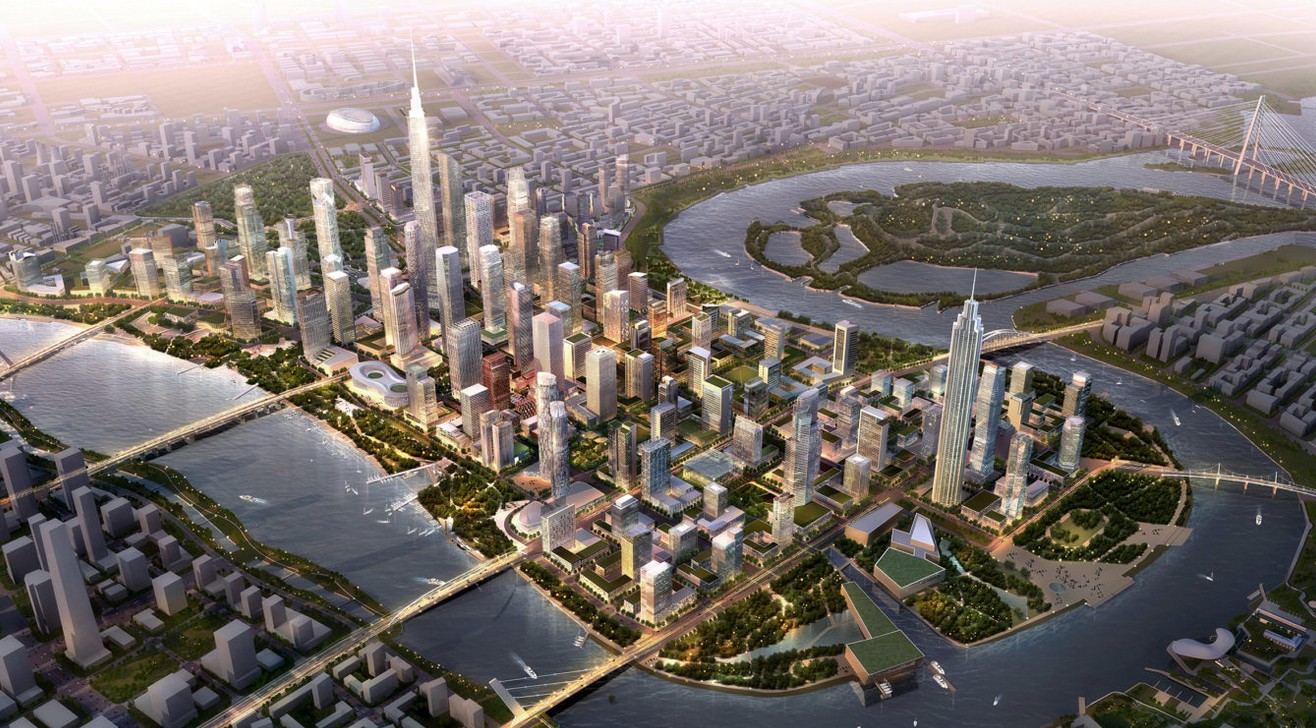
The policy regime of China’s green transition combines strategic policy centralisation and regional policy decentralisation. This may be called ‘green state-steering’ and enables national authorities to define long-term targets; flexibility is possible on the provincial level for the implementation. The 17 percent reduction in carbon dioxide emissions per unit of GDP by 2030 in the 15th Five-Year Plan is an example of this. Meanwhile, it contributes to industry upgrading, technological innovation, and sustainable urban development.
However, there are major hurdles to China’s green transition. Despite its size, industrial emissions remain a problem, and the differing levels of development across the country’s regions pose a challenge for the economy and emissions reduction. There is a continued need for energy, and significant investments are required to modernise the grid and expand energy storage. Furthermore, restructuring implications of traditional industries must be included in the transformation, both in social and job aspects.
China’s accomplishments in the green field have been praised and criticised internationally. Large-scale production of solar cells, batteries, and electric vehicles has accelerated the spread of clean technologies worldwide and driven down costs. Conversely, the country has also played its part in lowering the costs of clean technologies, including solar panels, batteries, and electric vehicles, which are produced on a massive scale. In the West, governments are increasingly saying that China’s dominance in manufacturing stems from ‘overcapacity’ and that this is negatively affecting markets. This has resulted in tariffs, trade barriers, and restrictions on market access for green technology, making them a persistent feature of competition.
But the rifts point to a bigger paradox of the global energy transition. The world is in crisis because it needs more affordable, ‘clean’ technology to achieve climate goals. But today, global competition is shaping the development and dissemination of that technology. Cooperation or competition will significantly impact the pace of global decarbonisation.
China’s green transition is more than just an environmental policy. It’s a plan for development along the path of transformation in the energy sector, industrialisation, governance, and the country’s presence in the international arena. Beijing is striving to develop a sustainable modernisation roadmap through sustainable energy development and industrial innovation, ecological management, and green financing. The challenges are still to come, but the Chinese story demonstrates how climate action can also be connected to other economic and strategic objectives. China’s green transition will have ramifications for global sustainability as climate change becomes increasingly evident.
The writer is a Professor, Department of International Relations, University of Chittagong, Bangladesh. Director, Hong Kong Research Center for Asian Studies-Bangladesh Center (RCASBC). Email: [email protected]