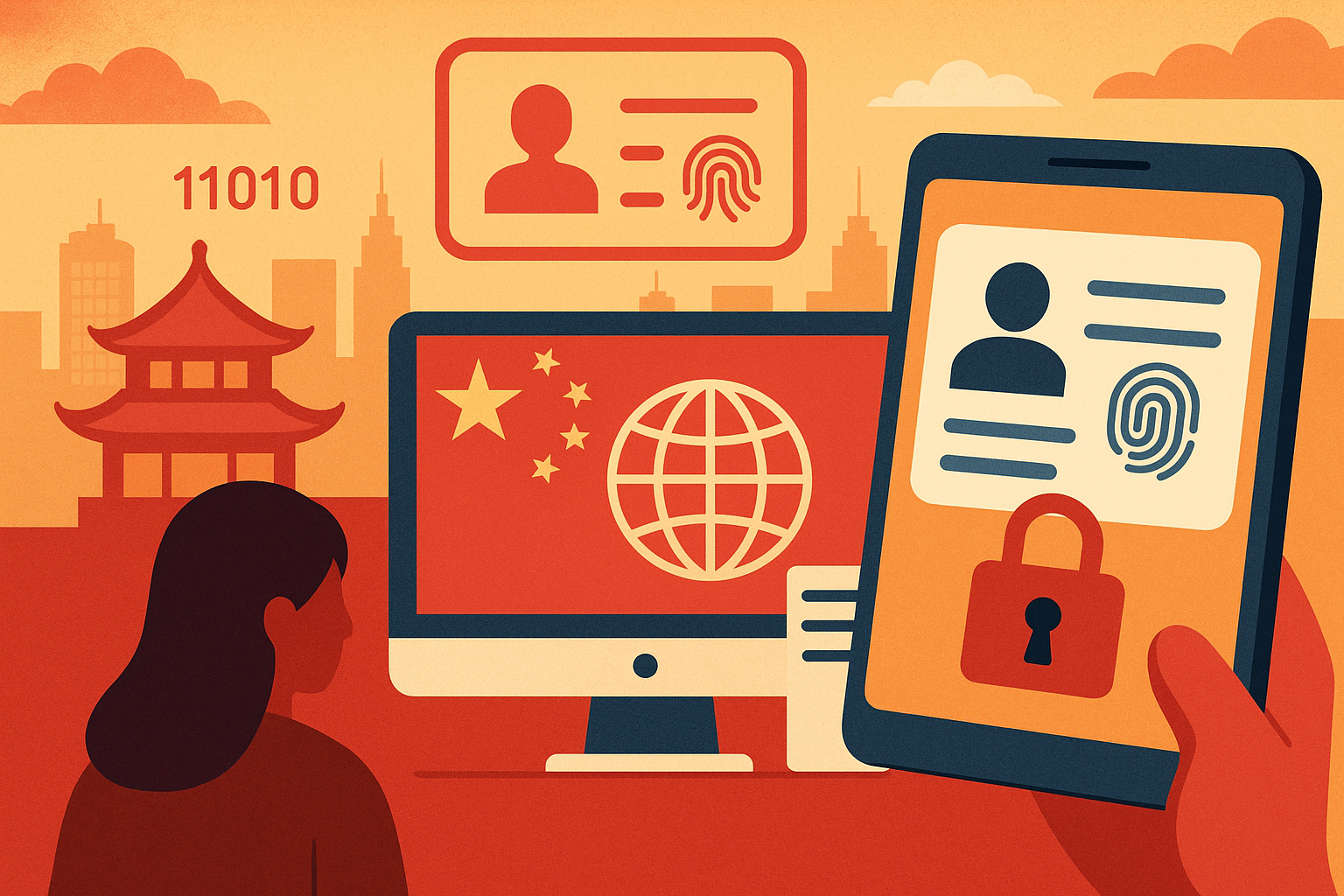

China, long known for its strict internet censorship and surveillance, is tightening control further with a new state-issued internet ID that will require citizens to register a single identity across all online platforms.
In late May, Chinese authorities unveiled rules for a national internet ID system, which will become effective mid-July, allowing citizens to log into all websites and apps with a single state-issued ID rather than separate credentials on each platform. The new programme is officially “voluntary,” but experts warn that it will give the state unprecedented power to monitor and control people’s online presence.
According to officials, the policy aims to protect user data and help develop a “healthy and orderly digital economy.” However, legal scholars and human rights experts fear the system will erode online anonymity and restrict freedom of expression.

“This is a state-led identity system capable of real-time monitoring,” said Xiao Qiang, a researcher at the University of California, Berkeley. “It is more than just a surveillance tool, it’s an infrastructure for digital totalitarianism.”



Since Xi Jinping took office in 2012, China has ramped up its internet regulation. Censors patrol the internet around the clock, deleting sensitive posts and silencing dissent. Experts say this new ID system will make the state’s control even more direct.
Although the system is officially optional, cybersecurity professor Haochen Sun from the University of Hong Kong said most citizens may have no choice but to opt in as websites and apps gradually require it. He also warned that a centralised platform would be a tempting target for cyberattacks.
The internet ID was first proposed in early 2024 by police cyber director Jia Xiaoliang. Despite public concern and critical comments from legal scholars, officials finalised the policy virtually unchanged after a year-long public consultation process.