
Pakistan’s Defence Minister Khawaja Asif warned Tuesday that a trilateral defence pact between Pakistan, Saudi Arabia and Turkey could become operational if the conflict in Yemen spilled over into Saudi territory, after Houthi rebels struck Saudi oil installations, wounding 73 people, says DAWN.
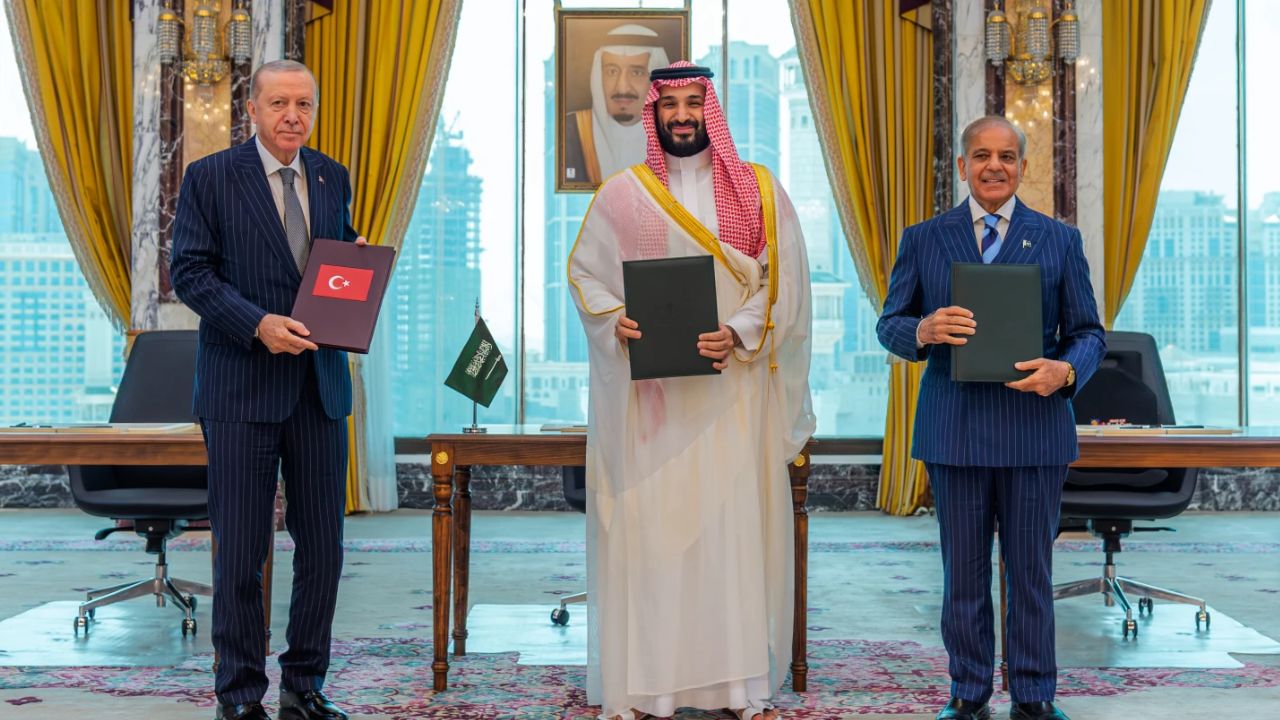
The Makkah Defence Alliance, signed on 7 August, is designed to strengthen collective deterrence among its three signatories, treating an attack on one member as an attack on all. Speaking on Geo News programme “Aaj Shahzeb Khanzada Kay Sath,” Asif said there was “no ambiguity” that the pact would be triggered by unprovoked aggression against any member. “This is a joint defence pact.
And unprovoked aggression or spillover of whatever is happening in Yemen into Saudi Arabia, definitely, the pact will become operational; there should be no doubt in this,” he said, adding that Pakistan would honour its terms “in case there is a need.”
Asked whether Islamabad and Riyadh had been in contact since the attacks, Asif said he was unaware of any engagement but reiterated that Pakistan was bound to respond under the pact’s provisions for joint defence.

He described the alliance as defensive rather than aggressive in nature, saying all three states would “respond in kind” only if one came under attack, and noted Pakistan would have responded even had the pact been bilateral rather than trilateral.
Asif expressed hope the situation would “come under control and die down,” and said he hoped the Houthis would recognise that attempting to “export their internal matters” would activate the pact’s clauses on confronting aggression.




He described the Houthis as “non-state actors,” noting Yemen’s government had itself responded to their attacks, and said that while sympathy for Iran existed across the Muslim world, those exploiting a bilateral dispute were acting “at their own peril.”
He recalled Pakistan’s support for Saudi Arabia during the Yemen conflict since 2014, including a visit he made to the country at the time, citing the two nations’ longstanding ties and the “sanctity” of Saudi land as reasons Pakistan continued to assist Riyadh in difficult periods.
On separate US-Iran negotiations, Asif said the process remained at a “stalemate” but voiced optimism that “all doors have not closed,” pointing to continued indirect engagement.
He said Pakistan was balancing “brotherly relations” with countries on both sides of the wider regional conflict, and accused Israel of seeking to prolong the conflict to drain Gulf states financially while incurring no costs itself, saying funding for the war effort was coming “from overseas.”
He said people in Gaza, the West Bank and Lebanon were paying the price for Israeli Prime Minister Benjamin Netanyahu’s “lust for power,” but noted a “silver lining” in what he described as shifting public opinion against Israel across Europe, North America, New Zealand and Latin America.
The comments followed Houthi attacks on Tuesday on four cities in southern Saudi Arabia — Abha, Khamis Mushait, Jazan and Najran — using dozens of ballistic missiles that struck Abha International Airport, King Khalid air base and facilities belonging to state oil giant Aramco, wounding more than 70 people and setting oil installations ablaze.
Saudi Arabia retaliated with strikes on Yemen’s Taiz and Marib provinces and the Jubah district east of Sanaa, with its foreign ministry saying Riyadh would “take all necessary measures to defend its sovereignty.”
Pakistani Prime Minister Shehbaz Sharif condemned the Houthi attack and pledged “unwavering solidarity” with Saudi Arabia, writing on social media that Pakistan reaffirmed its “steadfast support for the kingdom’s sovereignty, security and territorial integrity.” Pakistan’s Foreign Office also issued a statement condemning the strikes as “reprehensible.”