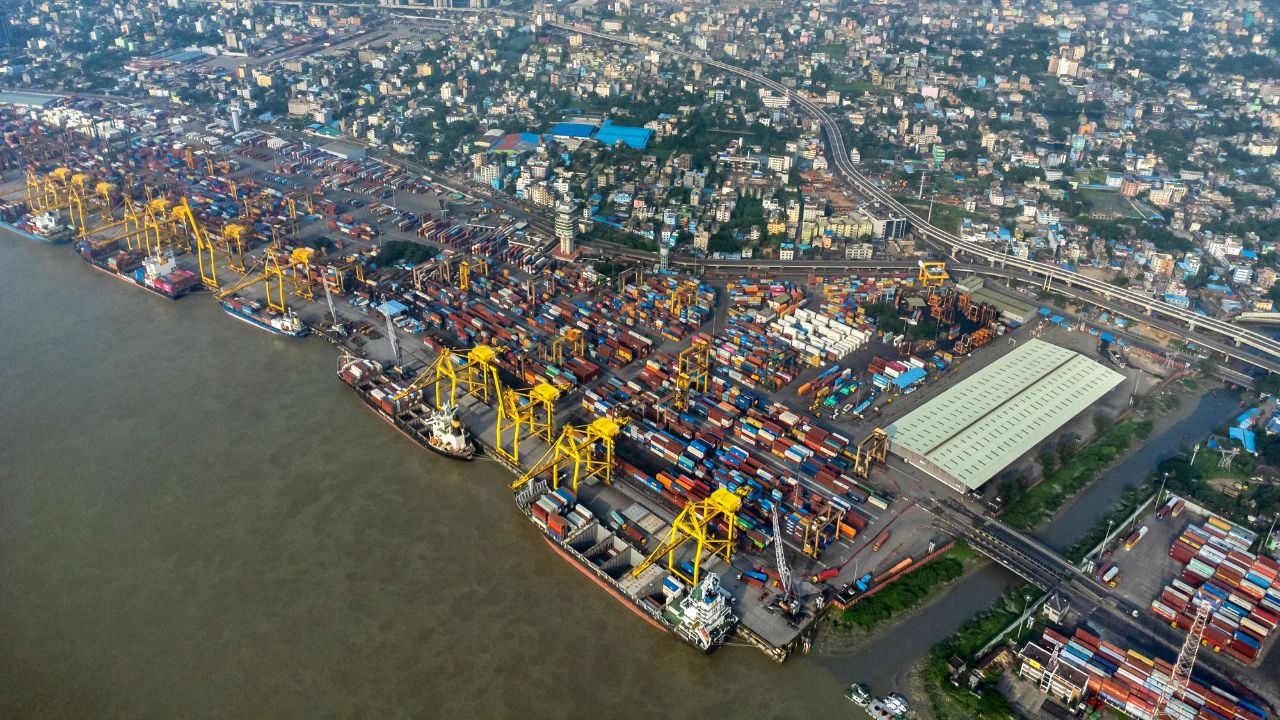
Once facing safety concerns, Chattogram Port is steadily improving security and gaining confidence from international shipping operators through advanced technology and coordinated operations involving the Bangladesh Coast Guard, the Navy and other agencies.
Foreign commercial vessels, which previously hesitated to enter the country’s busiest seaport due to safety issues, are now witnessing a noticeable improvement as incidents of robbery in the port’s waters have sharply declined over the past few years.
The most recent case occurred on April 20 at the port’s outer anchorage. Crew members of the Singapore-flagged anchor handling vessel Posh Eagle noticed unauthorized persons onboard around 8:15pm.
The intruders fled in a small boat after being spotted, leaving behind minor theft of 10 cans of paint. No crew members were harmed. The incident, classified as a “Category 4” event by the Regional Cooperation Agreement on Combating Piracy and Armed Robbery against Ships in Asia (ReCAAP), was considered minor and non-violent.
Chattogram Port’s reputation for insecurity goes back decades. In 2006, the International Maritime Bureau identified the port as one of the world’s most dangerous, recording 47 incidents in a single year.

The repeated attacks had serious implications for shipping companies, resulting in higher insurance premiums and additional risk charges.
Security improvements began in earnest after 2012 when the International Maritime Bureau removed Bangladesh from its list of high-risk piracy-prone countries.
Since then, incidents have fluctuated, with spikes linked to regional security challenges and occasional economic pressures. In 2024, a temporary rise occurred, with 12 incidents reported in Chattogram Port waters. Experts attributed this to diverted law enforcement attention near the Myanmar border and minor theft attempts due to economic hardship.



However, the following year saw a significant decline, with only one incident reported at the port through 26 April, while Asia overall recorded 27 piracy and robbery cases.
Stakeholders credit technology-driven monitoring and coordinated security measures for the improvement. The introduction of the Vessel Traffic Management System (VTMS) in 2013 allowed real-time monitoring of port waters via video surveillance, replacing the older radio-based system.
Around 1,250 CCTV cameras have since been installed across jetties, yards, and other key areas, providing near-complete coverage.
Syed Refaet Hamim, spokesperson of the Chattogram Port Authority, noted that theft and robbery incidents at outer anchorages have decreased, enhancing the port’s national and international standing. He highlighted mandatory onboard security watchmen trained by the port’s security department, along with 24-hour coordination between the port authority, Bangladesh Navy, and Coast Guard.
Security coverage has expanded from seven nautical miles to nearly 50 nautical miles, monitored collaboratively by the Coast Guard and the Navy. Coast Guard East Zone officials reported over 1,320 special operations at outer anchorages over the last 18 months, including inspections of 47 commercial vessels.
Stolen goods were recovered from five ships, and 29 commercial operators issued appreciation certificates recognizing the Coast Guard’s efforts.
The port has also emphasized public awareness and compliance with international standards. Earlier this year, a US Coast Guard inspection of Chattogram Port reported “Zero Observation,” indicating no security deficiencies.
In addition, the first-ever “Port Security Week-2026,” with the slogan “Safe Port, Prosperous Country,” was launched to strengthen awareness and security management.
Ali Akbar, acting chairman of the Bangladesh Shipping Agents Association, said the decline in piracy incidents is encouraging. “As security improves, international shipping companies are more confident in sending vessels to Bangladesh. Sustaining this achievement is key to boosting maritime trade,” he added.
Chattogram Port’s gradual transformation—from a high-risk zone to a secure, well-monitored international port—underscores the importance of technology, coordination, and ongoing vigilance in maintaining safety for both local and foreign stakeholders.