The Bangladesh Working Group on Ecology and Development (BWGED) has called on global leaders at the COP30 Climate Summit in Belém, Brazil, to adopt a concrete and time-bound roadmap for phasing out fossil fuels and ensuring a just transition toward renewable energy.
In a statement issued on Thursday, BWGED warned against what it termed “false solutions” such as carbon capture and storage (CCS), ammonia co-firing, nuclear power, liquid hydrogen, and waste-to-energy projects.
The group said these technologies are “costly, unproven and hinder the growth of renewable energy,” adding that they risk locking developing countries like Bangladesh into “long-term carbon dependency.”
As one of the world’s most climate-vulnerable nations, Bangladesh joined other Global South voices in demanding justice and equity at COP30. BWGED outlined three key priorities.
Grant-based climate finance
The group called for the immediate operationalisation of the New Collective Quantified Goal (NCQG) on climate finance – delivering at least $1.3 trillion annually, primarily as grants, directly accessible to national and local institutions without going through multilateral intermediaries.

Technology transfer and capacity building
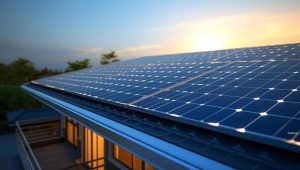
BWGED urged that advanced solar photovoltaic, wind, battery storage, and smart grid technologies be treated as global public goods, removing intellectual property barriers.
The group also stressed the need for international support to strengthen Bangladesh’s domestic renewable energy manufacturing, grid modernization, and regulatory institutions.



Justice and loss & damage
The organisation demanded that developed countries and multilateral banks halt all financing, subsidies, and insurance for fossil fuels—particularly LNG—and establish a Just Transition Fund to support workers, create green jobs, and provide social safety nets.
It also emphasized that the Loss and Damage Fund must be based on historical responsibility and reparations, not voluntary aid.
According to BWGED, Bangladesh has vast renewable energy potential—50,000 to 140,000 MW of solar power and up to 50,000 MW of wind power, including offshore capacity.
The group noted that rooftop and floating solar installations alone could surpass the country’s projected 2041 peak electricity demand of 60 GW, with solar power generation already three times cheaper than imported fossil fuels.
Achieving a 30% renewable electricity share by 2040 would require an estimated $35–43 billion, a modest figure compared to the country’s annual fossil fuel import costs, BWGED said.
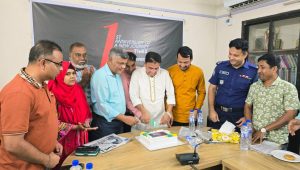
“At COP30, we stand for a truly just and fully financed transition—one that ends the age of fossil dependence and exposes the illusion of false solutions and dirty debt-games,” said BWGED member secretary Hasan Mehedi.
“The global community must replace empty promises with concrete action and ensure a livable future for those on the climate frontline.”
Dr Khondaker Golam Moazzem, Research Director at the Centre for Policy Dialogue (CPD), echoed the sentiment, saying, “The avoidance and apathy of major carbon-emitting countries, private investors, and financial institutions have raised the economic, social, and environmental costs for climate-vulnerable nations like Bangladesh to an unbearable level. COP30 must bring a clear commitment to end this indifference.”
BWGED also highlighted the need for regional and global solidarity, underscoring its coordination with the LDC Group, G77+China, and South Asian peers including Nepal, Pakistan, Sri Lanka, and the Maldives.
The coalition seeks to secure stronger climate finance commitments, accelerate the fossil fuel phase-out, and advance an equitable global energy transition.