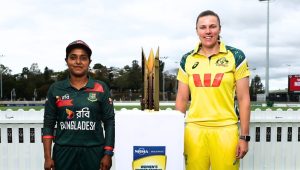
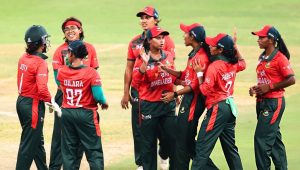
Bangladesh women’s coach Peter Butler says the most important thing right now is getting the job done, even if his team are not playing at their best.
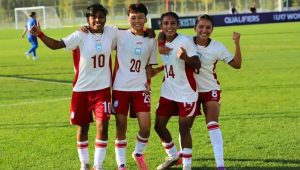
The Bangladesh women have reached a third straight SAFF Women’s Championship final in Goa. However, their performances have not matched the level they showed in recent years. Despite that, they are now just one win away from another regional crown.
The semifinal victory over Nepal helped ease some of the pressure that had built up around the team. The players looked more confident after securing a place in the final and keeping alive their hopes of a third consecutive SAFF title.
Expectations remain high because of what Bangladesh achieved in the past. They won the last two SAFF Women’s Championship titles and also impressed in the AFC Women’s Asian Cup qualifiers with strong performances against China, North Korea and Uzbekistan.
This campaign has been different.

Bangladesh have struggled in defence and midfield. Butler has had fewer options available than in previous tournaments. Injuries and form concerns have made it difficult for him to rotate players and maintain consistency.
The midfield has been affected the most. Bangladesh previously enjoyed strong balance when Maria Manda and Monika Chakma played alongside players like Umehela Marma, Sopna Rani and Munki Akter.
This time, Maria has often carried much of the responsibility herself. Monika has battled injury problems, while Sopna and Munki are not part of the squad. Ritu Porna Chakma has also found it difficult to hit her best form, although she scored a crucial goal that helped Bangladesh reach the semifinal.




Butler believes the current situation is part of a longer rebuilding process.
Several senior players were left out earlier this year following unrest within the squad. Promising youngsters Sopna Rani and Munki Akter also missed out because of poor form.
As a result, Butler has struggled to settle on his strongest starting eleven. Injuries to Monika Chakma, Sheuli Azim and Shamsunnahar Jr have further reduced his options.
Those problems were visible against Nepal. Butler made three changes to his starting side. Two of those players were substituted before halftime. Another adjustment became necessary when Monika picked up a fresh injury in the second half.
Bangladesh’s lack of depth has also been exposed in defence. The team do not have many direct replacements for experienced players such as Shamsunnahar Sr, Afeida Khandakar, Kohati Kisku and Suravi Akter Arfin.
Afeida’s replacement, Surma Jannat, conceded a penalty against India. The incident highlighted the difficulties Butler faces when making changes to his lineup.
Bangladesh now face a tough challenge against India in the final on June 6. India won 3-0 when the teams met in the group stage and will start as favourites.
Still, Butler remains optimistic. “We’ve got to the final. You never know what you’re gonna get. And sometimes the best final, you can have a lousy final. We will play a lot better than how we played today (Wednesday)and can still lose, believe me. Or, we’ll play a lot well, and I often say it to people. It’s not how you played, it’s how you did it.”
“We’ve got a few players who are coming to maybe their ends, and we’ve got a few players who are restarting. Bearing in mind they are a lot older team than us. We had a lot of 18 year olds in that group.”
“What I’m trying is to build for the future of Bangladesh. I’m not using old players. I’m using younger players to build for the future.”
“I’m not a monster. I don’t drop people or basically leave people out for the sake of it, I do it for a reason….sometimes the less you play, the more you prosper.”
For now, Bangladesh remain in the final. And for Butler, that is what matters most. The performance can wait. The result cannot.