With persistent bottlenecks and added political issues, the business climate in Bangladesh has remained in the challenging zone for the second consecutive year, according to the fourth annual Bangladesh Business Climate Index (BBX) report, published on Thursday.
The index, jointly provided by the Metropolitan Chamber of Commerce and Industry (MCCI) Dhaka and think tank Policy Exchange Bangladesh (PEB), slightly improved to 59.69 in FY25, from 58.75 in FY24.
However, it has yet to enter the “Improving Business Environment” zone, which requires a score above 60. In FY22 and FY23, Bangladesh reached the mark with scores of 61.01 and 61.95, respectively.
On a scale from 0 to 100, a score below 40 reflects an environment difficult for business, while the 40-60 zone indicates bottlenecks and challenges. A score within the 60-80 range suggests an improving business environment that demands more progress, while a score higher than 80 certifies a business-friendly environment.
The BBX 2025 report highlighted political unrest, geopolitical uncertainty, rising output costs, investment uncertainty, inflationary pressure, rising interest rates, and exchange rate volatility as key challenges cited by the surveyed businesses across the country. These businesses represent a wide range of sectors contributing 75% of the GDP.

This year, the survey reached 800 businesses, of which 650 responded, and 558 businesses qualified for data collection across 12 sectors. The respondents answered more than 110 questions.
Compared to the previous fiscal year, five of the 11 major survey pillars showed improvement.
The “Starting a Business” index rose from 62.74 to 64.72, “Access to Land” from 53.11 to 54.10, “Dispute Resolution” from 62.38 to 64.73, “Paying Taxes” from 54.74 to 55.38, and “Access to Finance” from 28.11 to 40.07.



The data also indicated that informal payments for land, utilities, and taxes still persist, raising costs and damaging investor confidence. Weak implementation, poor monitoring, and limited outreach in taxation, trade, labor, and environmental regulations further reduce business trust in the system.
In contrast, six pillars saw declines compared to the previous year.
“Availability of Regulatory Information” fell from 68.04 to 67.70, “Business Infrastructure” from 71.08 to 68.82, “Labour Regulation” from 70.04 to 68.92, “Trade Facilitation” from 60.87 to 59.56, “Technology Adoption” from 63.50 to 62.46, and “Environmental Regulation and Standards” from 51.59 to 50.18.
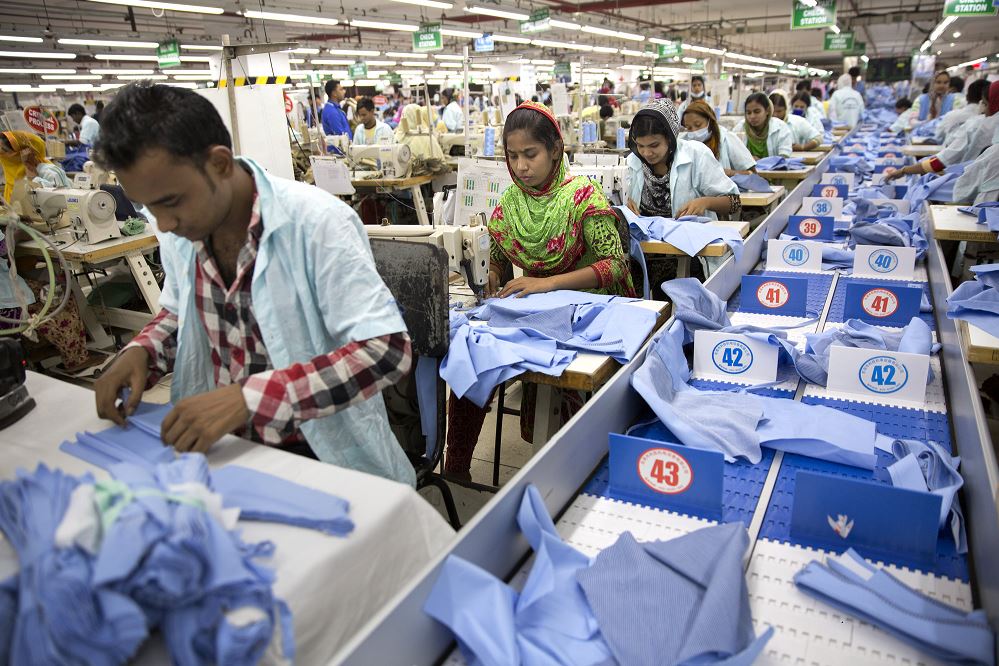
The data showed that the construction, textiles, and agriculture industries face higher operational challenges due to infrastructure, labor, and regulatory issues. However, technology-driven sectors like electronics, pharmaceuticals, and leather are adopting reforms faster, boosting their competitiveness.
Three western divisions—Khulna, Rajshahi, and Rangpur—along with Dhaka struggled to emerge from the challenging zone, as the BBX score was below 60 in these divisions.
In contrast, the eastern part of the country, including Chattogram, Sylhet, Mymensingh, and Barishal, showed improving business environments, with their scores remaining above 60.
According to the index, Dhaka and Chattogram are in the second-lowest tier for business. This highlights the need to develop secondary growth centers, as frequent protests and disruptions have hindered economic activity and supply chains.
Among all eight divisions, Barishal ranked highest with a score of 62.80, while Rangpur had the least business-friendly climate with a score of 56.90.
The BBX report mentioned that Bangladesh had strengthened its economy over the past year. Banking reforms boosted stability, while strong remittances and export growth eased external pressures. With easing inflation, 2026 is expected to be a better year for the economy.
However, it warned about slower investments, persistent structural and policy issues, and backwardness in global indices, calling for more efforts for faster improvement.
The report also cautioned that the upcoming LDC graduation would bring new challenges.