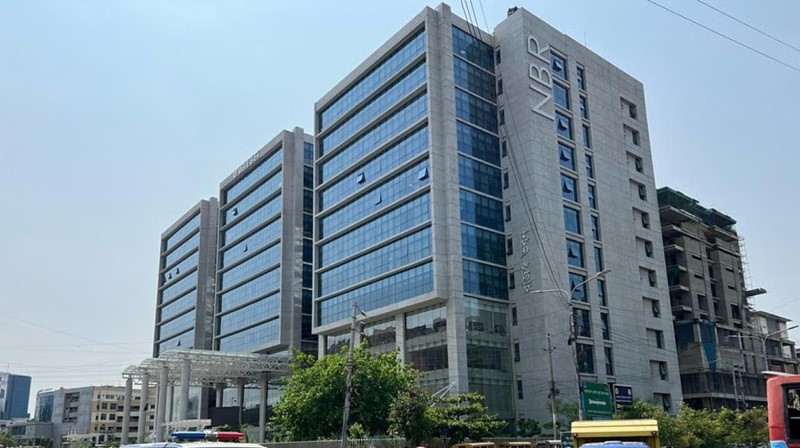



Revenue collection in Bangladesh witnessed growth of 20.21 percent year-on-year to reach Tk 90,825 crore in the first quarter of the current fiscal year (FY) riding on higher VAT collection.
In terms of monthly performance, the National Board of Revenue (NBR) registered Tk 36,402 crore in September, up 19.16 percent year-on-year.
The NBR has maintained robust revenue growth throughout the first three months of FY26, notching 24 percent in July and then 17.69 percent in August, as the country’s economic activities continue to show renewed momentum.
Officials of the revenue authority attributed the growth to strengthened monitoring in VAT and customs operations, wider use of online tax return systems, and gradual expansion of the tax net.
Farid Uddin, former NBR member (VAT policy), told TIMES of Bangladesh that revenue collection has been buoyed by the steady revival of domestic economic activities.
However, if the unrest among field-level officials regarding unwanted postings and sudden suspensions is resolved, then the overall revenue collection would improve further, he said.

In June, a number of NBR officials took to the streets to protest a move that aims to split the revenue authority into two halves – revenue policy and revenue management.
Following the protest, some of the officials were either suspended, sent into forced retirement or moved to less desirable postings.
But despite the strong showing in revenue collection in recent months, the NBR has missed its target for the July-September period by Tk 9,083 crore.




VAT remained the dominant source, with Tk 34,819 crore collected in the first quarter, indicating growth of 29.74 percent year-on-year.
Officials noted that the tobacco sector alone contributed an average of Tk 2,500 crore over the three-month period, significantly boosting VAT receipts.
Additionally, stronger monitoring reduced VAT evasion, further supporting revenue growth.
Revenue from import-export activities rose 18.26 percent year-on-year to Tk 27,528 crore.
Customs officials said that the easing of the US dollar crisis and a gradual lifting of import restrictions led to increased imports of high-duty items, directly contributing to higher revenue.
The tight forex situation has eased thanks to policy measures by the interim government, allowing the relaxation of restrictions on opening letters of credit (LCs).
As a result, imports of essential consumer goods, capital machinery and industrial raw materials increased.
Bangladesh Bank data shows that LC openings in July-August amounted to $11.47 billion compared to $10.60 billion in the same months of the previous year.
Furthermore, LC settlements reached $11.13 billion from $10.67 billion previously.
The income tax and travel tax segment contributed Tk 28,478 crore in the July-September period, reflecting an increase of 11.78 percent from the year prior.
While economists welcomed the strong performance, they stressed the need for structural reforms to maintain the momentum in revenue growth.
Dr M Masrur Reaz, chairman of the Policy Exchange Bangladesh, a private think-tank, said that economic activities must be accelerated to sustain the current pace.
Besides, curbing tax evasion and strengthening efforts to widen the tax net are also needed.
Reaz also emphasized the need for a simplified tax regime and greater trust-building measures between the tax authorities and taxpayers.