The Bangladesh Knitwear Manufacturers and Exporters Association (BKMEA) has urged the National Board of Revenue (NBR) to allow exports under the cut, make and trim (CMT) model using raw materials sourced free of cost from local suppliers, alongside the existing facility for inputs supplied from abroad.
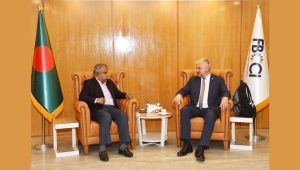
In a recent letter to the NBR, BKMEA President Mohammad Hatem sought extension of the current provision to include locally sourced inputs provided free of cost by buyers.
Under existing rules, manufacturers can export finished goods on a CMT basis using materials imported free of cost by foreign buyers, allowing factories to produce and ship goods using inputs supplied directly by international clients.
CMT is a basic apparel manufacturing process involving cutting fabric to design specifications, stitching garments, and completing finishing tasks such as attaching buttons, trimming threads, and ironing.

However, there is no clear provision in the relevant statutory regulatory order (SRO) allowing CMT exports when inputs are sourced free of cost from local suppliers nominated by foreign buyers, leaving such cases outside explicit approval.
Industry insiders said the lack of policy clarity is creating uncertainty for businesses, prompting BKMEA to seek clear guidelines and formal approval to facilitate exports.




Hatem said while the NBR allows exports using inputs supplied free of cost from abroad, the same benefit is not explicitly permitted for locally sourced materials.
“If a buyer supplies raw materials from overseas free of cost, it is permitted. But if the same buyer wants to source those materials from a local supplier and provide them free of cost, there is no clear approval. We want this to be allowed,” he said.
Sector insiders said approval could reduce risks such as order cancellations, price discounts, or urgent air shipments, as buyers remain directly involved in supplying inputs.
They added that it would ease financing pressures on manufacturers, as factories would not need to open letters of credit or rely on bank credit limits backed by cash or collateral, reducing interest costs.
“With free-of-cost inputs, factories do not need to rely on bank limits, interest payments, or collateral. This makes production easier and creates opportunities for smaller entrepreneurs,” Hatem said.
He said the move would shorten lead times, reduce production costs, and strengthen backward linkage industries, while improving flexibility in export operations and competitiveness in global markets.
Exporters said allowing the model for locally sourced inputs would reduce import dependence, cut production time, and support domestic supply chains.
Industry stakeholders said extending the existing facility for imported free-of-cost inputs to locally sourced materials would make export processes more flexible and support export growth.