

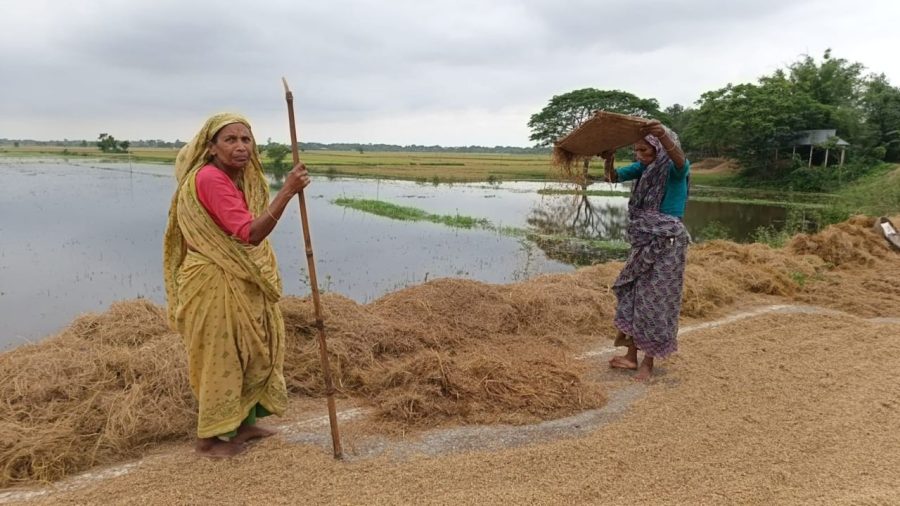



Bangladesh Bank (BB) has introduced a Tk 1,500 crore revolving refinance scheme to expand access to finance for marginalised communities, landless farmers, low-income professionals, small entrepreneurs, students and families benefiting from remittance inflows.
The central bank on Thursday issued a new policy under Financial Inclusion Department consolidating and revising earlier instructions to widen the scheme’s coverage and extend its duration in response to growing demand at the grassroots level.
The fund will come from BB’s own resources and remain available for five years from the date of issuance of the circular. Scheduled banks will provide loans to eligible borrowers and receive refinancing from the central bank at an annual rate of 1 per cent.
The initiative is designed to bring underserved groups into income-generating activities, improve their livelihoods and strengthen financial inclusion beyond conventional banking customers.
Under the policy, eligible borrowers include holders of Tk10, Tk50 and Tk100 bank accounts. New applicants seeking loans under the scheme will have to open an eligible account by depositing the applicable initial amount.
The scheme covers a wide range of micro and small entrepreneurs and low-income professionals, including fishermen, carpenters, goldsmiths, blacksmiths, tailors, hawkers, street vendors, rickshaw and van drivers, mechanics, plumbers, tea workers, food sellers, vegetable traders, livestock and poultry farmers, fish and shrimp cultivators, nursery operators, artisans, cottage-industry workers and freelancers.

People involved in other legitimate income-generating activities will also be eligible. Trained members of the Village Defence Party (VDP) engaged in income-generating work have been included as potential borrowers.
A major feature of the revised policy is its emphasis on women’s financial inclusion. Marginalised women and micro and small women entrepreneurs will receive priority, and at least 25 per cent of the total loans disbursed under the scheme must go to women borrowers or entrepreneurs.
Landless and marginal farmers holding the Farmer Smart Card introduced under the Agriculture Ministry’s Farmer Smart Card Policy 2025 will receive priority. However, the central bank has instructed banks to ensure that farmers without such cards are not excluded from the facility.



Small businesses and low-income professionals affected by natural or man-made disasters—including river erosion, cyclones, floods, droughts, fires, earthquakes and building collapses—will also receive priority. Residents of coastal, char, haor and other disadvantaged areas, as well as members of ethnic minority communities, are among the targeted groups.
Remittance senders and beneficiaries, along with workers who have returned from abroad and their family members, will also be prioritised.
The policy extends support to disadvantaged and underprivileged student account holders up to the age of 25. Banks can provide loans for vocational, technical and information technology training against repayment guarantees from guardians. Students aged over 18 may receive financing to start income-generating activities or businesses using skills acquired through training.
The scheme also allows priority financing for higher education, including MBA, BDS and engineering studies, as well as the purchase of necessary educational materials, subject to a guardian’s repayment guarantee.
At the individual level, a borrower or micro and small entrepreneur can receive a maximum loan of Tk10 lakh, depending on assessed requirements. For group lending, banks may provide up to Tk8 lakh per member to groups comprising two to five people, with the overall ceiling set at Tk40 lakh. All members will remain jointly and individually liable for repayment.
The customer-level interest or profit rate will be a maximum of 7 per cent annually, calculated on the declining balance of the loan. The refinancing rate charged by Bangladesh Bank to participating banks will be 1 per cent annually.
Borrowers can receive loans of up to Tk5 lakh without providing collateral. Banks may, however, take personal guarantees from the borrower and up to two other individuals. For loans exceeding Tk5 lakh, reasonable supporting collateral may be considered based on the relationship between the bank and the customer.
Banks may also use the credit guarantee scheme for loans of Tk25,000 or more, at their discretion, and will bear the guarantee fee from their own resources. For loans or investments of up to Tk3 lakh, banks cannot charge customers any fee for obtaining Credit Information Bureau reports.
The loan tenure can extend up to five years, including a maximum grace period of six months. After the grace period, banks will recover principal, interest, profit and service charges in quarterly instalments from borrowers. The refinancing rate and repayment arrangements will apply to participating banks under the policy.
To improve access, banks can distribute loans through their own branches and sub-branches, agent banking outlets, mobile financial services and online banking platforms. Agent banking and MFS agents may receive service charges approved by the respective banks’ boards, but no additional processing fees beyond BB’s prescribed schedule can be imposed on customers.
Banks must monitor loan disbursement, recovery and proper utilisation regularly and submit quarterly progress reports to BB by the 15th of the following month. The central bank may also conduct inspections when necessary.
Defaulters will not qualify for the scheme. Borrowers with outstanding loans under other government or Bangladesh Bank refinance or interest-subsidy schemes will also remain ineligible until those loans are fully adjusted.
The success of the Tk1,500 crore initiative will depend on how effectively banks reach the intended beneficiaries, particularly people in rural and underserved communities who often face difficulties accessing formal credit.