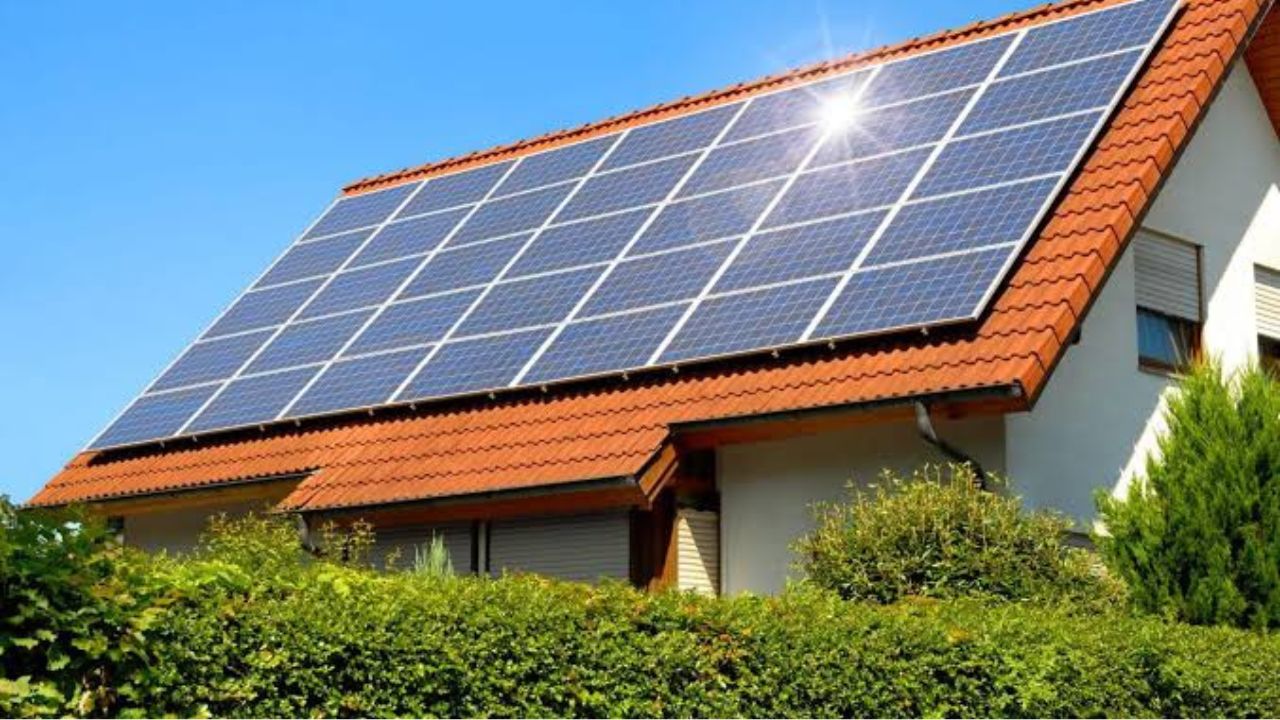

Bangladesh’s rooftop solar industry is expanding much faster than official data indicate, with private investment gathering pace as factories turn to self-generation to curb rising electricity costs and improve energy security.
Installed rooftop solar capacity has reached an estimated 667 megawatts (MW) across 239 industrial establishments and business groups, compared with the government’s reported 418.1MW as of June 2026, according to a briefing by the Institute for Energy Economics and Financial Analysis (IEEFA). Including smaller systems below 0.15MW, total capacity could already be approaching 1,000MW, it said.
The findings suggest rooftop solar is emerging as one of Bangladesh’s fastest-growing renewable energy segments, driven largely by industrial demand rather than public investment.
That momentum is expected to continue. Engineering, procurement and construction (EPC) companies have built a pipeline of more than 500MW in rooftop solar projects, providing early support for the government’s strategy to install 5,500MW of rooftop solar by 2030 within a broader target of 10,450MW of renewable energy capacity.

The growing adoption is beginning to reshape electricity consumption patterns. Comparing the period from 16 April to 11 June in 2024 with the same period in 2026, the study found rooftop solar had contributed to a modest reduction in daytime grid demand.
The report also places Bangladesh alongside Australia and India, arguing that distributed energy resources—including rooftop solar, solar irrigation, battery storage and vehicle-to-grid technologies—are becoming increasingly important in the transition away from fossil fuel-based electricity. Across all three countries, rooftop solar has emerged as the dominant driver of distributed energy growth.
“Compared to the grid-scale variable renewable energy capacity of 859MW as of June 2026, the country’s growing rooftop solar capacity provides an encouraging signal for Bangladesh’s power sector,” said Shafiqul Alam, Lead Analyst for Bangladesh Energy at IEEFA South Asia and co-author of the briefing.




He said Bangladesh still needs to unlock the several-thousand-megawatt rooftop solar potential available across its industrial sector.
The study identifies another significant opportunity in agriculture, where irrigation remains heavily dependent on diesel. Converting one-third of diesel-powered irrigation pumps to solar could reduce Bangladesh’s annual diesel import bill by about $244 million, equivalent to roughly Tk3,000 crore.
The economics of distributed solar are becoming increasingly compelling. Rising electricity tariffs have encouraged industries to invest in rooftop systems, while higher diesel prices are pushing farmers towards solar irrigation.
Policy, however, has not kept pace with market demand.
Although the government recently revised import duties on rooftop solar equipment, IEEFA says the changes do not fully remove cost barriers. Small rural projects are unlikely to benefit because of restrictive eligibility conditions, while industrial rooftop solar projects now face an effective 17 per cent import duty, compared with 1 per cent previously available under capital machinery provisions.
The report argues that broader duty exemptions, similar to incentives adopted in Australia and India, would accelerate deployment and improve the affordability of distributed energy technologies.
It also flags slow net metering approvals as a persistent obstacle. Despite regulations requiring applications to be processed within 10 to 15 days, rooftop solar and solar irrigation projects continue to face delays.
To support faster growth, the report recommends closer monitoring of net metering applications by the Sustainable and Renewable Energy Development Authority and the Ministry of Power, Energy and Mineral Resources. It also calls for greater deployment of battery storage and a gradual rollout of smart meters to help utilities integrate distributed energy resources more efficiently as rooftop solar capacity expands.