At a cricket academy in a small town in Bangladesh, a boy named Shumon once played. He was not the usual off-spinner or left-arm orthodox bowler so common in the country. Shumon was a left-arm leg-spinner who could bowl the googly and even the carrom ball. Batters often failed to pick him, and wickets came through deception.
But Shumon experimented too much at times. His floated deliveries and variations also leaked runs. Coaches admired his courage, but they had little experience working with such bowlers.
After one bad day with the ball, Shumon was dropped for Arif, a traditional off-break bowler who could bowl dot balls all day. Arif was steady, not spectacular, but safe. Shumon never returned. Without guidance or confidence, his career ended before it had even begun.
Shumon’s story represents the fate of many young cricketers in Bangladesh. Talented, different, and unorthodox, but lost in a system that does not know how to handle them.
Step outside the Sher-e-Bangla National Cricket Stadium in Mirpur, and you will see a statue of a leg-spinner. Step inside, and you will see a team that has spent decades without a regular leg-spinner in its setup.
Other countries nurture unorthodox talent
Afghanistan’s Asia Cup 2025 squad features Rashid Khan, Mujeeb Ur Rahman, Noor Ahmad, and teenager AM Ghazanfar. Four bowlers of the unorthodox kind in one squad.
Sri Lanka’s history tells a similar story. After Muttiah Muralitharan came Ajantha Mendis, who shone with his mystery factor. Today, they have Wanindu Hasaranga, Maheesh Theekshana, and even ambidextrous options such as Kamindu Mendis and Tharindu Rathnayake.
Bangladesh, meanwhile, continues to rely on Mehidy Hasan Miraz and Taijul Islam. Both are safe, reliable, orthodox spinners, although the arrival of leg-spinner Rishad Hossain has offered some hope. The question remains: where are Bangladesh’s Ajantha Mendises and AM Ghazanfars, who dare to do things differently?

The system discourages risk
Former Bangladesh international and current coach Rajin Saleh believes the system itself discourages unorthodox talent.
“It is not that Bangladesh does not have such bowlers. We do not give them value,” Rajin Saleh told the Times of Bangladesh.
He explained that at the grassroots, talent is spotted but rarely nurtured.
“This kind of bowler needs time. In the process, he might not bowl well in many games. Suppose he plays in the under-14 or under-16. If he gets hit once, he does not get another chance. With fewer matches, he lags behind. I saw it myself in my academy. A left-arm leg-spinner was doing well, but he was left out because of poor match opportunities. He lost motivation. That happens to many.”



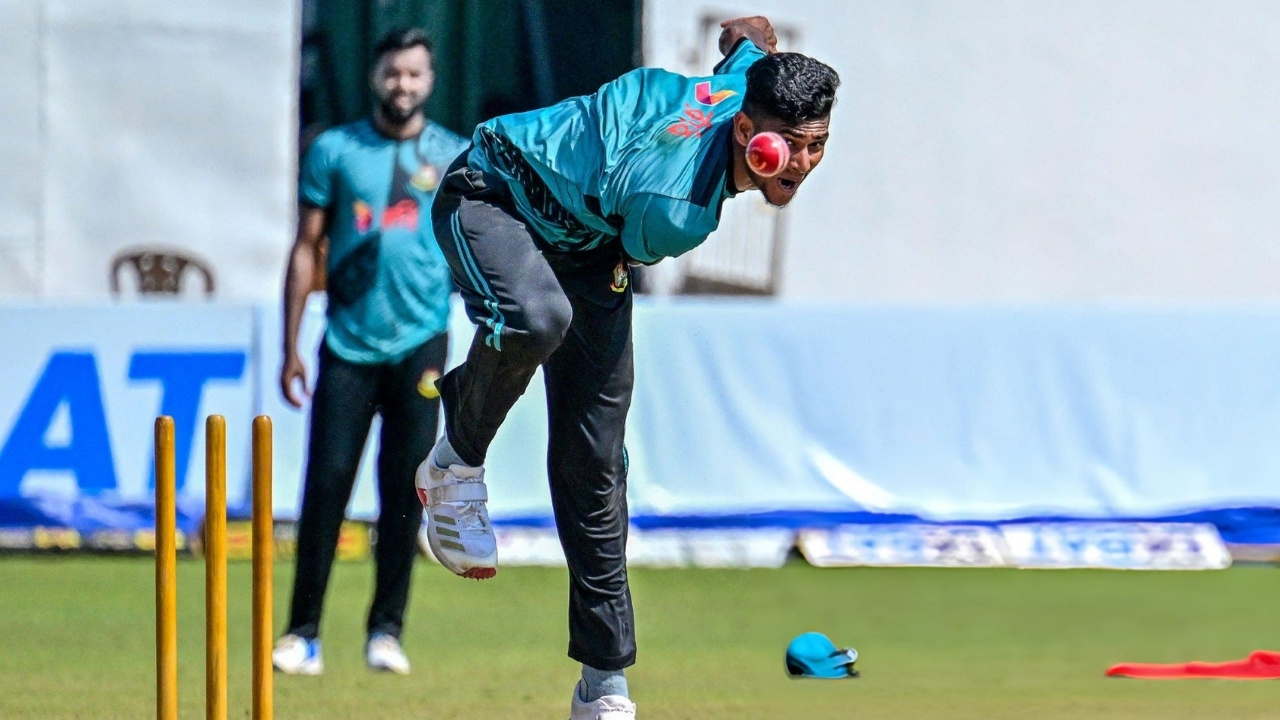
Rajin believes the lack of insistence from divisions and the board is the biggest roadblock.
“If proper attention is given, you can easily find ten unorthodox bowlers in Bangladesh. Put them in a camp for two months under a coach. At least one will reach the national team. But we do not do it. That is why we are behind. Look at Afghanistan. We are not even at their level yet.”
He also pointed out a cultural issue: “Bangladesh cricket looks for quick results. Unorthodox bowlers, by nature, are inconsistent. They need time to master their craft. One expensive spell should not end their careers, but in Bangladesh, it often does.”
Safety first culture
The system backs and encourages safety. Dot balls from an off-spinner are preferred over mystery deliveries from a leg-spinner. Bowlers like Arif thrive here, while bowlers like Shumon fade away.
Bangladesh fast-bowling coach Mahbub Ali Zaki identifies another problem: the lack of technical expertise among coaches.
“We definitely have unorthodox bowlers,” he said. “But when HP selectors look for players, they do not focus on them. And even when one is found, coaches try to change him. They bring him into a basic setup. They do not know how to work with him.”
“In the Under-17s, I picked a bowler named Habibur Rahman. His bowling action is like that of Sohail Tanvir. But in Bangladesh, coaches often want to fix such bowlers. They do not have the knowledge or experience to guide them,” Mahbub added.
Lack of technical guidance
For Zaki, the issue is not just mindset but also biomechanics.
“Unorthodox bowlers have different biomechanics: loading, unloading, balance, and foot-landing. A normal academy cannot handle them. They need a separate system where they are monitored for the whole year. Without that, they get lost.”
He drew an analogy: “If you find an alien, will you treat him like everyone else? No, you give him a different oxygen tank, a different lifestyle, and different food. Unorthodox bowlers are like that. They look normal, but their game is different. If you do not understand this, you cannot work with them.”
Fear of inconsistency
In Bangladesh, unorthodox bowlers are seen as risky. They might win a match by taking back-to-back wickets out of nowhere, but they might also leak runs. For domestic teams chasing results, reliability matters more than surprise. This preference for safety explains why orthodox bowlers flourish while mystery bowlers vanish.
Afghanistan kept playing Rashid Khan despite his early inconsistency. Today, he is one of the greatest T20 bowlers of all time. Noor Ahmad was given plenty of opportunities in T20 cricket in Afghanistan’s domestic structure from a very young age, and now he dominates world-class T20 franchise leagues.
In contrast, Jubair Hossain Likhon, who once bowled Virat Kohli with a googly, faded away due to a lack of opportunities in the domestic structure. Not good enough for internationals or top-level cricket? Then say goodbye to the BPL, the DPL, and the NCL. That is the harsh formula that bowlers such as Jubair Hossain Likhon and Aminul Islam Biplob have been subjected to.
A way forward
From the insights of Rajin Saleh and Mahbub Ali Zaki, some solutions stand out:
1. Unorthodox bowlers must be allowed to fail without being discarded.
2. Coaches must be trained in biomechanics and advanced techniques for unusual actions, both for spin and pace bowling.
3. A separate programme or camp for unorthodox bowlers can help nurture them outside the orthodox system.
Only then will the Shumons of Bangladesh stop being wasted talent, and instead turn into the Ajantha Mendises and Rashid Khans the nation longs for.
– By Shajedul Rahin