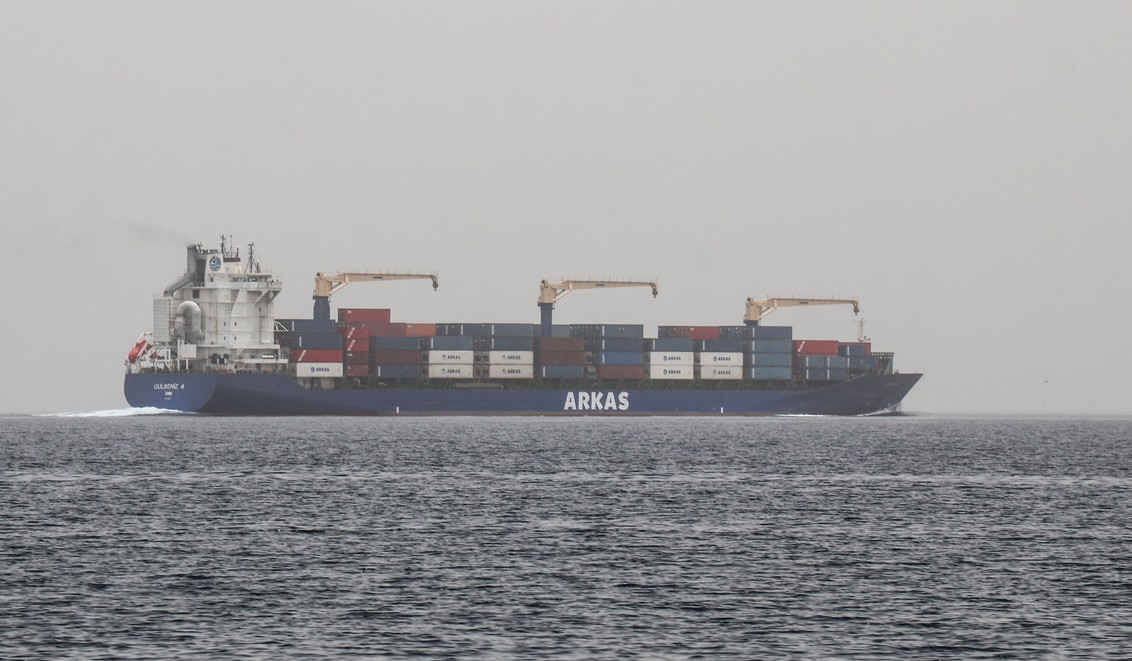



A new chapter has opened in Bangladesh’s diplomatic landscape with its decision to join the emerging Saudi-led multinational maritime coalition. According to available information, the initiative seeks to safeguard international commerce and freedom of navigation through the Red Sea, the Bab el-Mandeb Strait and the Gulf of Aden. Saudi Arabia has described it as a joint maritime protection arrangement with a defence dimension.
The announcement comes as the Middle East has become one of the world’s principal arenas of geopolitical and geo-economic competition. The recent US-Iran confrontation, repeated disruptions to maritime traffic in the Strait of Hormuz, and persistent attacks by Yemen’s Houthi movement on commercial shipping have exposed the vulnerability of global sea lanes. Against this backdrop, Bangladesh’s participation carries important implications for its foreign policy, maritime security, defence diplomacy and strategic positioning in the Indian Ocean Region.
Nearly all of Bangladesh’s crude oil and a substantial share of its liquefied natural gas imports originate in, or transit through, the Gulf region. Safer maritime routes would improve supply reliability, moderate transportation costs and contribute to greater price stability. Conversely, prolonged instability would increase shipping costs and place additional pressure on Bangladesh’s import-dependent economy. Participation could also strengthen Bangladesh’s maritime capabilities. Greater naval cooperation, multinational exercises, intelligence sharing and improved maritime domain awareness would enhance interoperability in humanitarian assistance, disaster relief, search and rescue, and anti-piracy operations. These would complement the ongoing modernisation of the Bangladesh Navy under Forces Goal 2030 and reinforce the country’s aspiration to become a responsible maritime stakeholder following the settlement of its maritime boundaries.
The broader strategic implications, however, extend well beyond maritime security. Bangladesh has carefully cultivated productive relations with Saudi Arabia and other Gulf states while maintaining close ties with China, India, the United States, Japan and Europe. If the coalition remains focused on protecting commercial shipping and ensuring freedom of navigation, Dhaka’s participation is unlikely to generate significant diplomatic concerns. The challenge will arise if it gradually evolves into a broader security architecture aligned with a particular geopolitical bloc.

Bangladesh has traditionally pursued strategic autonomy rather than alliance politics. For a middle power with expanding economic interests but limited strategic leverage, preserving balanced relations among competing powers has long served its national interest. Any perception that Dhaka is abandoning this approach could complicate its external relations.
China has a strong interest in safeguarding energy routes across the Indian Ocean. Beijing may regard a narrowly focused maritime security arrangement as compatible with these interests. However, should the coalition acquire an explicit strategic orientation alongside the United States or evolve into a mechanism perceived as containing China, Bangladesh would need to reassure Beijing that its participation remains defensive, limited and non-exclusive.




India will also watch developments closely. As the principal maritime power in the Bay of Bengal and a key stakeholder in Indian Ocean security, New Delhi shares an interest in secure sea lanes and regional stability. Bangladesh’s participation could create opportunities for greater bilateral and multilateral maritime cooperation, although India will assess whether the emerging framework complements existing regional maritime initiatives. Perhaps the most delicate diplomatic question concerns Iran. Bangladesh and Iran have maintained cordial relations for decades, encompassing trade, energy cooperation, education and cultural exchanges. While economic ties remain modest compared with those with the Gulf monarchies, Tehran has generally viewed Dhaka as a friendly, non-aligned partner.
If the Saudi-led coalition is perceived as part of a broader effort to counter Iranian influence, Bangladesh’s participation could generate diplomatic unease and affect future cooperation in energy, trade and regional diplomacy. Dhaka will therefore need to communicate consistently that its involvement is directed solely towards protecting international navigation and commercial shipping rather than participating in any military posture against Iran.
Another important consideration is the welfare of Bangladeshi workers in the Middle East. Nearly four million Bangladeshis are employed across Saudi Arabia and the Gulf states, and their remittances remain a vital source of foreign exchange. Improved maritime security and regional stability would support continued economic growth in the Gulf, sustaining labour demand. However, if the coalition becomes entangled in a wider regional confrontation involving Iran, the security environment and economic outlook could deteriorate, affecting infrastructure projects, investment and employment opportunities. Any prolonged instability could also disrupt remittance flows and labour migration, underscoring the importance of Bangladesh maintaining balanced relations with all major regional actors.
The principal strategic risk is therefore political rather than military. If the coalition becomes directly involved in conflicts involving Iran, Yemen, Israel or broader Middle Eastern rivalries, Bangladesh could face diplomatic pressure to support positions inconsistent with its long-standing foreign policy. Dhaka’s participation should remain confined to maritime safety, anti-piracy operations, humanitarian assistance, disaster response and the protection of freedom of navigation, while avoiding commitments to offensive military operations. Such an approach would also strengthen the Bangladesh Navy’s contribution to protecting the country’s growing blue economy.
Participation in the new maritime initiative should be viewed not as a departure from that philosophy but as an evolution in safeguarding national interests in an increasingly interconnected maritime environment. The country’s involvement will remain consistent with its foreign policy only if the coalition stays defensive rather than offensive, inclusive rather than exclusive, and rules-based rather than bloc-oriented. The potential gains are considerable: safer sea lanes, stronger naval diplomacy, enhanced maritime capabilities and greater strategic relevance in the Indian Ocean. Yet these advantages will endure only if Bangladesh preserves the strategic autonomy that has long been the hallmark of its diplomacy.
If the Saudi-led initiative remains a cooperative mechanism for protecting international commerce, Bangladesh can strengthen both its security and economic interests without compromising its balanced foreign policy. Should it instead evolve into an overt geopolitical or military alignment against particular states, Dhaka will need to calibrate its participation carefully to preserve its relations with Saudi Arabia, Iran, China, India, the United States and other key partners while remaining faithful to its enduring commitment to regional peace, stability and an independent foreign policy.
The views expressed in this article are solely those of the author
The writer is a Research Director in Osmani Centre for Peace and Security Studies