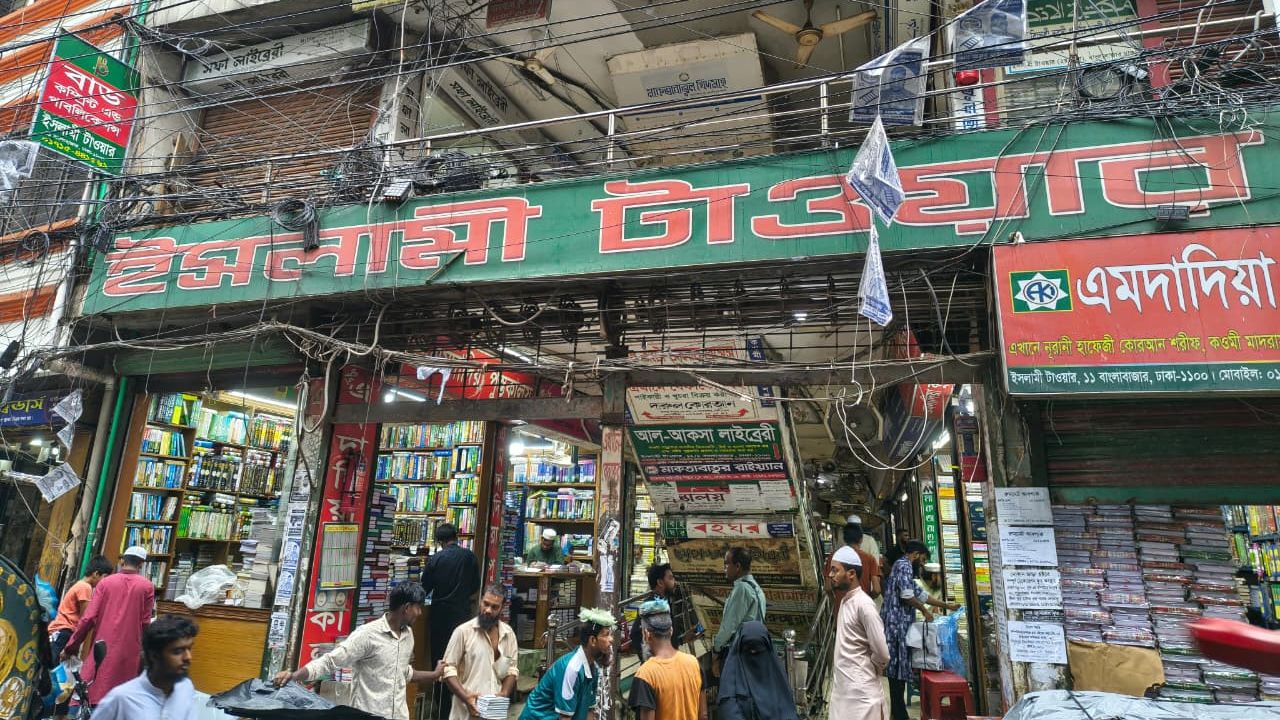

For generations, Banglabazar was synonymous with Bangladesh’s book trade. From publishing and printing to binding, distribution and wholesale sales, almost every stage of the industry once revolved around the crowded lanes of this Old Dhaka neighbourhood.
Until about 15 years ago, publishers, authors, distributors and booksellers from across the country regularly converged on Banglabazar. The smell of newly printed books, the constant clatter of printing presses and animated gatherings in publishers’ offices gave the area its distinctive identity as the country’s undisputed book capital.
That dominance has since weakened.
Dhaka’s rapid expansion, advances in technology, the rise of online shopping and the spread of publishing businesses to other parts of the capital have transformed the industry. Banglabazar remains a major centre, traders say, but it no longer commands the market alone.
An once unrivalled publishing empire
Banglabazar’s emergence as a publishing hub began before independence and accelerated after 1971. Over the years, it developed into the country’s largest centre for publishing and wholesale book trading.
The entire production chain was concentrated there. Authors brought manuscripts to publishers, editors prepared them for publication, and printers and binders turned them into finished books before distributors transported them across the country.
At the beginning of every academic year and ahead of the Amar Ekushey Book Fair, booksellers from district towns travelled to Banglabazar to stock up on textbooks, religious books, fiction and other publications.
“Until 2010, booksellers from almost every district came to Banglabazar,” wholesale trader Md Saiful Islam told TIMES of Bangladesh.

“It was the main source of textbooks, religious books and nearly every other category of publication. The market was busy throughout the year.”
Why the market changed
Publishers and traders say Banglabazar’s transformation cannot be attributed to a single factor. Urban growth, shifting commercial centres, technological development and changing consumer behaviour have all played a part.
Over the past two decades, Dhaka’s commercial activity has gradually shifted away from Old Dhaka towards the northern and western parts of the city.
The publishing industry has followed that movement.
Many leading publishing houses now operate from Shahbagh, Aziz Super Market, Banglamotor, Dhanmondi, Katabon, Green Road, Mirpur and Uttara.
Publishers say these areas offer better transport connections, easier access for employees and a more suitable environment for modern corporate operations.



Online trade reshapes the industry
The rapid growth of digital commerce has brought the most dramatic change.
Readers no longer need to visit a physical bookshop to buy a title. Social media pages, online bookstores and e-commerce platforms now allow publishers to reach customers across the country directly.
Bookseller Md Jahangir Alam said traders in Banglabazar had also adjusted to the shift.
“The way books are sold has changed,” he said. “We now sell books online as well.”
The market for digital books is also expanding, particularly among younger readers who increasingly use mobile phones, tablets and e-readers.
Industry insiders say this shift has reduced footfall in Banglabazar, even though the overall book market has expanded.
Congestion drives businesses away
Severe traffic congestion in Old Dhaka has also weakened Banglabazar’s appeal.
The area remains gridlocked for much of the day, while parking and goods-handling facilities are severely limited.
“Lorries cannot enter the area easily, and loading and unloading goods takes far too long,” businessman Md Shahidul Islam said.
To avoid these difficulties, many wholesale buyers and distributors now collect books directly from publishing houses elsewhere in the capital.
The growing commercial importance of the Amar Ekushey Book Fair has also altered the industry’s sales cycle.
“There was a time when anyone looking for a newly published book had to come to Banglabazar,” wholesale bookseller Md Abdur Rahim said.
“Now publishers consider the book fair their biggest sales platform, and business shifts there for a significant part of the year.”
Still at the heart of wholesale trade
Despite losing its monopoly, Banglabazar remains deeply embedded in the country’s publishing industry.
Many established publishing houses, printing presses, binding businesses and distribution companies continue to operate from the area. Large volumes of textbooks, guidebooks, religious titles and other publications are still dispatched from Banglabazar to districts across Bangladesh every day.
“Banglabazar remains the country’s largest wholesale market for textbooks, guidebooks and religious books,” bookseller Md Farid Uddin said.
Ahmed Mahmudul Haque, proprietor of Mawla Prokashani, said the emergence of publishing houses elsewhere should not necessarily be viewed as Banglabazar’s decline.
Rather, he said, the expansion of the industry had created greater competition and opened opportunities for new entrepreneurs.
Osman Gani, proprietor of Agami Prokashani, said Banglabazar’s historic foundations remained strong and that publishers had successfully adapted to online sales.
Businessman Md Rafiqul Islam said the market needs digital order-management systems, modern warehouses, improved transport access and adequate parking facilities to remain competitive.
Banglabazar may no longer be the publishing industry’s only centre, but its legacy, infrastructure and nationwide distribution network ensure that it remains one of its most important pillars.