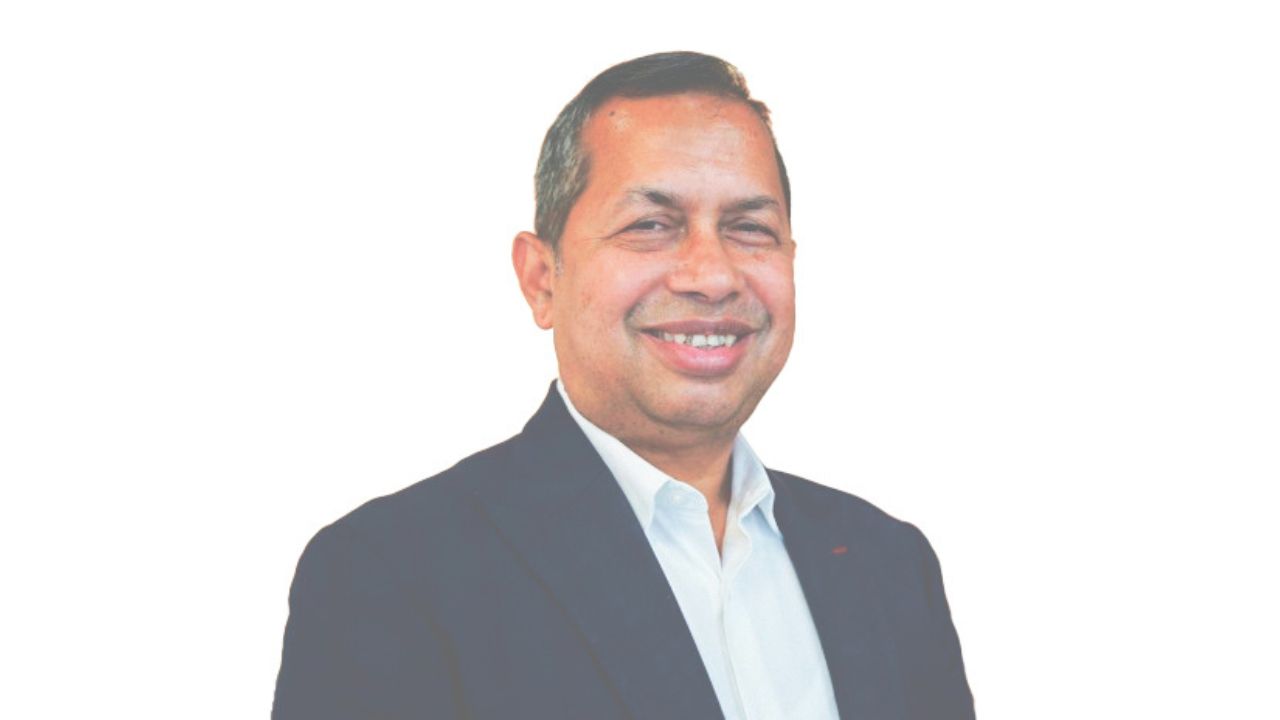

Bangla QR has the potential to transform Bangladesh’s entire economy if rolled out successfully nationwide, said Md Motasem Billah, the Bangladesh Bank-appointed administrator of Nagad, arguing that the unified payment standard can remove long-standing barriers to digital transactions while creating a more inclusive and competitive payments ecosystem.
In an interview with TIMES of Bangladesh, Motasem Billah discussed Nagad’s commercial rollout of Bangla QR, the policy choices behind merchant pricing, why interoperability matters for merchants and consumers, the government’s role in accelerating digital payments, how customer verification can be strengthened and the economics shaping MFS pricing.
Motasem Billah said some friction was inevitable when introducing major public digital infrastructure. However, the transition serves a greater national economic interest and its long-term benefits will outweigh the initial adjustments.
“If successfully spread across Bangladesh, Bangla QR has the potential to truly transform our entire economy,” he said.
Nagad commercially launched Bangla QR on 25 June and immediately began replacing company-specific QR codes. “The ground-level response was remarkably encouraging, with merchants embracing the transition without hesitation,” he said, allowing Nagad to phase out proprietary QR codes across urban and rural Bangladesh and establish a unified digital payment presence.
From fragmented codes to one payment standard
Designing a Merchant Discount Rate (MDR) framework that balanced the different economics of banks and mobile financial service (MFS) providers was “one of the biggest policy challenges” before the commercial rollout, Motasem Billah said.

MDR is the transaction fee merchants pay banks or MFS providers to process digital payments.
The merchant footprint across Bangladesh is already substantial, with nearly 10 lakh merchants connected through Bangla QR, although many rural neighbourhood shops remain outside the network. Most onboarded micro-merchants entered the ecosystem through MFS providers.
MFS operators incur distinct backend costs because funds are routed, cashed in and cashed out through extensive agent and distribution networks, requiring MDR to remain commercially viable, Motasem Billah said.
Banks, by contrast, operate with lower MDRs because they do not incur direct costs for cash-in services, relying instead on brick-and-mortar branches. Reconciling these different operating models required years of policy planning before Bangladesh Bank finalised the framework.




The central bank capped the maximum MDR at 1.15 per cent, including VAT, and introduced a minimum floor of 1.0 per cent, including VAT.
According to Motasem Billah, the floor prevents banks from aggressively cutting MDRs to target only premium mega-chains, leaving low-volume retail merchants underserved. “The standardised framework removes that imbalance” and should remain until at least December to allow market economics to stabilise.
“Interoperability is Bangla QR’s biggest advantage,” he said.
Previously, merchants often displayed only one provider’s QR code, preventing customers using different banking or wallet apps from making digital payments. Bangla QR removes that barrier, allowing consumers to scan and make a payment using any digital wallet holding a balance, regardless of which entity issued the QR code, eliminating the need to carry cash or maintain multiple platform-specific wallets.
For merchants, one universal Bangla QR replaces multiple QR stands, reducing counter clutter while driving higher transaction volumes through what Motasem Billah described as “a structured, highly favourable fee design.”
Bangla QR transactions are free for consumers. Banks and MFS providers are expected to compete through promotional discounts and cashback offers.
Rather than introducing subsidies immediately, Motasem Billah suggested monitoring market data for at least three to six months to identify precisely which market segments genuinely require financial support, warning that premature subsidies could lead to inefficient allocation.
Instead, he said, the government could accelerate adoption by mandating digital payments for selected public utility services while maintaining a balanced approach for marginalised communities and feature-phone users with limited digital literacy.
Motasem Billah also urged merchant acquirers to expand beyond cities. Banks have largely focused on urban markets because onboarding rural merchants involves higher overheads. With MDR pricing now stabilised, he said, recovering those costs has become more feasible even in lower-volume rural markets.
The economics behind MFS pricing
Motasem Billah said data accessibility remains “the primary challenge” to ensuring data accuracy and minimising fraud.
Neither Nagad nor any other MFS provider charges customers to open an account. However, onboarding incurs backend costs, including verification fees for accessing the Election Commission database.
A bigger challenge is that MFS providers do not receive comprehensive National Identity (NID) profiles from the Election Commission and cannot efficiently verify whether a registered mobile SIM belongs to the same individual.
Motasem Billah proposed giving banks and MFS providers API access to the Bangladesh Telecommunication Regulatory Commission’s SIM registration database. “If Bangladesh Bank requires the registered NID and SIM to belong to the exact same individual and allows providers to cross-check them during onboarding, data accuracy would improve significantly while transactional fraud would be effectively mitigated,” he said.
Competition has begun reshaping MFS pricing as providers reduce cash-out charges. Against that backdrop, Motasem Billah said he has been reviewing Nagad’s operating costs to identify opportunities to lower customer-facing tariffs.
Although millions of users have migrated from legacy USSD codes to smartphone apps, MFS remains fundamentally dependent on human networks and grassroots employment. A substantial share of every Tk1,000 cash-in or cash-out fee is paid as commissions to agents and distributors who maintain liquidity across the country. Consequently, “the cost of sustaining that nationwide distribution network, rather than technology itself, remains the primary driver of cash-out pricing,” he said.
Nevertheless, Motasem Billah said Nagad continues to explore “innovative ways to optimise those costs and make digital financial services more affordable for the public.”