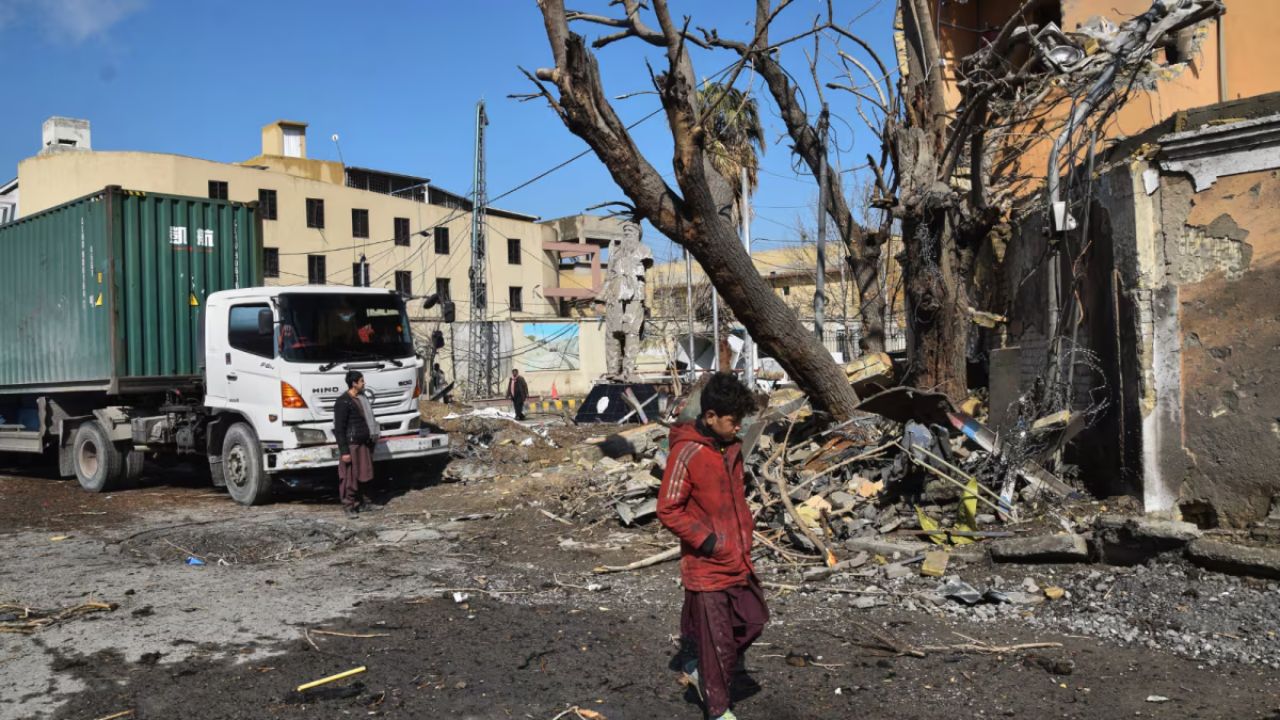



A viral document claiming that Baloch separatists have declared independence from Pakistan has renewed global attention on the country’s restive southwestern province, though the claim has not been independently verified.
The development has once again placed Balochistan at the centre of a geopolitical discussion involving Islamabad and Beijing, as China has major strategic and economic interests in the region, News 18.
The significance of Balochistan lies in its geography, resources and role in China’s ambitious connectivity plans. Any serious challenge to Pakistan’s control over the province could create uncertainty for Beijing’s long-term investments, particularly those linked to the China-Pakistan Economic Corridor (CPEC).
Balochistan is Pakistan’s largest province by area, accounting for nearly 44 per cent of the country’s territory. Despite its vast size, it remains one of the country’s least populated and least developed regions.

The province is rich in natural resources, including copper, gold, natural gas, coal and rare minerals. Its location along the Arabian Sea gives it strategic importance, connecting South Asia with the Middle East and Central Asia.
For decades, Baloch nationalist groups have accused Pakistan’s central government of exploiting the province’s resources while failing to provide adequate benefits to local communities. These grievances have fuelled a long-running separatist insurgency.
China’s interest in Balochistan is largely tied to CPEC, a flagship project of Beijing’s Belt and Road Initiative (BRI). The corridor, valued at more than $65 billion, aims to link western China with the Arabian Sea through highways, railways, energy projects and ports.




For Beijing, Balochistan provides a strategic route to international shipping lanes and could reduce China’s dependence on the Malacca Strait, one of the world’s busiest maritime chokepoints.
At the centre of China’s plans is Gwadar Port, a deep-sea facility on the Arabian Sea coast operated with Chinese involvement. Beijing views the port as the cornerstone of CPEC and has invested heavily to transform it into a major commercial and logistics hub.
Key infrastructure projects include the Eastbay Expressway, new road networks, energy facilities and the New Gwadar International Airport. China hopes Gwadar will eventually serve as a gateway for Chinese trade with markets in the Middle East, Africa and Europe.
China’s interests in Balochistan also extend to the mining sector. The province’s mineral wealth has attracted Chinese companies seeking access to resources needed for manufacturing and clean-energy technologies.
One major project is the Saindak Copper-Gold Project in Chagai district, which has been operated for years by the Metallurgical Corporation of China (MCC). Chinese firms have also explored opportunities in other mining ventures across the province.
However, security remains a major challenge for Chinese investments. Several separatist groups, including the Balochistan Liberation Army (BLA), oppose Chinese involvement, arguing that Beijing is supporting Islamabad’s control over local resources without ensuring sufficient benefits for residents.
Chinese nationals and CPEC-linked projects have repeatedly been targeted in attacks, including bombings, ambushes and assaults on infrastructure. Pakistan has deployed thousands of security personnel through specialised units to protect Chinese workers and strategic projects, but security risks remain a major concern.
While an independent Balochistan remains highly unlikely at present, any expansion of separatist activity could complicate China’s future plans.
A more autonomous administration could review existing agreements, renegotiate mining and infrastructure contracts, seek greater control over natural resources and pursue partnerships with other countries. Such changes could affect projects that Beijing considers important to its wider Belt and Road ambitions.