


The United States is discussing plans to arm Kurdish opposition groups as part of efforts to pressure Iran’s government, according to several people familiar with the discussions.
Officials and sources told CNN that the Central Intelligence Agency is involved in talks about providing military support to Iranian Kurdish forces, with the aim of triggering wider unrest inside Iran as the conflict intensifies.
The Trump administration has been holding discussions with Iranian opposition figures and Kurdish leaders in Iraq about possible cooperation, the sources said.
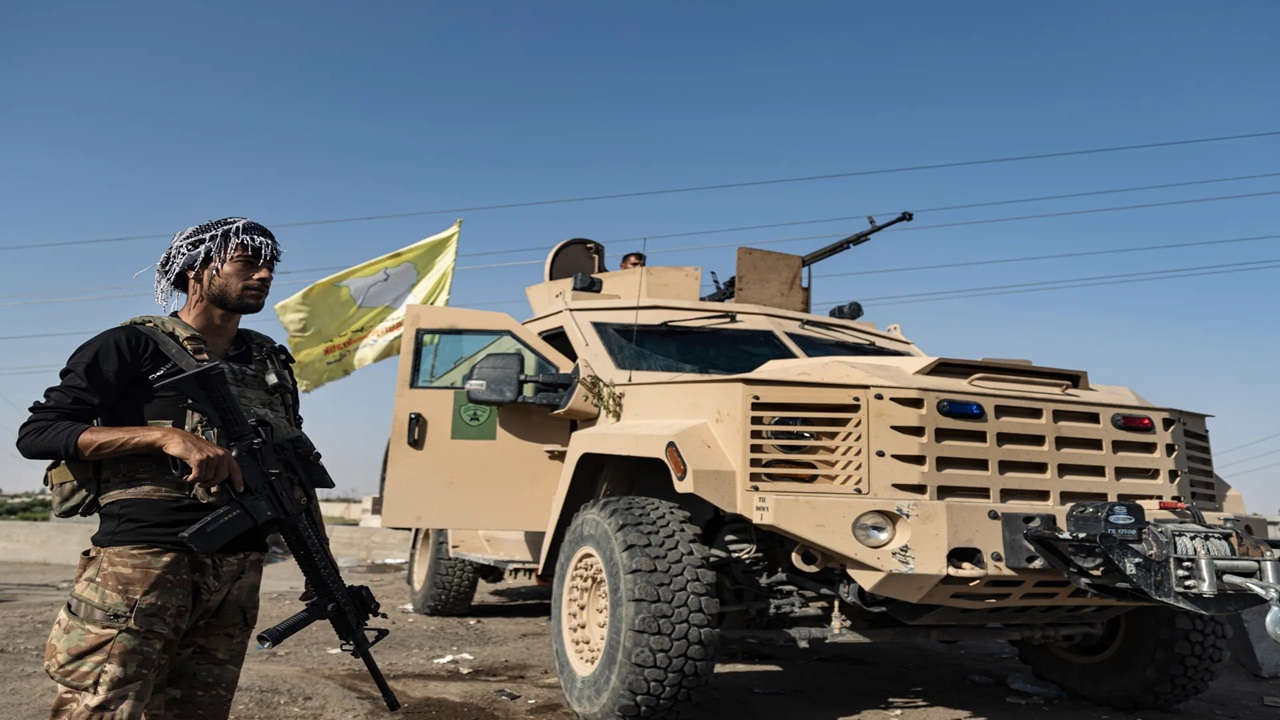
Iranian Kurdish armed groups maintain several thousand fighters along the Iraq-Iran border, mainly operating from Iraq’s Kurdistan region, reports CNN.
Since the outbreak of the war, some Kurdish organisations have issued public statements suggesting they may take action and calling on Iranian security forces to defect.
Iran’s Islamic Revolutionary Guard Corps (IRGC) has already targeted Kurdish groups with drone strikes, saying on Tuesday it had attacked their positions with dozens of drones.
A senior Kurdish official told CNN that Iranian Kurdish opposition forces could take part in a ground operation in western Iran in the coming days.
“We believe we have a big chance now,” the source said.
The official added that Kurdish militias expect support from the United States and Israel.
President Donald Trump also held a phone conversation with Mustafa Hijri, president of the Democratic Party of Iranian Kurdistan (KDPI), according to a senior Kurdish official.
The KDPI was among the groups targeted by recent IRGC strikes.

Trump also spoke on Sunday with Iraqi Kurdish leaders to discuss the ongoing US military operation in Iran and possible cooperation with Kurdish forces, two US officials and another person familiar with the discussions said.
Axios first reported the call.
Any plan to arm Iranian Kurdish groups would require cooperation from authorities in Iraqi Kurdistan to allow weapons shipments to pass through the region.
It would also require Kurdish-controlled areas in Iraq to serve as staging points for any cross-border operation.
One person familiar with the discussions said Kurdish fighters could be tasked with engaging Iranian security forces in border regions.
That could tie down government troops and potentially create space for civilian protests in major Iranian cities.
Another US official said Kurdish groups might help stretch the Iranian military by opening additional fronts and creating instability along the border.



Some proposals have also considered whether Kurdish forces could seize and hold territory in northern Iran, creating a buffer zone that might benefit Israel.
The CIA declined to comment on the reports.
Alex Plitsas, a national security analyst for CNN and a former senior Pentagon official during the administration of President Barack Obama, said the United States appears to be seeking ways to accelerate unrest against Iran’s leadership.
“The Iranian people are generally unarmed as a whole and unless the security services collapse, it will be difficult for them to take over unless someone arms them,” he said.
“I believe the US is hopeful that this will inspire others on the ground in Iran to do the same.”
Other analysts have raised concerns about the risks of expanding the conflict.
Jen Gavito, a former senior State Department official who specialised in Middle East policy during the administration of President Joe Biden, warned that the consequences of arming Kurdish forces had not been fully considered.
“We are already facing a volatile security situation, on both sides of the border,” she said.
“This has the potential to undermine Iraqi sovereignty and essentially empower armed militias with no accountability and with little understanding of what it may set in motion.”
Israeli forces have recently carried out strikes on Iranian military and police positions near the Iraq border.
One source said those attacks may be intended partly to weaken defences and prepare for potential Kurdish operations moving into northwestern Iran.
An Israeli source said the strikes could intensify in the coming days.
Despite the discussions, US intelligence assessments suggest Iranian Kurdish groups currently lack the political influence and resources required to launch a successful uprising against the government.
Iranian Kurdish political parties have also sought political assurances from Washington before committing to any coordinated effort.
Kurdish opposition movements are fragmented and often divided by ideology and competing political agendas.
Some officials involved in the discussions have raised concerns about whether those divisions could complicate cooperation with the United States.
“It may not be as simple as Americans convincing a proxy force to fight on its behalf,” one Trump administration official said.
“You have a group of people who are thinking about their own interests, and the question is whether getting them involved aligns with their interests.”
The United States has maintained ties with Kurdish forces for decades, particularly in Iraq.
The CIA has worked with Iraqi Kurdish factions at various points during the conflict in Iraq.
The agency currently operates an outpost in Iraqi Kurdistan near the Iranian border, according to two people familiar with the matter.
The United States also maintains a consulate in Erbil and deploys American and coalition troops there as part of operations against Islamic State.
Kurdish groups have often viewed cooperation with Washington as a path toward greater autonomy or independence.
However, those expectations have frequently gone unmet.
The United States relied heavily on Kurdish fighters during campaigns against Islamic State in Iraq and Syria.
Those forces also guarded thousands of Islamic State detainees in makeshift prison camps in northern Syria.
Earlier this year, however, Kurdish groups withdrew from those responsibilities when US troops left the area during a military offensive by Syria’s new US-backed government.
The shift deepened concerns among Kurdish leaders about the reliability of US support in the region.
Some analysts warn that if Kurdish forces again align with Washington but fail to achieve their objectives, it could reinforce perceptions that the United States abandons its Kurdish allies once its strategic goals change.