
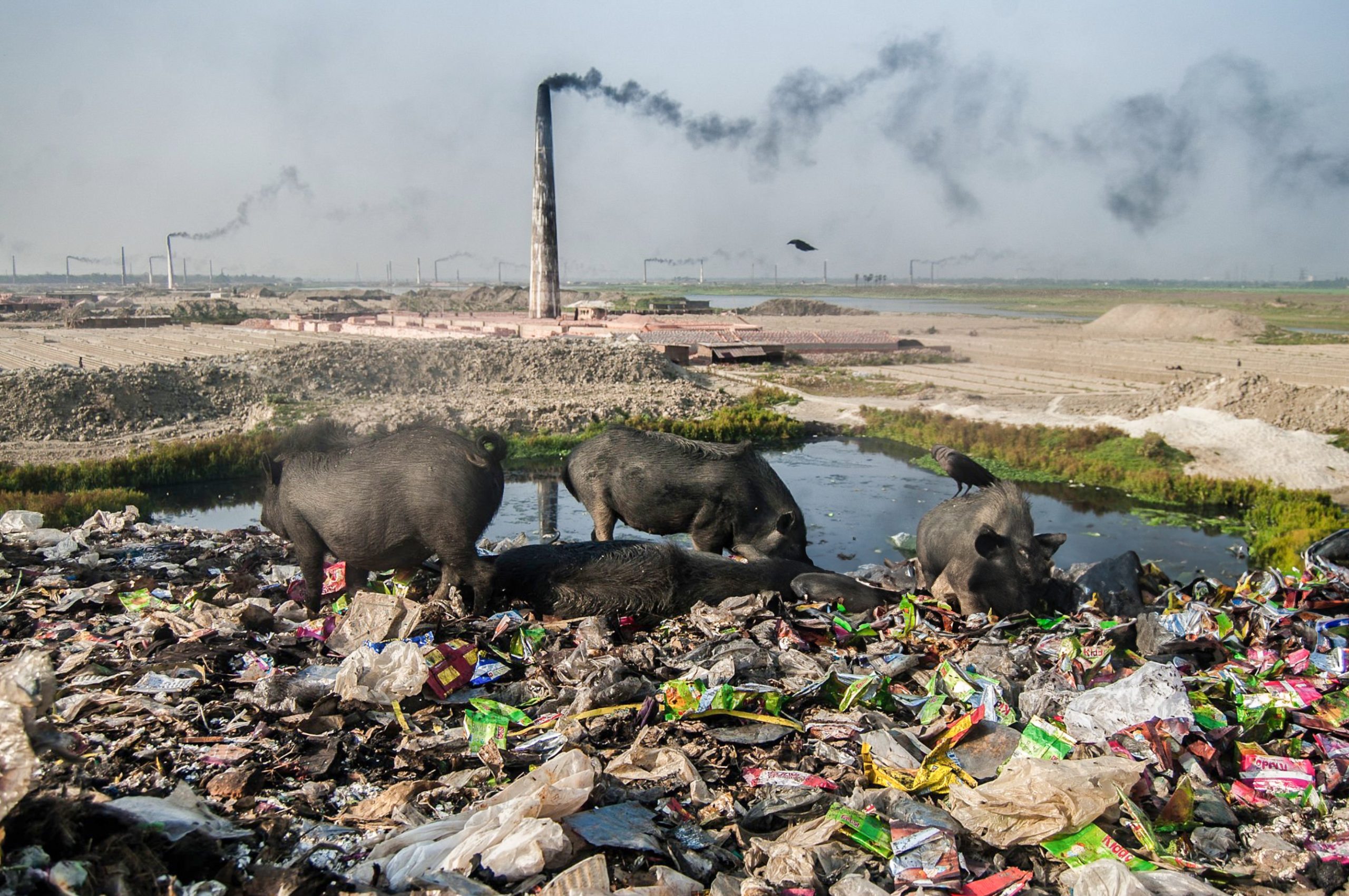



Air pollution is costing Bangladesh an estimated 5 per cent of its gross domestic product (GDP) each year by cutting lives short, shrinking the workforce and eroding productivity, according to a new study that underscores the growing economic toll of deteriorating urban air quality.
Researchers at Jahangirnagar University estimate that exposure to fine particulate matter, or PM2.5, causes about 88,240 premature deaths annually across Bangladesh’s six largest cities, equivalent to around 242 deaths every day, while inflicting annual economic losses of $23 billion, or about Tk2.8 lakh crore.
The findings, published recently in the international journal Pollution, frame air pollution not only as a public health crisis but also as an economic challenge that threatens labour productivity, healthcare spending and long-term growth.
The study, conducted by the Climate Change, Air Quality and Health Research (C2AHR) Unit under Jahangirnagar University’s Department of Public Health and Informatics, assessed the health and economic impacts of PM2.5 pollution in Dhaka, Chattogram, Rajshahi, Khulna, Sylhet and Barishal.

Dhaka accounted for the overwhelming share of the burden, with an estimated 68,703 premature deaths linked to PM2.5 exposure each year. Chattogram recorded 11,202 deaths, followed by Rajshahi (2,827), Khulna (2,625), Sylhet (1,488) and Barishal (1,395).
Cardiovascular disease was the leading cause of pollution-related deaths, claiming an estimated 37,519 lives annually. Chronic respiratory diseases accounted for 8,344 deaths, while 811 people died from lung cancer associated with long-term exposure to PM2.5.




The researchers also found that premature deaths attributable to air pollution increased steadily in all six cities between 2013 and 2021, pointing to worsening urban air quality despite years of policy discussions. Dhaka recorded the sharpest deterioration, with pollution-linked deaths rising by an average of 3,484 people annually during the period.
Lead researcher and Jahangirnagar University department chair for Public Health and Informatics Shakhaoat Hossain said the findings should serve as a warning that air pollution has become both a health emergency and an economic risk.
“Our research shows that air pollution is responsible for nearly 88,000 premature deaths every year while causing economic losses equivalent to about 5 per cent of GDP,” he said. “Without effective intervention, both the health and economic burden will continue to grow.”
Beyond the human cost, the study argues that pollution is steadily weakening Bangladesh’s economic capacity by reducing the productive workforce through illness and premature mortality, while increasing healthcare costs and lowering overall productivity.
The researchers said much of that burden could be avoided through stricter implementation of the World Health Organization’s air quality guidelines.
They called for evidence-based policies to curb PM2.5 emissions, stronger urban air quality management, tighter regulation of major pollution sources and coordinated action across government agencies, arguing that improving air quality is not only a public health priority but also an economic imperative for sustaining long-term growth.