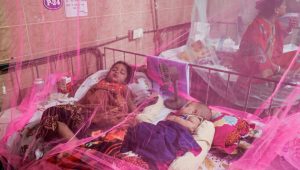
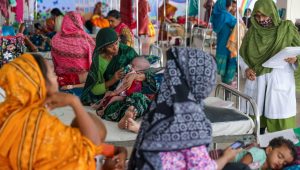
A severe lack of oxygen, elevated carbon dioxide levels, and systemic staff negligence caused the deaths of six neonates at Ad-Din Medical College Hospital, a probe report into the tragedy has found.
Revealing the findings, Health Minister Sardar Md Sakhawat Husain said the investigation uncovered evidence of negligence by doctors, nurses, staff, and hospital authorities in the deaths of the newborns at the hospital in Dhaka’s Moghbazar.
According to the Directorate General of Health Services (DGHS) investigation committee, the hospital building itself was found unfit for medical operations.
The report highlighted that the structural safety of the building had been compromised by partitioning internal spaces into numerous small glass rooms.
Consequently, the committee recommended that inspecting relevant buildings and obtaining prior clearance from the Department of Environment be made mandatory before issuing licences to private hospitals in the future.
The tragedy occurred in the early hours of the day before Eid-ul-Adha, when six newborns in the hospital’s post-operative ward suddenly fell ill and died in quick succession.
Following public outcry, the health ministry formed a three-member probe committee, which submitted its report on Wednesday.
While briefing reporters on the probe committee’s report at the ministry on Thursday, the minister revealed that investigators inspecting post-operative ward 2 found a severe shortage of oxygen and dangerously high levels of carbon dioxide.
This was caused by the air conditioning being switched off for a prolonged period in a room lacking normal ventilation.

When questioned about how an unsuitable building received approval in the first place, the minister clarified, “The building complied with regulations at the time of approval. However, a Rajuk (Rajdhani Unnayan Kartripakkha) report notes that structural changes were made afterward, and Rajuk will take necessary action regarding this.”
Addressing criticisms over the oversight failures of the Health Services Department’s inspection team, Sakhawat added, “Inspectors typically evaluate cleanliness and healthcare services. Our officials were not aware that a bakery was operating on the ninth floor. We only discovered the bakery and the storage of flammable materials there during this subsequent investigation.”
Death due to ‘lack of oxygen’
The investigators concluded that the newborns likely died from a severe lack of oxygen and carbon dioxide poisoning (hypercapnia).
Based on environmental conditions, witness testimonies, and statements, the probe committee found that a prolonged air conditioning failure, coupled with overcrowding in a sealed room lacking alternative ventilation, caused oxygen levels to plummet and carbon dioxide to spike.
However, the committee noted that a definitive cause of death could not be established because no autopsies were performed.
The investigation revealed that the 900-square-foot post-operative ward was dangerously overcrowded. Around 50 people, including 11 newborns, their relatives, and staff, were packed into the room, far exceeding its capacity, with no measures taken by the hospital to control the crowd.



When questioned about the lack of ventilation in the ward, the health minister explained that while the room was entirely sealed, it relied on two AC units for air circulation.
“The crisis began the moment the air conditioning shut off,” the minister said. “In that situation, the patients should have been immediately evacuated elsewhere. The negligence of the on-duty doctors was severe.”
While hospital authorities claimed the AC units frequently malfunctioned, the minister dismissed their defence. “I do not believe them,” Sakhawat stated firmly. “I can say with 100% certainty that these patients died of oxygen deficiency and hypercapnia because the ACs were turned off.”
Unresponsive medical staff and hidden crises
The investigation committee unanimously concluded that the negligence of on-duty doctors, nurses, staff, and hospital authorities in the deaths of the six newborns, which occurred between 5:00am and 9:00am on 27 May, has been “clearly proven.”
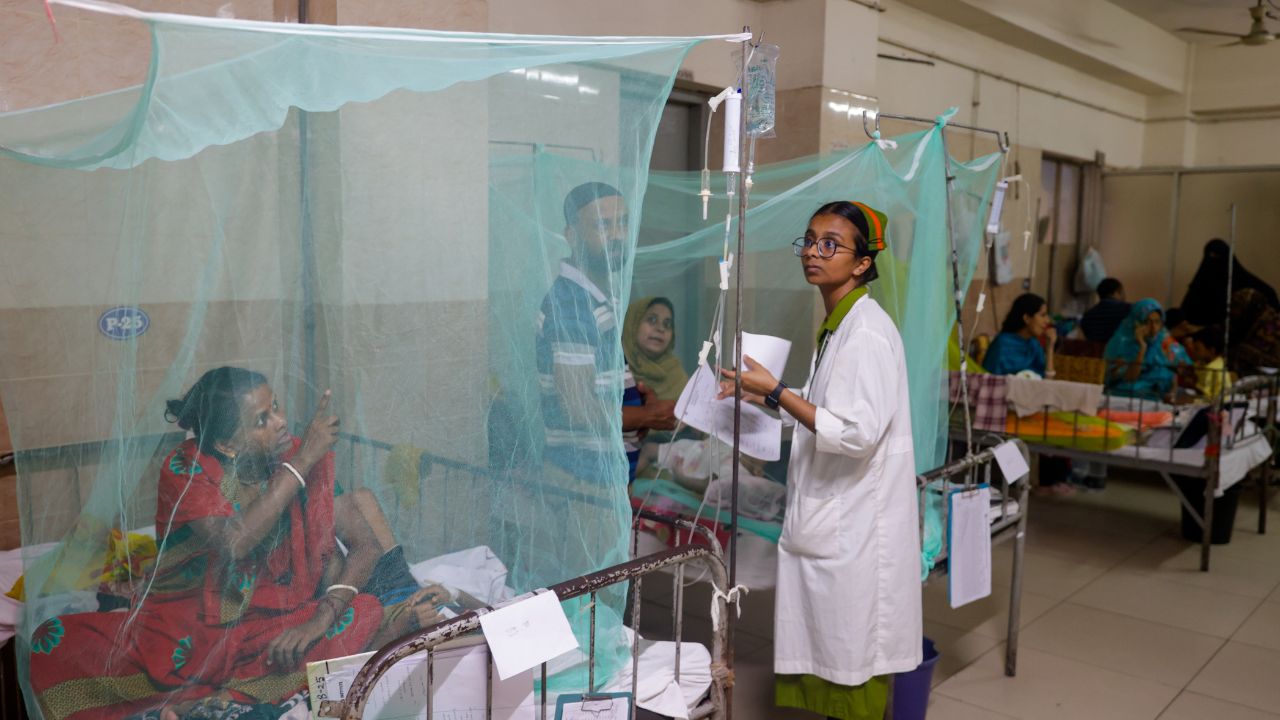
According to the report, no doctors were stationed to monitor the ward, and the nurses on duty lacked the training required to handle medical emergencies.
When the neonates’ conditions rapidly deteriorated, the hospital failed to provide an effective emergency response.
The report highlights that nurses ignored desperate calls from parents, wasting critical time instead of alerting doctors or administering life-saving treatment.
Minister rules out hospital closure
When asked about the penalties Ad-Din Hospital will face, the health minister said, “Action will be taken under existing laws based on the proven negligence detailed in the report.”
He added that the ministry will review the findings over the next two days and announce its official decision by Sunday.
Addressing the judicial aspect of the tragedy, the minister noted, “We do not hand down jail term; the courts do. A criminal case has already been filed regarding this incident.”
Asked if the absence of autopsies would weaken the legal case, the minister dismissed the concern. “This was not a hidden incident. It is completely transparent, and I believe the court will not grant any unfair advantage to the accused.”
Regarding calls to shut down the facility entirely, the minister gave a resounding “no,” explaining that a total closure would be unlawful and disruptive.
“We have sealed off the specific post-operative room, which lacked ventilation and suffered from a toxic imbalance of carbon dioxide over oxygen. However, there are more than 200 other patients in the hospital, and it would not be lawful to suddenly close the entire facility.”
Expert blames oversight failures for tragedy
Public health expert Mohammad Mushtuq Husain said that the tragedy at Ad-Din Hospital exposes severe failures in institutional monitoring and oversight.
He emphasised that hospitals are legally required to conduct routine inspections of clinical services, medical equipment, cleanliness, electrical systems, and fire safety, while keeping rigorous records to catch potential hazards before they escalate.
Ensuring compliance with these safety standards, Mushtuq noted, is a shared responsibility among hospital authorities, the Directorate General of Health Services (DGHS), the health ministry, the Fire Service, and other regulatory bodies.
“Without regular monitoring, structural and administrative disasters only come to light after lives are lost,” Mushtuq warned.
“Accountability lies across the entire oversight chain; it cannot simply be pinned on a single individual.” He added that while hospital management bears primary responsibility, officials at the Health Ministry and the DGHS carry distinct ethical and administrative duties as the regulators overseeing the entire sector.
Mushtuq called for those found negligent to face both legal and professional consequences, suggesting that regulatory bodies like the Bangladesh Medical and Dental Council (BMDC), the Bangladesh Nursing and Midwifery Council, and private hospital associations initiate strict disciplinary actions.
To prevent future tragedies, he urged the government to launch immediate, nationwide safety inspections across all public and private hospitals.
Historical instances
Bangladesh’s healthcare system is plagued by a lack of institutional accountability, profit-driven private clinics, severe understaffing, and poor oversight.
This systemic failure frequently leads to tragic patient deaths, sparking public outrage and occasional mob violence against medical staff.
Historical precedents underscore the crisis across both public and private sectors: in 2015, ten infants died in a single night at an overcrowded MAG Osmani Medical College Hospital in Sylhet amid negligence allegations.
More recently in Dhaka, Central Hospital was temporarily closed following the deaths of a mother and newborn, revealing that leading gynecologist Dr Sangjukta Saha had practiced for 13 years without a renewed license, while United Medical College Hospital was ordered shut in January 2024 after a young boy named Ayaan died following a routine circumcision.
38% Bangladeshis experience medical negligence
A Bangladesh Bureau of Statistics survey, submitted on 18 February 2025, to the Health Sector Reform Commission, revealed that 38% of people in Bangladesh experience medical negligence, carelessness, or mistreatment in hospitals. The crisis spans both public and private sectors, affecting 44% of urban residents compared to 36% of rural patients.