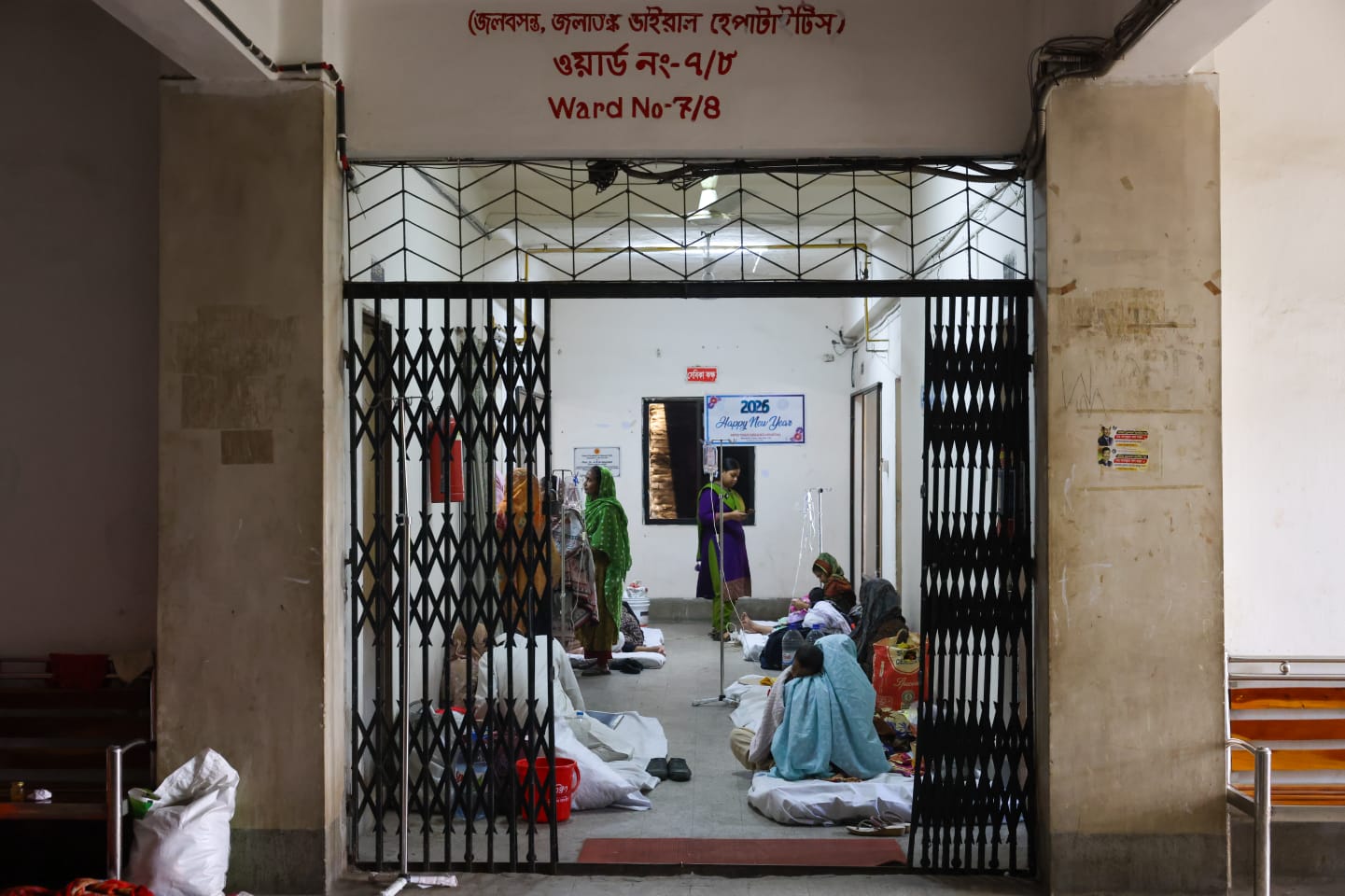
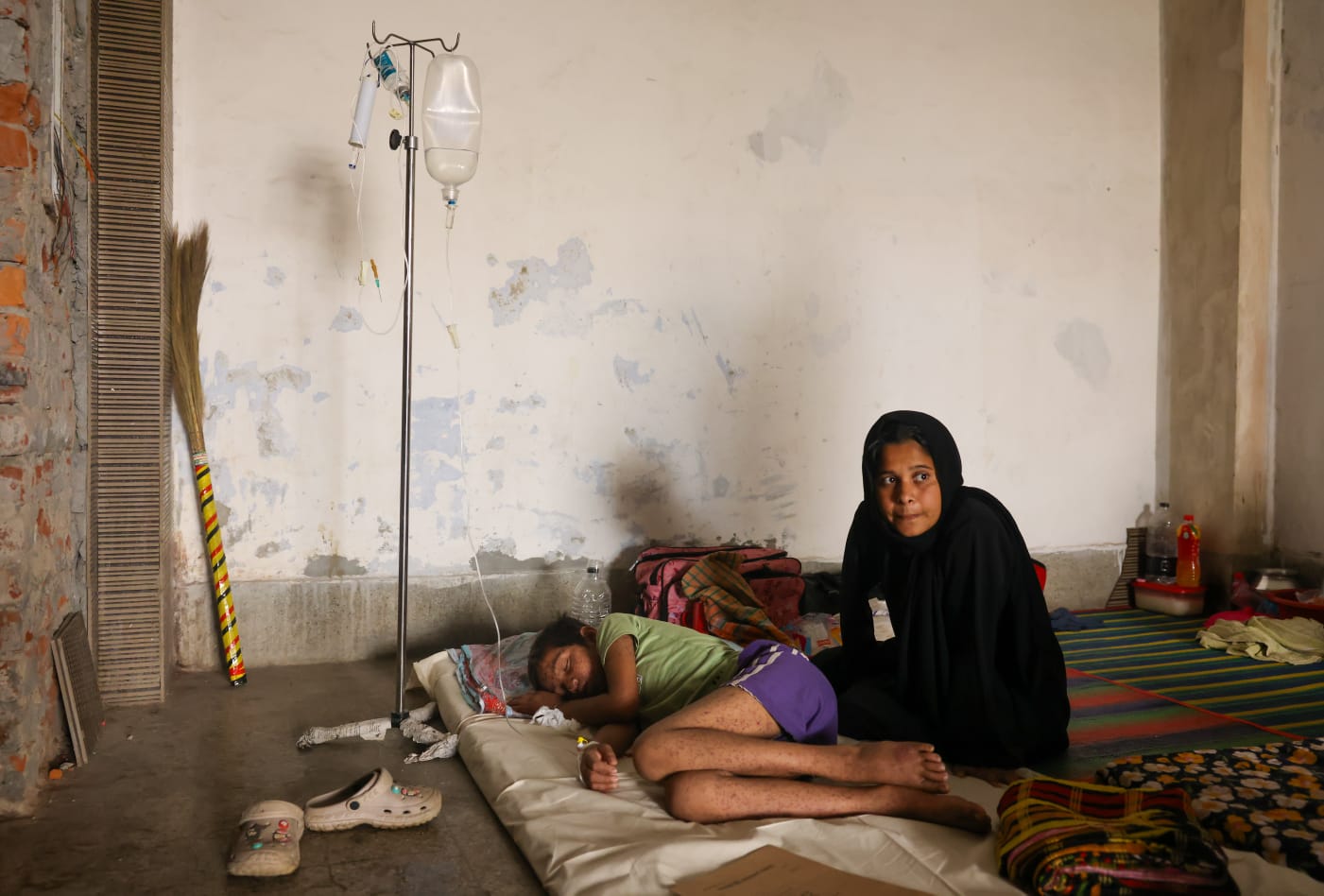
The Infectious Diseases Hospital in Mohakhali is currently reeling under an overwhelming surge of patients, leaving many children suffering from measles and pneumonia to receive treatment on the floor due to a severe shortage of beds.
The crisis has been further highlighted by the reopening of the hospital’s Intensive Care Unit (ICU) on 18 March – a facility that had remained closed for over a year and was only reactivated following the tragic death of an infant.
Desperation of parents is palpable
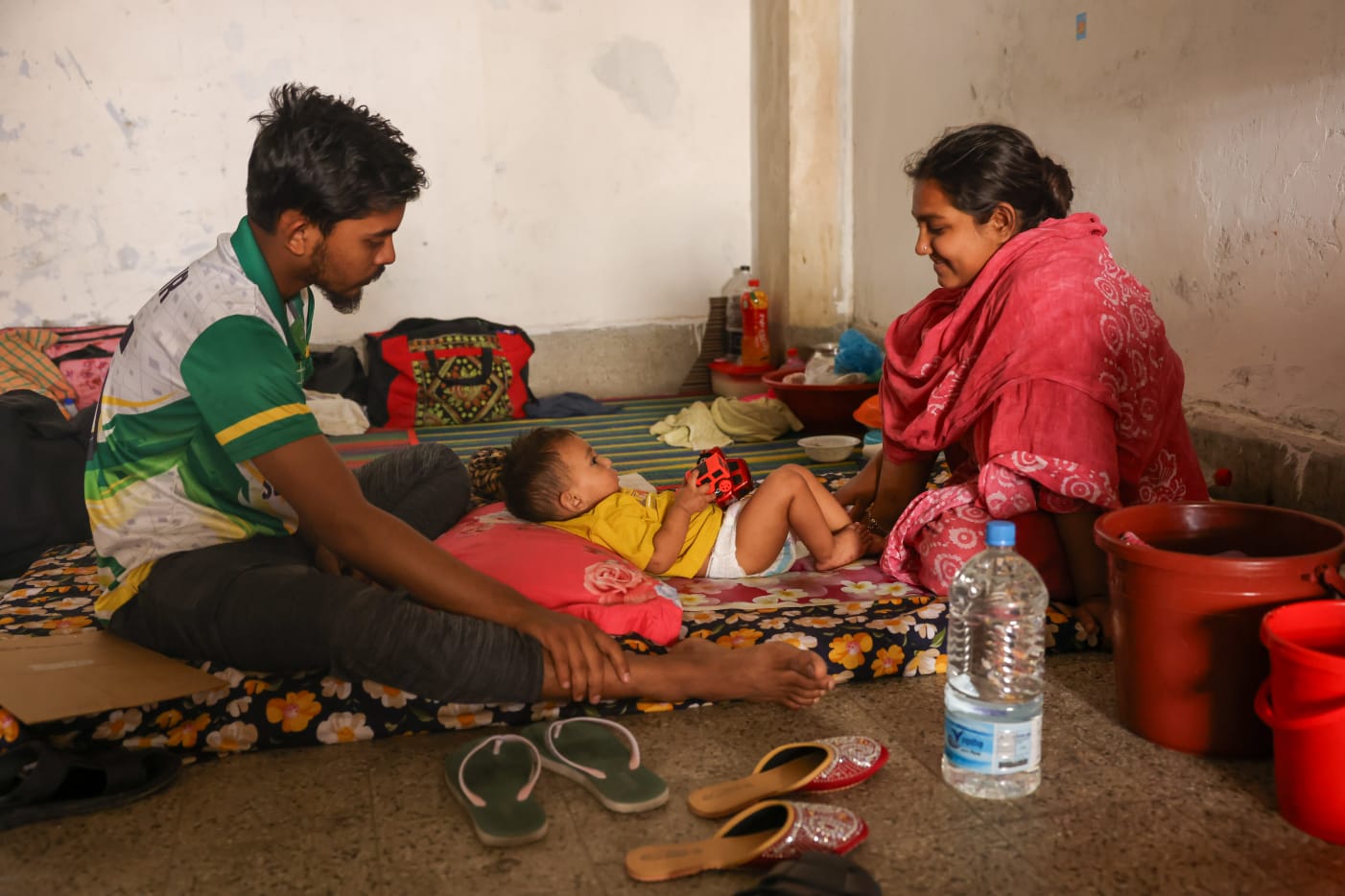
In the Tetanus ward on the fifth floor, the desperation of parents is palpable. Mosammat Halima Akhtar, who arrived from Barishal on Tuesday night, was found sitting on a thin quilt spread near the stairs.
Her six-month-old son, Abdur Rahman, lay listless in her arms, struggling with measles, pneumonia, and respiratory distress.
After being referred from Barishal Sadar Hospital, Halima first sought help at Dhaka Medical College Hospital, but was redirected to the Infectious Diseases Hospital due to the risk of infecting other children.


“The doctor admitted him, but there is no bed,” Halima told TIMES of Bangladesh. “My child is in a terrible state… the doctor only prescribed a nebuliser but has not ordered oxygen yet.”
The 100-bed hospital is currently struggling under the weight of an unprecedented patient load. In the Tetanus ward, which contains only 13 beds across three rooms, at least 11 additional patients were seen being treated on the floor on Wednesday morning alone.
A cycle of ‘hospital hopping’
Many parents reported a harrowing journey through multiple facilities before reaching the Mohakhali hospital. Rashed Alam, the father of two-month-old Rafsa Moni, described an “indescribable war” to get treatment.


After visiting Suhrawardy Medical College Hospital, the Bangladesh Shishu Hospital and Institute, and the International Centre for Diarrhoea Disease Research, Bangladesh (Cholera Hospital), he still lacks a bed for his daughter.
“Even after showing her at so many places, doctors cannot say for sure what has happened to the baby,” Rashed said, expressing frustration over the lack of available nurses during emergencies.
Another parent, Heera, echoed these sentiments, noting she was “exhausted” after rotating through private hospitals in Mirpur-2, the DNCC Hospital, and the Shishu Hospital without receiving a definitive diagnosis for her six-month-old daughter, Humayra.
ICU reactivated after tragedy
The severity of the situation is perhaps best illustrated by the case of Sayed, an eight-month-old who was admitted on 14 March with measles and fever. Despite a critical need for ICU support, the hospital’s unit was non-functional. Sayed passed away shortly after.
The death prompted immediate action from the Ministry of Health, leading to the reactivation of the long-dormant ICU. On 18 March, Rohan, the two-and-a-half-year-old son of Rafiq from Barguna, became the first patient admitted to the newly reopened unit. Rohan’s condition had deteriorated from pneumonia and measles to tuberculosis (TB).
Surge in Measles cases
Hospital statistics reveal a startling spike in infections. While only 69 measles patients were admitted in the entirety of last year, that number has already reached 255 by mid-March of this year.
Dr ARM Sakhawat Hossain Khan, junior consultant (Paediatrics), noted that the medical team – comprising 21 doctors and approximately 60 nurses – is struggling to manage the influx.
“The number of patients is so high that it is becoming difficult to manage,” Dr Khan said, adding that they must prioritise beds for the most critical patients while keeping others on the floor.
In an attempt to manage the crisis, hospital authorities have decided to transfer measles patients over the age of two to the DNCC Dedicated COVID-19 Hospital.
Vaccination success at risk
This outbreak comes despite the historical success of Bangladesh’s Expanded Programme on Immunization (EPI). According to World Health Organization (WHO) data, measles cases in Bangladesh dropped by over 95 percent between 2000 and 2024.
However, the current situation – characterised by delayed diagnoses and a lack of emergency facilities – raises urgent questions about why the system was unprepared for this sudden resurgence.