During a high-level meeting held on the sidelines of the UN General Assembly in New York, several European leaders announced their countries’ recognition of Palestine, positioning the move as a pivotal step toward resolving the ongoing Gaza war and advancing the goal of a two-state solution.
The conference, co-led by France and Saudi Arabia, was titled the High-Level International Conference for the Peaceful Settlement of the Question of Palestine and the Implementation of the Two-State Solution. Leaders at the gathering called for immediate actions to end the violence in Gaza and to pursue a peaceful resolution to the Israeli-Palestinian conflict, reports Anadolu Agency.
Luxembourg’s Prime Minister Luc Frieden officially declared that his country would recognise Palestine, describing it as “the beginning of a renewed commitment” to diplomacy, hope, and coexistence. He clarified that this decision was not aimed “against Israel or its people”, but was intended to revive the potential for peace under the framework of international law and the UN Charter.
Prime Minister Robert Abela of Malta also confirmed his country’s recognition of Palestine, stating, “What is happening in Gaza is morally and legally very wrong, and we have a duty on all of us to act.”

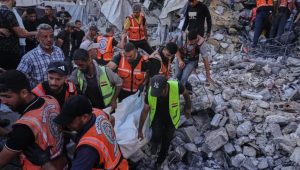
Andorran Foreign Minister Imma Tor Faus referred to the Gaza situation as “unbearable,” citing the use of hunger “as a weapon of war” and the mass displacement of people. She called for an immediate ceasefire and announced that Andorra has approved the recognition of Palestine, affirming that Palestinians “should live in peace and security within their own state, side by side with the state of Israel.”
Belgian Prime Minister Bart De Wever reiterated his country’s support for a two-state solution, joining the signatories of the New York Declaration. However, he noted that Belgium would only officially recognise Palestine once all hostages are freed and Hamas is no longer part of Palestinian governance.
Spain’s Prime Minister Pedro Sanchez called for an end to the violence, describing the ongoing bombings in Gaza as “indiscriminately” targeting civilians. He warned, “there is no solution possible when the population of one of those two states is the victim of a genocide,” and called for Palestine’s immediate recognition as a full UN member state.




Sanchez stressed that Spain would take further steps to address the brutality in Gaza, adding, “History will judge us, and its verdict will be brutal with those that perpetrated this slaughter and with those who remain silent or turned a blind eye.”
Ireland’s Prime Minister Michael Martin emphasised that “the only viable option to deliver a peaceful future for Israel and for Palestine is a two-state solution.”
Martin condemned the suffering of Palestinians in Gaza, describing it as “an affront to the world,” and stated, “We have reached a point where what has been credibly described as a genocide is being carried out in front of the eyes of the world.”
Ireland had recognised Palestine alongside Spain, Norway, and Slovenia the previous year.
European Commission President Ursula von der Leyen expressed support for the growing momentum, noting that “the state of Palestine has been recognised by the majority of EU member states.”
Although a majority of European nations have now recognised Palestine, two of Europe’s largest economies, Germany and Italy, have signaled that they are unlikely to follow suit in the near future.
Germany’s Foreign Minister Johann David Wadephul acknowledged that the two-state solution seemed further out of reach than ever, but maintained that there was “no convincing alternative” to the idea of an “independent, democratic and viable Palestinian state existing side by side and in peace and in security with Israel.”
Italy’s Foreign Minister Antonio Tajani expressed his country’s support for a two-state solution and emphasised Rome’s humanitarian assistance to Palestinians, but refrained from announcing recognition of Palestine.