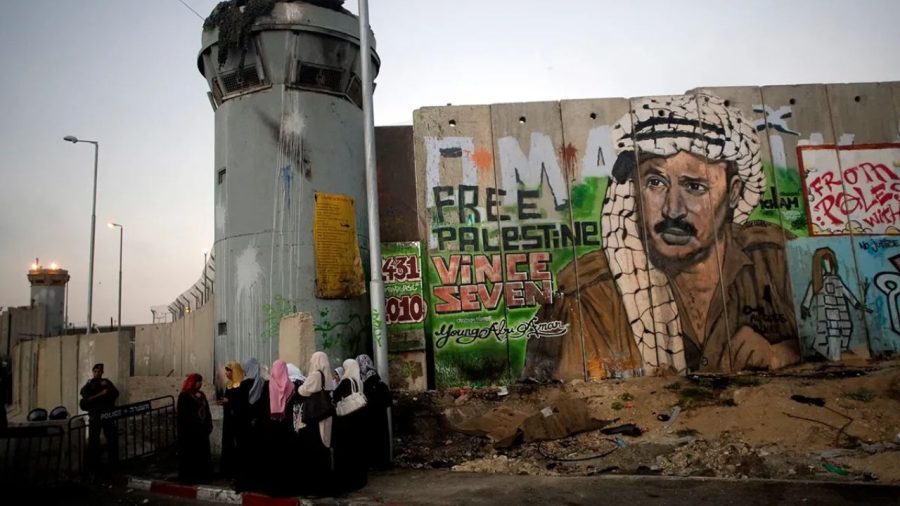



Thirty seven years after the fall of the Berlin Wall on 9 November 1989, Palestinians mark the date as an international day of action against Israel’s separation wall in the occupied West Bank.
Berlin Wall was constructed by East Germany in 1961 to stop its citizens from fleeing, the wall stretched 155 kilometre (96 mile). The Berlin Wall encircled West Berlin for 28 years before it was brought down. By contrast, Israel began constructing its barrier in 2002, and Palestinians have observed 9 November as an international day of protest against the structure since 2003 as construction continues deep inside occupied territory.
Scale and Physical Dimensions
The Israeli separation wall is planned to reach 712 kilometres (442 miles) in length, making it more than four times as long as the Berlin Wall. In urban sections, its concrete structure reaches a height of about 9 metres (30 feet), which is more than twice the height of the barrier that divided Berlin.
According to data from the United Nations Office for the Coordination of Humanitarian Affairs (OCHA), approximately 456 kilometres (283 miles), or 64 percent of the planned route, had been built by April.

While some urban areas feature solid concrete walls, other stretches consist of fences, patrol roads, ditches, and additional security infrastructure. Unlike the Berlin Wall, which encircled West Berlin, about 85 percent of Israel’s separation wall runs inside the occupied West Bank rather than along the Green Line,the 1949 armistice line separating Israel from the West Bank.
By cutting through Palestinian land rather than following the recognized boundary, the structure determines which roads, communities, and farmland are severed from their surroundings. In 2004, the International Court of Justice (ICJ) declared the separation wall illegal.



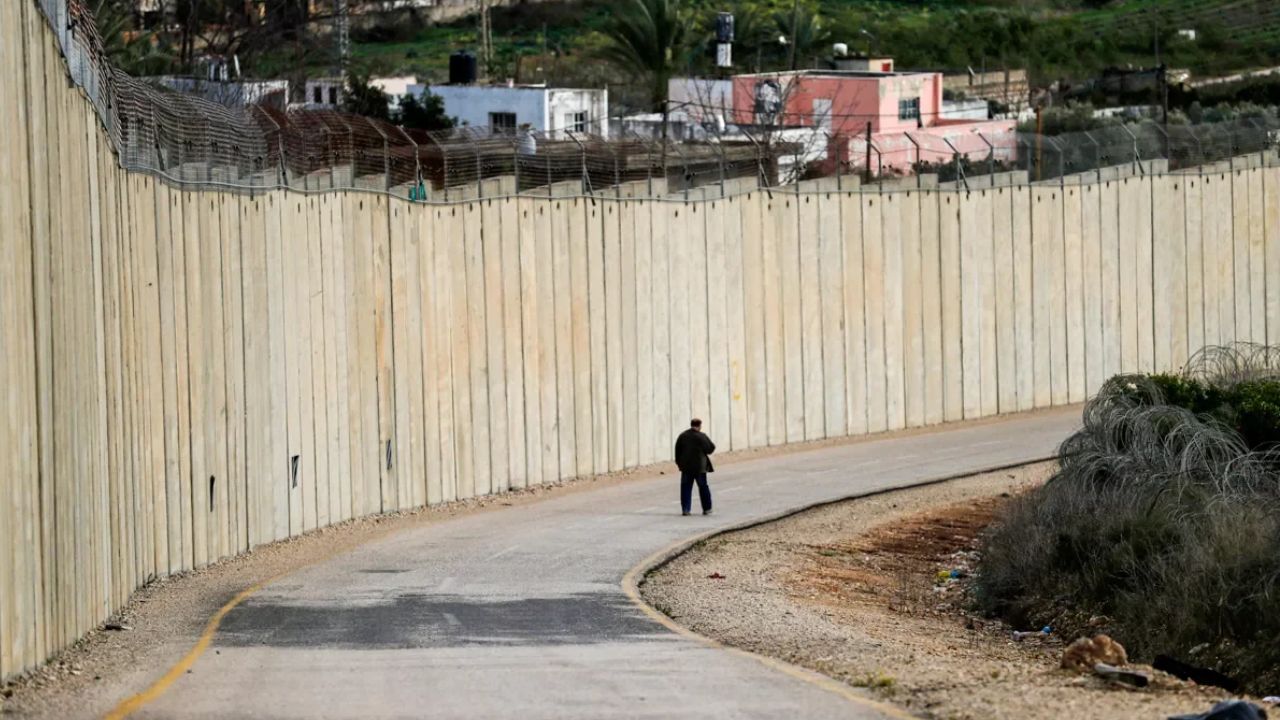
Nevertheless, construction has proceeded, prompting a Palestinian activist in Bir Nabala to express that no matter how high the barriers are built, they will eventually fall just as the Berlin Wall fell.
Isolation of Communities and Farmlands
The barrier severely disrupts everyday life, livelihoods, and community ties across the occupied territory. More than 14,000 Palestinians now reside in the “Seam Zone,” an area trapped between the wall and the Green Line, where passing through checkpoints is mandatory to access basic services, markets, and family members. OCHA reported that about 150 Palestinian communities hold farmland in this zone, where access depends on permits, prior coordination with Israeli authorities, and designated agricultural gates.
Of the roughly 62 agricultural gates along the wall, most remain closed for the majority of the year; during the 2025 olive harvest, 74 percent of these gates were opened on only a limited number of days. In the city of Qalqiliya, the wall wraps around most of the municipality, isolating it from surrounding Palestinian towns and farm grounds, turning formerly brief trips into lengthy detours or checkpoint crossings.
System of Movement Obstacles
The separation wall forms part of a far broader administrative and physical control system operating across the West Bank. As of December, OCHA documented 925 movement obstacles across the West Bank and occupied East Jerusalem, restricting the movement of approximately 3.4 million Palestinians.

This network includes 89 permanently staffed checkpoints, 218 partial checkpoints, 232 road gates, 167 earth mounds, 114 linear closures, and 105 roadblocks. Checkpoints and road gates now account for nearly 60 percent of all obstacles, up from 15 percent two decades ago when temporary physical blockages were more prevalent.
Furthermore, crossing the wall itself requires specialized permits. Out of the wall’s 13 checkpoints, only three are accessible to Palestinians holding West Bank identification cards and Israeli permits to enter East Jerusalem.
Israel permits have become increasingly difficult to obtain, with many revoked or suspended following the Hamas led attacks on southern Israel and the onset of Israel’s genocidal war on Gaza in October 2023.