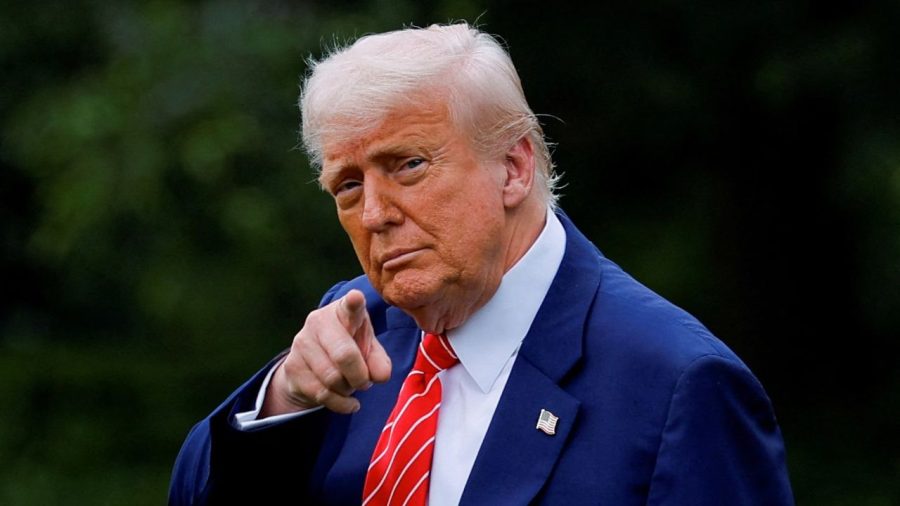



Millions of Americans have cast their ballots in a midterm election widely seen as a referendum on President Donald Trump’s second term, with growing dissatisfaction over the cost of living, the war with Iran, immigration policies and the administration’s exercise of presidential power shaping voters’ choices.
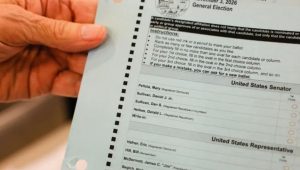
With polling having concluded across the United States, attention has shifted to the counting of ballots and the battle for control of Congress.
Early projections and pre-election opinion polls favoured Democrats to regain the House of Representatives, while the Senate race remained too close to call.
The outcome will determine how much political room Trump has to pursue his domestic and foreign policy agenda during the remaining two years of his presidency.
It will also provide a significant indication of public sentiment ahead of the 2028 presidential election.
For Trump, the stakes are particularly high.
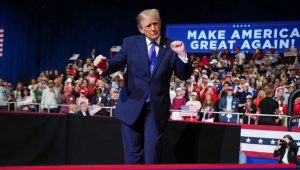
He has spent weeks campaigning across the country, urging Republican supporters to treat the congressional elections as a personal vote of confidence in his leadership. He repeatedly told them to “pretend I’m on the ballot”.
However, opinion polls suggest that the president’s strategy may have also mobilised voters unhappy with his administration.
A Reuters/Ipsos poll found that 48% of people who planned to vote, or had already voted, viewed their ballot as a vote against Trump. Only 25% said they were voting in support of him, while another 25% said the president was not a factor in their decision.
Economic dissatisfaction dominates
The cost of living emerged as one of the most important concerns for American households. Rising fuel prices, particularly following the outbreak of the US-Israeli war with Iran in February, have added to financial pressures already weighing on consumers.

The dissatisfaction extends beyond fuel prices as nearly half of Americans surveyed said their household finances had deteriorated since Trump returned to the White House in January 2025.
Economic discontent could become a significant political liability for Republicans, particularly as voters assess whether the administration’s policies have improved their everyday lives.
The rising cost of energy, uncertainty over the conflict and its implications for American security have therefore become important considerations for voters evaluating Trump’s foreign policy.
Concerns over democracy and presidential power
Beyond economic and foreign policy issues, the elections have exposed growing divisions over the administration’s approach to democratic institutions and electoral integrity.
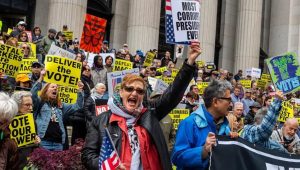
Trump has repeatedly made unsubstantiated claims about large-scale illegal voting by non-citizens. His administration’s efforts to increase federal involvement in election administration have also raised concerns among critics, who argue that such moves could undermine states’ constitutional authority over elections and potentially disenfranchise eligible voters.
On Monday, a federal judge temporarily blocked the Justice Department and the Department of Homeland Security from sending states lists of registered voters the administration suspected might be non-citizens.




US District Judge Tanya Chutkan also prohibited the agencies from asking state election officials to separate those voters’ ballots or withhold their counting until citizenship was established.
The ruling represented another legal setback for Trump’s efforts to assert greater federal control over election administration ahead of the midterms.
In a separate case, however, a panel of the San Francisco-based 9th US Circuit Court of Appeals cleared the administration to threaten state and local election officials with prosecution if they failed to comply with demands concerning alleged non-citizen voters.
The conflicting court decisions illustrate the legal and political tensions surrounding the administration’s election-related initiatives.
Divisions over social and technology issues
Several other issues also featured prominently in voters’ calculations.
The rapid expansion of artificial intelligence and the infrastructure supporting it has also entered the political debate.
Meanwhile, campaign financing and the growing political influence of wealthy individuals have generated bipartisan concern.
A difficult road ahead for Trump
The congressional results will have important consequences for Trump’s ability to govern.
Since returning to office, the president has relied extensively on executive authority to impose sweeping tariffs, intensify immigration enforcement, reduce the federal workforce and pursue foreign policy objectives, including military action against Iran.
He has also invoked national emergencies to expand his authority without securing fresh legislation from Congress.
If Democrats secure control of either chamber, they could significantly complicate the administration’s legislative and political agenda.
A Democratic-controlled Senate would have the power to block or delay Trump’s judicial and executive-branch nominations, potentially including a future Supreme Court appointment. Democrats could also refuse to approve legislation backed by the White House.
However, Trump would retain his veto power, and Democrats are unlikely to command the two-thirds majority required in both chambers to override presidential vetoes.

The president has already indicated that he would use the veto to resist Democratic initiatives before eventually seeking compromises.
“I guess I’ll become Mr. Veto,” Trump told the New York Post’s Pod Force One podcast, adding that he would probably make deals with Democrats at some point.
The White House has also been preparing for the possibility of losing congressional control. According to officials and people familiar with internal discussions, the administration has developed plans to continue advancing major policy priorities through executive powers while preparing for congressional investigations.
Political analysts believe a Democratic majority could further encourage the president to govern through executive orders, potentially leading to more legal confrontations.
Senate battlegrounds and the political future
While the House contest has attracted considerable attention, control of the Senate remains uncertain, with nearly 10 closely contested statewide races, many in traditionally Republican territory.
The Michigan Senate race has emerged as a particularly significant contest. Progressive Democrat Abdul El-Sayed, 42, faced Republican former US representative Mike Rogers, 63.
The race took an unexpected turn when Democratic primary runner-up Haley Stevens endorsed Rogers, despite narrowly losing to El-Sayed in the party’s nomination contest.
Beyond its implications for Senate control, the contest has become a test of whether identity-based political attacks can influence voters. El-Sayed, if elected, would become the first Muslim senator in US history.
He has criticised Israel, supported progressive policies, including universal healthcare.
Historically, midterm elections have been difficult for the party occupying the White House. Since World War II, the president’s party has lost congressional ground in all but two midterm elections.
With Trump’s approval rating hovering near its lowest levels, the elections have therefore become a critical test of whether voter dissatisfaction can translate into a shift in congressional power.
For now, Americans and the whole world await the final results.
Whatever the balance of power in Congress, the election has demonstrated that economic anxiety, dissatisfaction with the Iran war and concerns over the administration’s governing approach have become central to the country’s political debate.