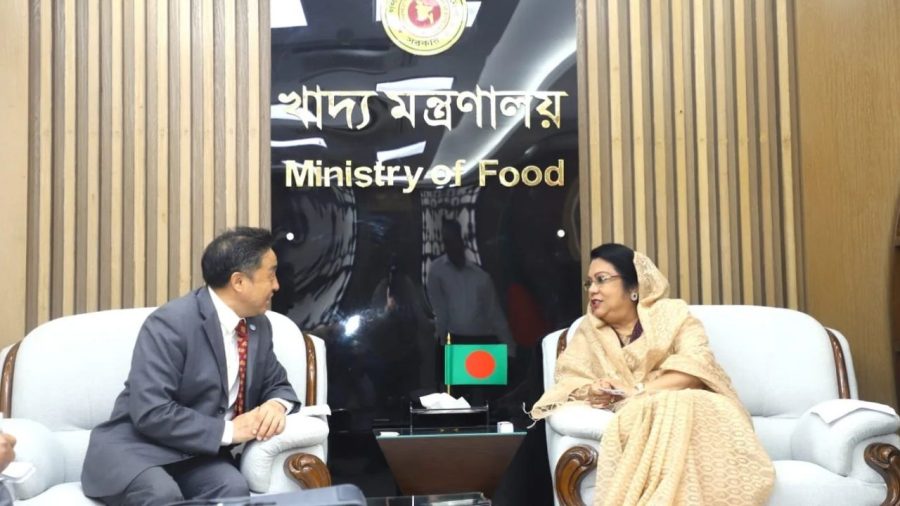



Food Minister Afroza Khanam has urged Food and Agriculture Organisation (FAO) of the United Nations to work jointly with Bangladesh to protect the nutrition of vulnerable groups, particularly women and children, and to ensure overall food security amidst climate change risks.
She laid emphasis on strengthening Bangladesh’s food security system through FAO’s technical and technological support, research, and exchange of experience.
The call was made when FAO Representative in Bangladesh Jiaoqun Shi and Assistant Representative (Program) Imanun Nabi Khan paid a courtesy call on the food minister at the Secretariat on Tuesday.
During the meeting, both sides discussed various aspects of mutual cooperation regarding food security, nutritional protection for women and children, and addressing climate change impacts in Bangladesh.

The FAO delegation informed the food minister about the organisation’s ongoing activities across the country.
In response, the food minister sought detailed information on potential FAO cooperation in ensuring food security and safe food, particularly regarding technical assistance and technological knowledge exchange.
Afroza said climate change impacts are increasingly challenging the food security of vulnerable populations, including women and children.



She enquired whether FAO has ongoing programmes in Bangladesh for the nutrition and food security of these groups and what future initiatives are planned, emphasising the adoption of special women, and child-centric programmes.
The minister further pointed out that climate adversity makes it difficult to maintain the quality of food grains in long-term storage, with spoilage risks rising significantly when stored for more than six months.
To address this challenge, she requested FAO for modern storage technology, methods suitable for long-term food grain preservation, and the sharing of international experience and technical knowledge.
Highlighting that Bangladesh has a large population relative to its land area, she said ensuring the availability of safe and nutritious food to meet growing demand is critical, and she discussed potential technical and research-based support from FAO.

Additionally, she sought FAO’s cooperation in conducting research to evaluate the nutritional efficacy and actual public health impact of fortified rice.
In response, Jiaoqun Shi said FAO is keen to work closely with Bangladesh to ensure food security and access to safe and nutritious food for its people.
He expressed interest in continuing support through the organisation’s experience, technical knowledge, and ongoing activities.
The meeting was attended by Food Secretary Abu Taher Md Masud Rana, Director General of the Directorate General of Food Md Jashim Uddin Khan, Director General of the Food Planning and Monitoring Unit (FPMU) Md Mahbubur Rahman, alongside senior officials from the Ministry of Food and related departments.