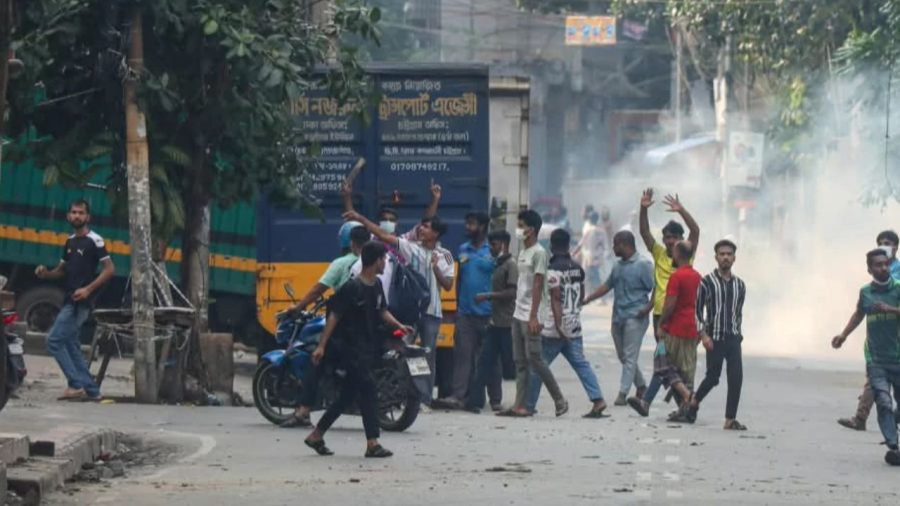



Police and law enforcement agencies remain on high alert following three consecutive days of garment worker protests in Dhaka. Authorities report that over 50 individuals have been arrested or detained across multiple locations, and five cases have been filed over the violence in Mirpur. The workers are demanding an increase in the monthly minimum wage from Tk12,500 to Tk30,000.
The government suspects that outside forces may be exploiting workers’ grievances to create instability, disrupt garment production and undermine export earnings. These allegations warrant investigation. However, maintaining law and order must not become an excuse to ignore workers’ legitimate demands.
Bangladesh’s garment industry is witnessing a familiar cycle: workers demand higher wages, protests intensify and sometimes turn violent, and the eventual settlement falls short of their expectations. The current minimum wage was fixed at Tk12,500 in December 2023. Although the government has announced the formation of a new minimum wage board, factory owners have yet to submit a proposal.

Employers argue that a substantial wage increase could undermine competitiveness and force factories to close. Yet four consecutive years of high inflation have severely eroded workers’ purchasing power, making it increasingly difficult to meet basic household expenses. Under labour law, minimum wages can be reviewed every three years, making the formation of a new board timely.
A female labour leader told Daily TIMES of Bangladesh that political interests might be exploiting the unrest. She questioned the identities of some protesters but stressed that wages must reflect the rising cost of living. Neither she nor her organisation had specifically demanded Tk30,000 as the minimum wage.




The financial pressures on workers are undeniable. At the same time, factory owners acknowledge the rising cost of living but insist that wage increases must remain financially sustainable. They warn that excessive increases could threaten their businesses, while labour leaders caution that a nominal adjustment would deepen workers’ frustration. A fair settlement must protect workers’ livelihoods without making factories economically unviable.
The industry’s challenges are real. Bangladesh relies heavily on low-cost garment exports, and international buyers are reluctant to absorb higher labour costs. Manufacturers also face rising electricity and gas prices, increased fuel and transport expenses, and declining orders. Nevertheless, the persistent gap between workers’ demands and final wage settlements cannot be allowed to continue indefinitely.
We believe the government, factory owners and legitimate worker representatives must urgently engage in meaningful negotiations. The government has already issued two notifications to reconstitute the minimum wage board and appoint employer and worker representatives. These initiatives must produce a credible and mutually acceptable settlement.
Workers should also reject violence and any outside provocation that could damage the industry on which their livelihoods depend. At the same time, employers must recognise that lasting industrial peace is impossible without addressing workers’ basic needs. Allegations of external interference should be investigated without dismissing legitimate grievances.

The garment sector remains a major driver of Bangladesh’s economy, employment and export earnings. Damage to this industry would affect workers, businesses and the country as a whole.
We hope all parties will abandon violence and vandalism, reach a fair and realistic minimum wage agreement through dialogue, and restore normal factory operations. Sustainable industrial peace requires both a competitive garment industry and workers who can live with dignity.