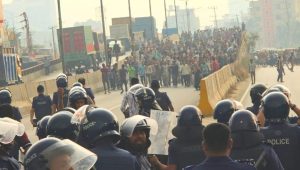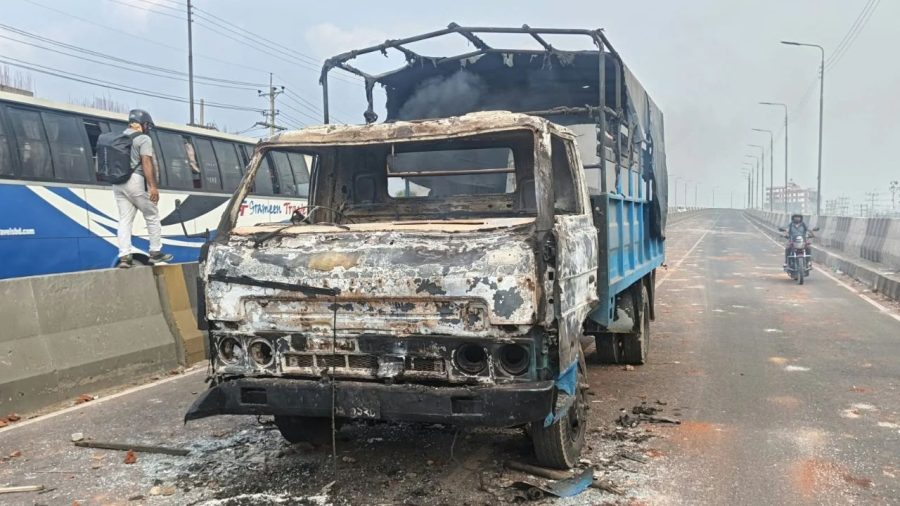



The garment workers’ movement demanding a minimum monthly wage of Tk30,000 turned violent for the second consecutive day in the industrial belt of Gazipur, with blockades, demonstrations, vandalism, and arson reported across various points on Dhaka-Tangail highway.
Multiple police vehicles were torched and vandalised in the Naojor area, while three journalists covering the protests and a member of Border Guard Bangladesh (BGB) were injured by a thrown stones.
At least 28 police personnel and several others were injured over two days of unrest, according to Industrial Police sources. To maintain order, 10 platoons of BGB have been deployed in the Gazipur industrial zone alongside 21 executive magistrates.
More than 150 factories declared holidays due to security risks and ongoing protests, disrupting production across the ready-made garment sector.
Although tension persisted since morning, the situation largely normalised by Monday afternoon following prompt action by law enforcement agencies, according to Mohammad Razib Hossain, officer-in-charge (investigation) of Industrial Police.
Escalation across industrial zone
Protests began early Monday at around 7:30am when workers occupied the Dhaka-Tangail highway at Mochak, Safipur, and Palli Bidyut in Kaliakair, causing severe traffic congestion.

Law enforcement personnel fired sound grenades to disperse the crowd, leading to a series of chases and counter-chases.
By noon, the situation escalated further in Naojor, where demonstrators vandalised and set fire to several police vehicles, and a BGB member was injured by a thrown stone.
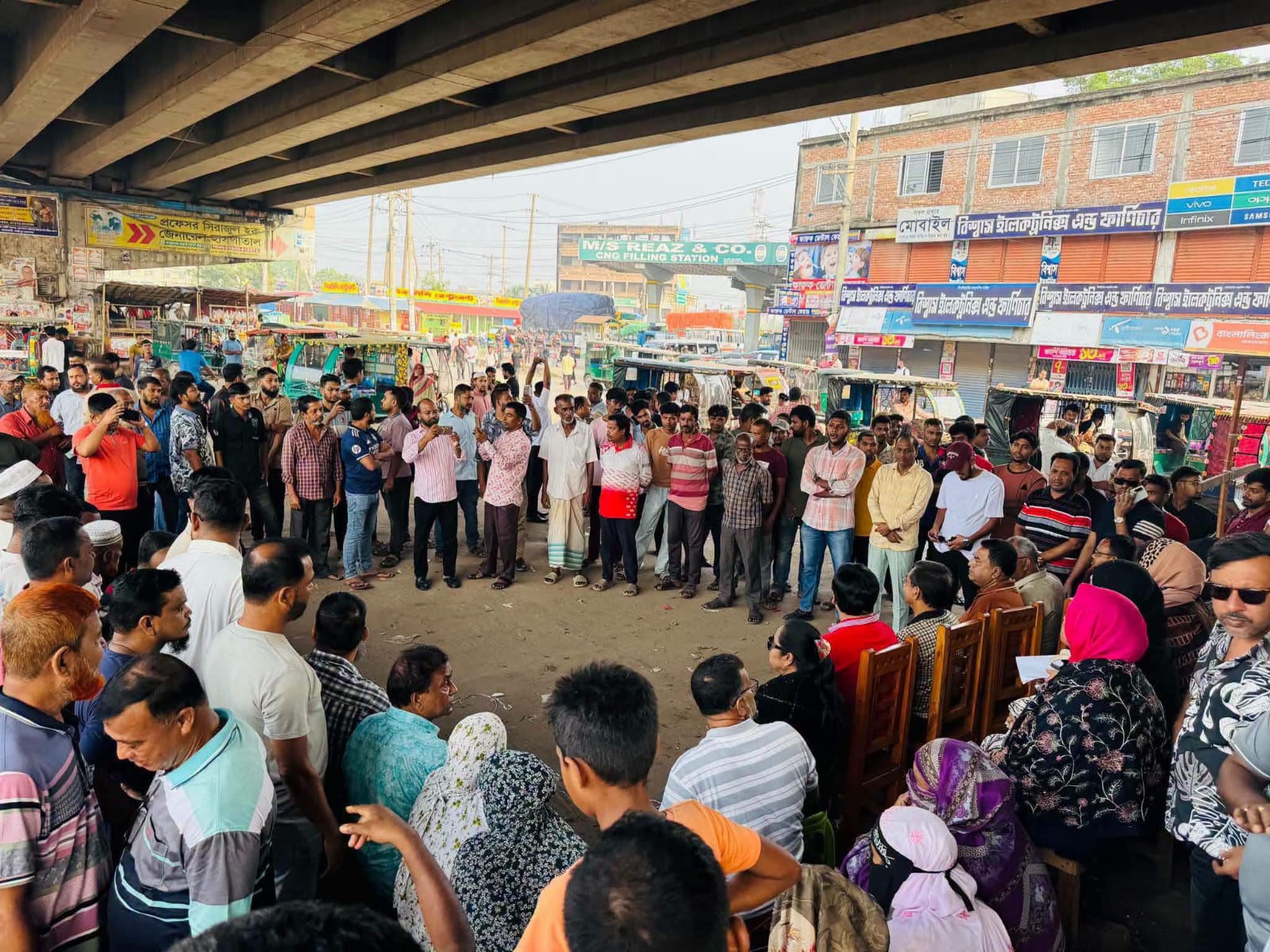
During the coverage, a reporter and a cameraperson from Somoy Television were attacked and their camera was vandalised, while two other journalists were also assaulted.
The agitation had originally erupted on Sunday morning across Kaliakair, Konabari, Kashimpur, and adjacent areas. At around 8:30 am on Sunday, workers gathered on roads at Safipur, Mochak, and Chandra Palli Bidyut before the protests spread across the industrial belt.


Around 10am that day, demonstrators in Konabari vandalised and torched a traffic police box, set a police motorcycle on fire, and damaged several vehicles.
Police responded with tear gas and sound grenades to disperse the crowds, triggering clashes and long traffic jams, which prompted initial factory closures and the early deployment of five BGB platoons.
Formation of new wage board
Amid the growing turmoil, the government formed a six-member Wage Board on Sunday through a gazette notification issued by the Ministry of Labour and Employment. Sheikh Ashfakur Rahman, senior district and sessions judge, was appointed chairman of the board.
The board includes ABM Shamsuddin, director of BGMEA, representing factory owners, while Anowar Hossain, president of Bangladesh Jatiyatabadi Sramik Dal, and Babul Akhter, general secretary of Bangladesh Garments and Industrial Workers Federation, represent the workers. The board has been instructed to begin its work expeditiously.
Following the board’s formation, Ariful Haque Chowdhury, labour and employment minister, urged workers to return to their jobs, noting that the government established the board specifically to address wage revision.
The minister alleged that leaders and activists of the banned Awami League were attempting to incite instability using the movement, though he noted that a neutral investigation is necessary to verify these claims.
Lawmakers urge calm and investigation
M Monjurul Karim Roni, member of parliament for Gazipur-2, and Md. Mojibur Rahman, member of parliament for Gazipur-1, inspected damaged factories and held discussions with workers and trade union leaders to seek a peaceful resolution.
The lawmakers said that any attempt to destabilise the country by exploiting the workers’ movement, activities of banned organisations, violence, and conspiracy will not be tolerated, while expressing support for the workers’ fair demands.

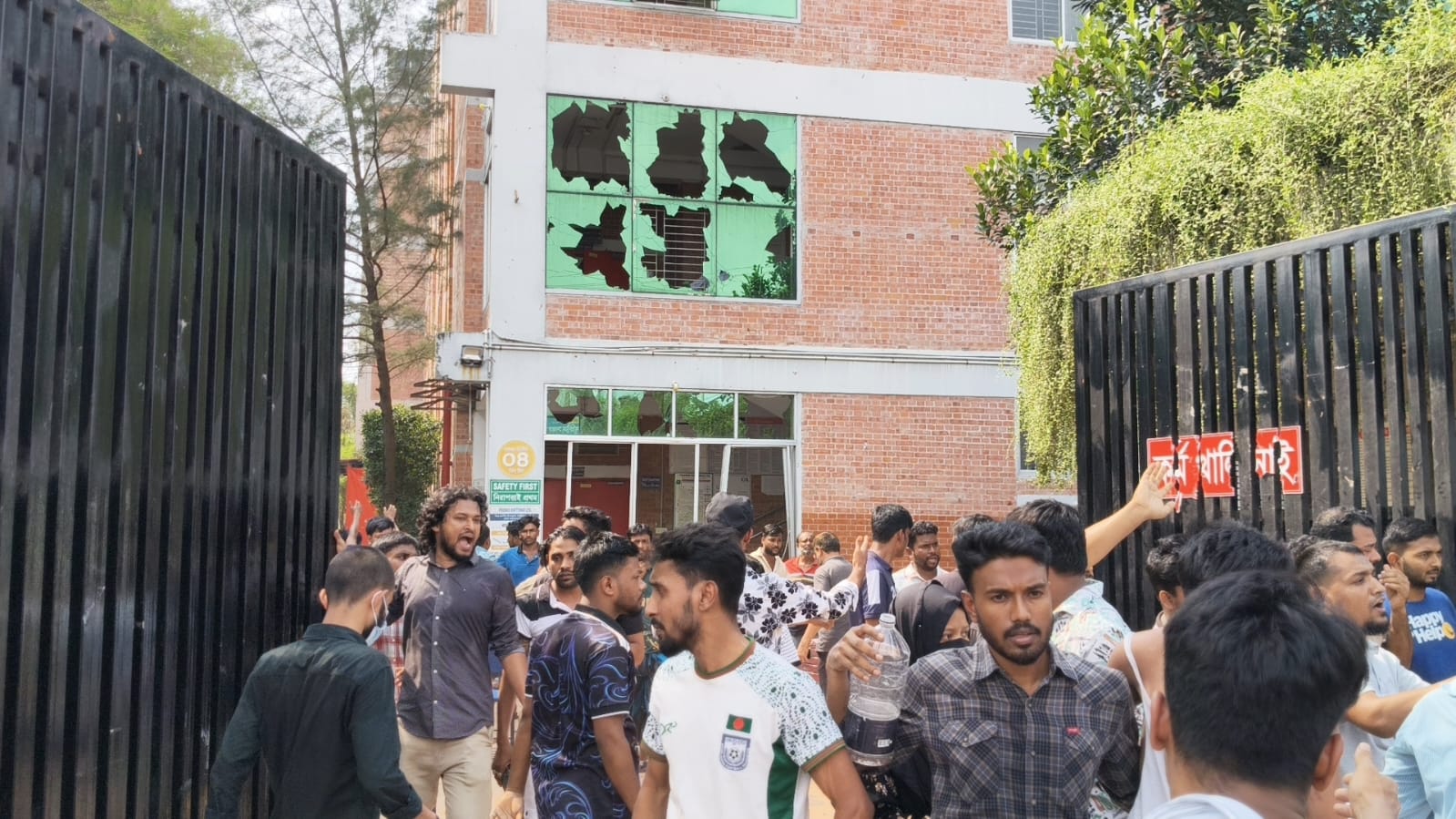
They warned that strict action would be taken against anyone engaging in vandalism, arson, or creating instability, adding that initiatives are underway to resolve the issue peacefully.
A section of protesting workers claimed that their agitation for fair wages was peaceful, alleging that outsiders had entered the movement to carry out vandalism and arson. On the other hand, law enforcement agencies cited instances of sabotage and provocation, leading to demands for an impartial investigation to establish the truth.
Economic stakes and ongoing challenges
The demand for wage revision has been longstanding due to the rising costs of living, house rent, food, and daily essentials.
However, acts of violence, arson, vehicle vandalism, and attacks on journalists damage the logical basis of the workers’ demands while harming ordinary people, factories, and the economy.
With the ready-made garment industry serving as a major export earner and employing nearly 40 lakh workers, prolonged unrest in Gazipur threatens export earnings, employment, and the overall economy.
Under these circumstances, effective steps by the Wage Board, responsible engagement by factory owners, and coordinated government action are necessary.
Ensuring worker safety, maintaining factory production, bringing perpetrators of violence to justice through impartial probes, protecting worker rights, and maintaining peace remain critical challenges for the government.