


This is a generation of students who have smartphones in their hands and the world’s information at their fingertips. They freely explore YouTube, Instagram, Facebook and TikTok. However, this year nearly half of this generation has left school without passing the HSC exams. In the era of incredible technological progress, the result might come as a shock. They are grounded in social, psychological and educational lived experiences.
This is the question. How can a generation that spends hours in front of digital screens day in and day out, and yet can’t pay attention to books? Have smartphones created a door to knowledge for them? Have they caught young minds in algorithmic mazes, and deprived them of patience in learning, of deep thinking and of concentration? Or is the actual failure that of our education system, which cannot understand the new generation?
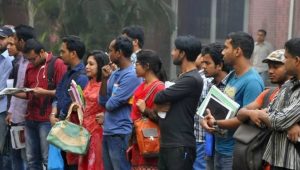
The latest results of Bangladesh’s Higher Secondary Certificate (HSC) examinations are more than just examination statistics. They are a significant sign of problems in the nation’s educational system, changing social circumstances and psychological shifts in a new generation. Overall, 1,240,798 candidates appeared in the education board. Only 646,685 passed. The overall pass rate was 52.12 percent. Almost half of all candidates did not pass. The lowest pass rate in the past 22 years. The number of students who scored a GPA-5 was also lower at 40,084. The situation is even worse if the figures of those who failed English (243,528) and Information and Communication Technology (ICT) (138,493) are added together.
The question is, does the entire generation’s academic ability have to be so drastically reduced? Or have students’ ways of doing things, their thinking, their concentration and their modes of processing information shifted as they have grown up in a different social context from the one that our education system has developed? This year’s results from a communication studies perspective must be viewed as part of a larger social and communication crisis.
The children of today’s youth have grown up in the age of the COVID-19 pandemic. Bangladesh’s education system was severely affected by the pandemic. Questions have been raised as to whether those damages have been fully compensated. Schools were closed for 18 months beginning in March 2020. Alternatives to face-to-face classes, such as television and online classes, were introduced. But these efforts were not equally successful. The World Bank/UNICEF study determined that many students were not receiving their regular education due to a lack of digital facilities as well as the ability to learn at home.

Learning is not so much about memorising what is in the book. Effective learning requires class interaction, teacher feedback, student interaction, the ability to ask questions and a structured approach to learning. That’s what matters in a worthwhile education. This whole communication system has been thrown off by the pandemic. With the schools opening, an important question was yet to be answered. What work was really undertaken to restore students’ learning habits?
Furthermore, this cohort has gone through a reduced syllabus, alternate modes of assessment, and different types of exams during the pandemic, making it very challenging for them to reach higher secondary. However, the task of the state and educational institutions was to recognise what students actually know and don’t know and to restructure the teaching and assessment processes as a result.



The youth of today are raised in a totally different communication climate. Textbooks, newspapers and classrooms are no longer their only sources of information. They have become accustomed to using smartphones, social media, video and algorithm-driven digital content as a part of their daily routine. This is called the expansion of the attention economy in the field of communication studies. Digital platforms deliver users new content continually, according to their individual tastes and actions. One video comes up before the end of the last one. The two posts are immediately connected.
The brain can get accustomed to fast stimuli in a short time because of constant exposure to new pieces of information, entertainment and excitement. In contrast, traditional education requires a whole lot more. It involves reading a book for a longer duration, comprehending complex topics, analyse information and focusing on a single topic. These two habits don’t like each other at all. Short videos, short posts, short reactions to social media- students who are used to a world of that may find themselves struggling more and more to sit with their books for hours.
To conclude, let’s take the ‘instant culture’ of Generation Z into account. The need for immediate gratification, quick fixes and success with little work is taking the place of the discipline of long years of academic work for some students. Technology is not the enemy of education, however. Social media can be used to aid learning. The issue lies with students who no longer interact with technology, and instead rely on the algorithms that win their notice.
The July-August uprising has had a profound impact on the social and political consciousness of the young population in Bangladesh. It was a turning point in the students’ consciousness of their rights, authority, identity and relationship with the state. The movement was significant in the field of communication studies, as it was a mix of direct social solidarity and digital communication. Social media became a significant tool in disseminating news, pictures, videos, comments and feelings about the movement. Young people located themselves in new places to voice their opinions, outside the realm of conventional mass media. As a result, their areas of attention and interest also began to change.
There were no coordinated actions to assist students in getting back to normal school after major political and social changes, nor were there any programsmes to offer psychological assistance and rekindle interest in school. If educational institutions are unaware of the thinking of the new generation and continue to autocratise them with old laws, the gap between the students and education will only deepen. When looking at this year’s results, the role of the government and of the students must be analysed separately.
On the other hand, the high failure rates of the learners in English and ICT could be attributed to a lack of competent teachers, poor science laboratories, lack of devices, disengagement of the learners from the classroom, and low socioeconomic status of the learners. This generation is the generation of smartphones. However, many of them have not been successful in formal study of ICT. This is an important lesson for us to learn. Being familiar with technology and having knowledge of technology are not the same thing. It’s one thing to use technology; it’s another to use technology well. It’s a different skill to understand it, analyse it and use it creatively.

The government does not have only the duty of conducting examinations and announcing the outcome. It must also develop an educational setting that is appropriate to the needs of the students. Pupils also have a role to play. They will need to exercise their freedom and access to technology to develop themselves personally.
This year’s results can be blamed on an entire generation easily. However, this will not help resolve the issue. Rather, these are the effects of an education system ill-equipped to relate effectively to a new digital society, a new generation, new habits and new technologies. The students have gotten with the times. However, methods of teaching them have not. If we do not find a way to bridge this communication gap, then the same crisis could be back again in the next test.
The views expressed in this article are solely those of the author
The writer is an Associate Professor, Department of Communication and Journalism, University of Chittagong; Doctoral Scholar, School of Journalism and Mass Communication, Jadavpur University, India. Email: [email protected]