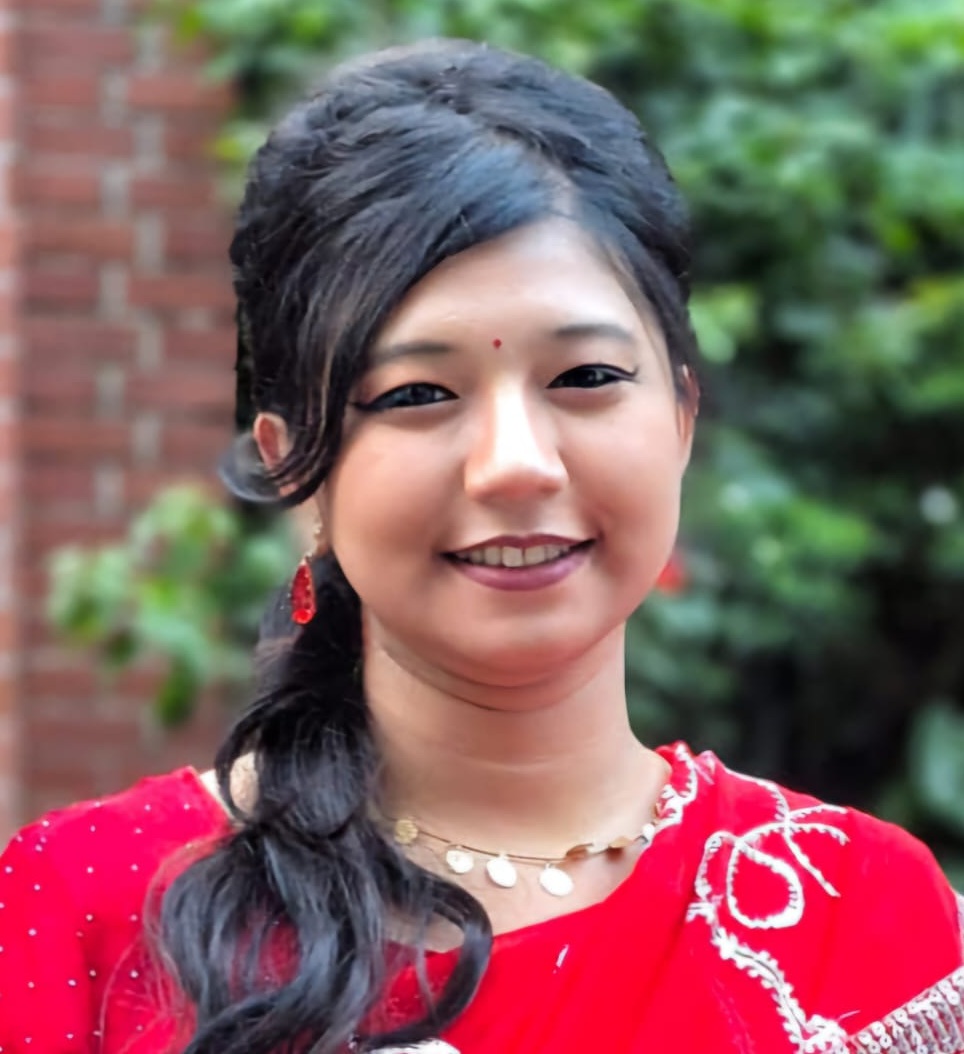




When Putul Rakhine was a little girl, the sea felt like a distant secret.
To touch the waves, Putul and her older sister, Lachu, had to walk down the earthen embankment outside near home and trek for an entire hour.
The dirt path wound through a forest of whispering tamarisk trees, wild bushes, and tall coconut palms swaying against the sky.
That green corridor was their playground – a world of shade, salt breeze, and childhood games.
Today, Putul is 23, and Lachu is 30.
That one-hour journey takes less than ten minutes.
“Before, we had to walk for nearly an hour to reach the sea. Now, it takes just ten minutes from the embankment. The sea has kept eating away at the land, inching closer to our homes,” Putul says, gazing at the water.
The coconut grove where the two sisters once played hide-and-seek has dissolved into the sea. The old coastal forest is gone, too.
Mutalib, a 35-year-old van driver who carries villagers down the remaining dirt roads, remembers how thick the woods used to be. “Year after year, the hungry waves took it down,” he says.
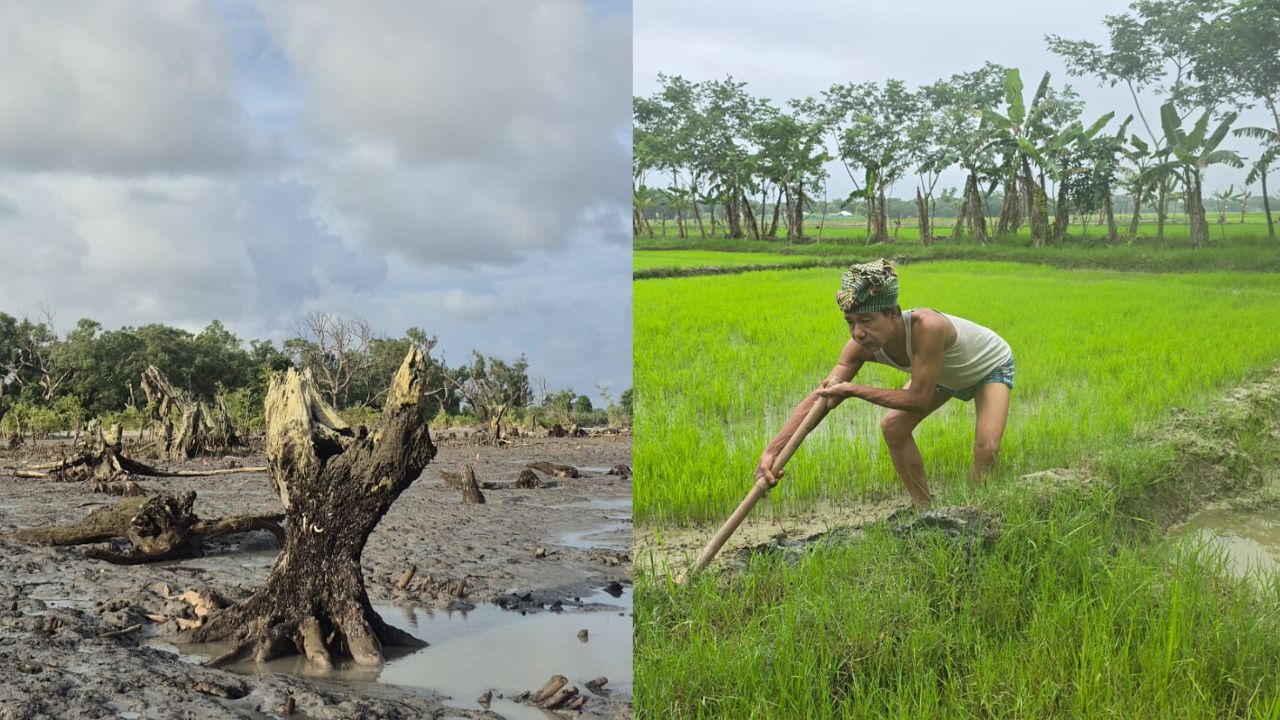
“Where a dense forest stood, only a few naked stumps stick out of the mud.”
For Putul, the hardest part isn’t just the land that washed away. It’s that her childhood memories no longer have a physical place to rest.
As the sea advances, it takes more than trees and acres of land.
For Putul, it is erasing the landscape of her childhood, the places where she played, laughed and grew up.
One day, she hopes to tell her children, “This is where our coconut grove stood. This is where we used to play.”
But she fears that by then, there will be nothing left to show them.
Only the open sea, holding the memories of a childhood they will never get to see.
Climate change is often measured in numbers – homes destroyed, crops lost and wealth washed away.
But numbers cannot capture the pain of losing a childhood home, being separated from neighbours, or watching once-joyful festivals grow quieter.
When families move away, children may also lose touch with their mother tongue and traditions.
Along Bangladesh’s southern coast, erosion is taking more than land from the Rakhine community.
It is slowly erasing their memories, culture and sense of belonging.

From 60 families to five: A village losing its life
Choten Rakhain, 65, remembers when his village was full of life.
His father’s barn was packed with golden rice, cows grazed in open fields, and neighbours shared extra milk with each other.

Back then, neighbourhood (Para) meant living together, working together, standing by one another in times of trouble, collecting contributions for festivals, and gathering for weddings or religious events.
In his village of Lakshmi Para, 60 Rakhain families once lived like one big family.
They helped each other in hard times and celebrated festivals together.
Today, only five families are left.
What hurts him most is not simply the loss of wealth, but the disappearance of familiar faces and the close-knit community that once gave village life its meaning.
The decline extends beyond Lakshmi Para.
According to Caritas Barisal’s regional data, 306 Rakhain families remain in Kalapara and 36 in Rangabali, both in Patuakhali district.
Another 266 families live in Taltali and Barguna Sadar.
A 2017 study by Md Sayedur Rahman of the Department of Disaster Science and Management at the University of Dhaka documented a much larger Rakhain presence in the south-central coastal region in 1947–48, with 5,190 families across 168 settlements.
Following migration over the years, the number had fallen to an estimated 515 families across 47 settlements.
The study highlighted social, political and economic pressures, alongside natural disasters and climate change, as factors contributing to the decline and displacement.
Choten has witnessed the cultural cost of that decline firsthand.
He once led a cultural group in his community, helping bring people together through traditional sports, boat races and religious celebrations.
Buddha Purnima, the water festivities of Sangria (Sangreng Poe), Prabarana Purnima and weddings were once occasions for large gatherings.
“There used to be so many families that we could each contribute a small amount and still organise grand celebrations,” he recalls.
“Now, so few of us remain. Even if everyone contributes what little they can, we can no longer celebrate on the scale we once did.”




When a community shrinks, its festivals do not simply become smaller.
There are fewer children to take part, fewer young people to learn from their elders, and fewer hands to prepare food, make traditional clothes, sing old songs and carry out familiar rituals.
With each family that leaves, the chain connecting one generation to the next grows weaker.
And for Choten, the quietest loss may be the hardest to bear: a village that once overflowed with life is slowly becoming a place where fewer people remain to keep its traditions alive.
A village erased by the river now a memory: Salty soil, clouded futures
Maten Rakhain, around 60, has three children. Today, they live in three different places.
She has not tried to stop them from leaving. As people have gradually moved away from her village, Maten has come to understand that love for one’s homeland is not enough to keep a family there.
People also need safety, a livelihood and a future they can count on.
For generations, many Rakhain families along Bangladesh’s southern coast depended on farming, fishing and the natural resources around them.
But Maten says life has become increasingly uncertain.
Cyclones, floods and tidal surges now come alongside rising temperatures, unpredictable rainfall and worsening soil salinity.
Last year, she says, hailstorms destroyed crops in many fields. Elsewhere, saltwater has made farmland difficult to cultivate.
“Even farming no longer gives us any confidence,” he says.
Research based on a survey of 37 families in Kalapara, along with group discussions and interviews, found that farming was the main livelihood for half of the participating households. Most had no bank savings.
The study also documented how salinity and prolonged waterlogging have reduced the productivity of coastal farmland, leaving some fields suitable for only one rice crop a year and making other crops difficult to grow.
For Maten, the loss of land is not just about farming. she remembers an old Rakhain settlement on a river island across the water.
According to her, it was swallowed by river erosion following disasters in the 1960s. Around 40 to 45 Rakhain families once lived there.
Today, only about 11 families remain in her present village, parts of which have also been eaten away by the river.
Choten Rakhain recalls a similar decline in his own community.
What remains of these lost settlements lives in people’s memories: where a neighbour’s house once stood, which path led to the Buddhist temple, which courtyard gathered with people during festivals, and where children once played.
These losses are also recorded in research.
In his study A Rakhain Proverb: Reviewing the Land Crisis of Indigenous Rakhain People in Barisal Division, Bangladesh, published in Pratichinta in January–March 2018, researcher Pavel Partha describes the disappearance of an old Rakhain village called Mraibunia in Laluya Union of Kalapara, Patuakhali.
When people leave in search of a more secure livelihood, they leave behind more than their homes and farmland.
They also leave the neighbour’s, shared memories and traditions built over generations.
And when those connections begin to break, the loss reaches beyond the land itself. It touches the very identity of a community.
The feast that no longer happens
In Mathus’s childhood, a Rakhine home was never quiet.
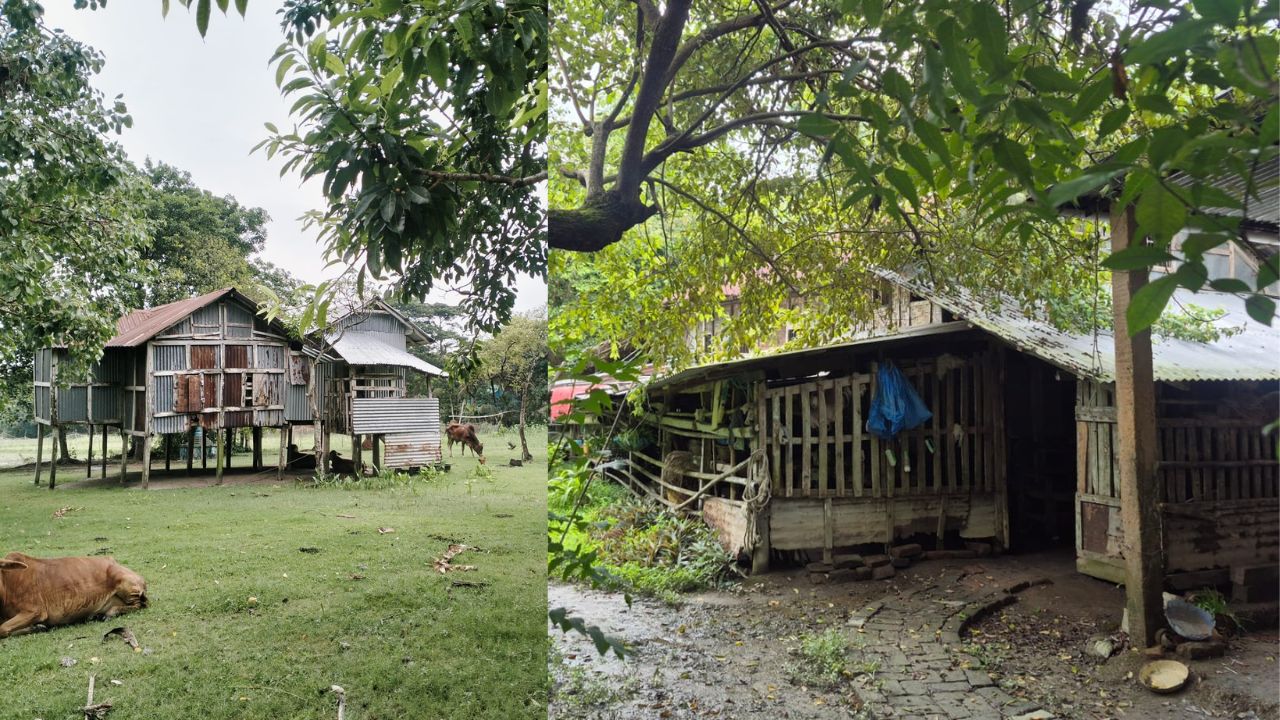
The 52-year-old remembers growing up in massive, high-ceilinged houses made of sturdy timber, sal, and Indian Iron Tree.
Under one roof, 20 or 30 relatives, grandparents, aunts, uncles, and cousins—shared daily life.
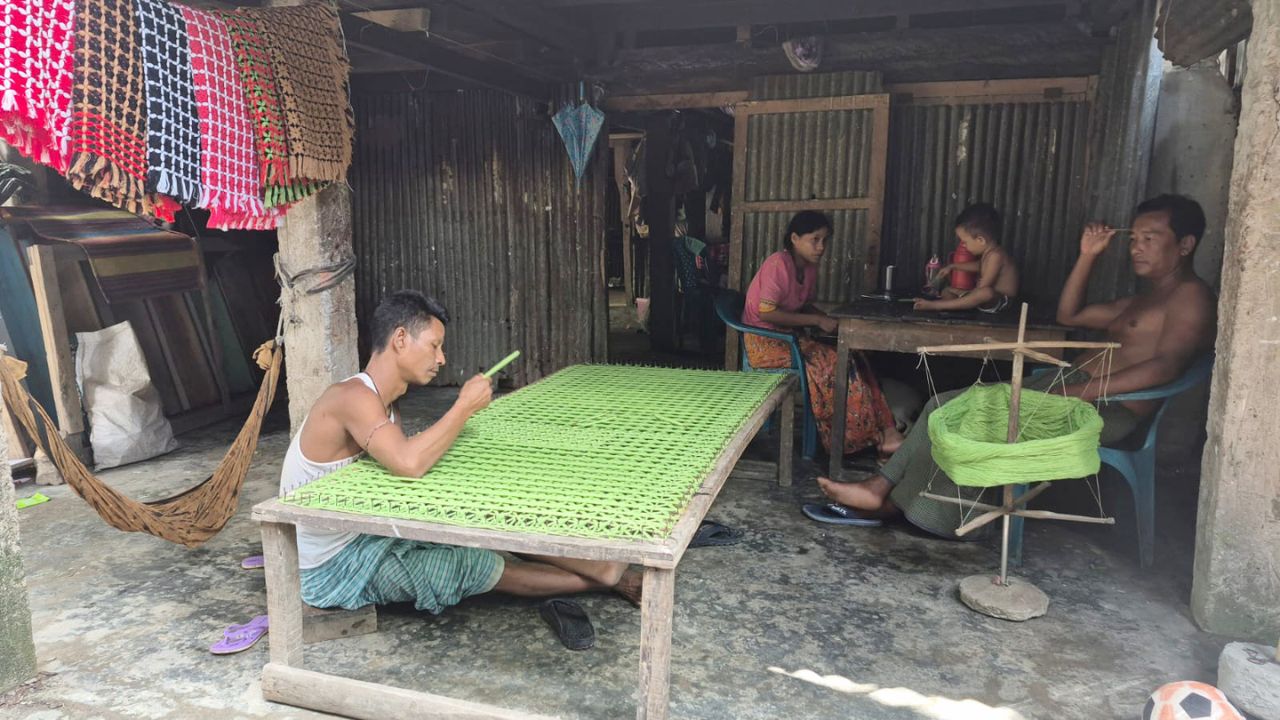
Today, stepping through those same wooden doorways reveals shadowy rooms occupied by just one or two elderly residents.
“If someone fish in the canal, a bowl of it was sent to every house of community,” Mathus remembers, a faint smile crossing his face.
“At harvest time, the women gathered around the wooden foot-pounder (dheki) to crush fresh rice into flat flakes. We called it the Chira Utshob—the Flattened Rice Feast. We invited the whole village. It wasn’t just about sharing a meal; it was our way of holding each other close.”
That feast has faded out.
With few local jobs, young people migrated to various parts of the country, especially in Dhaka and Chattogram.
Some have crossed the border into Myanmar, searching for a place where people still look and speak like them.
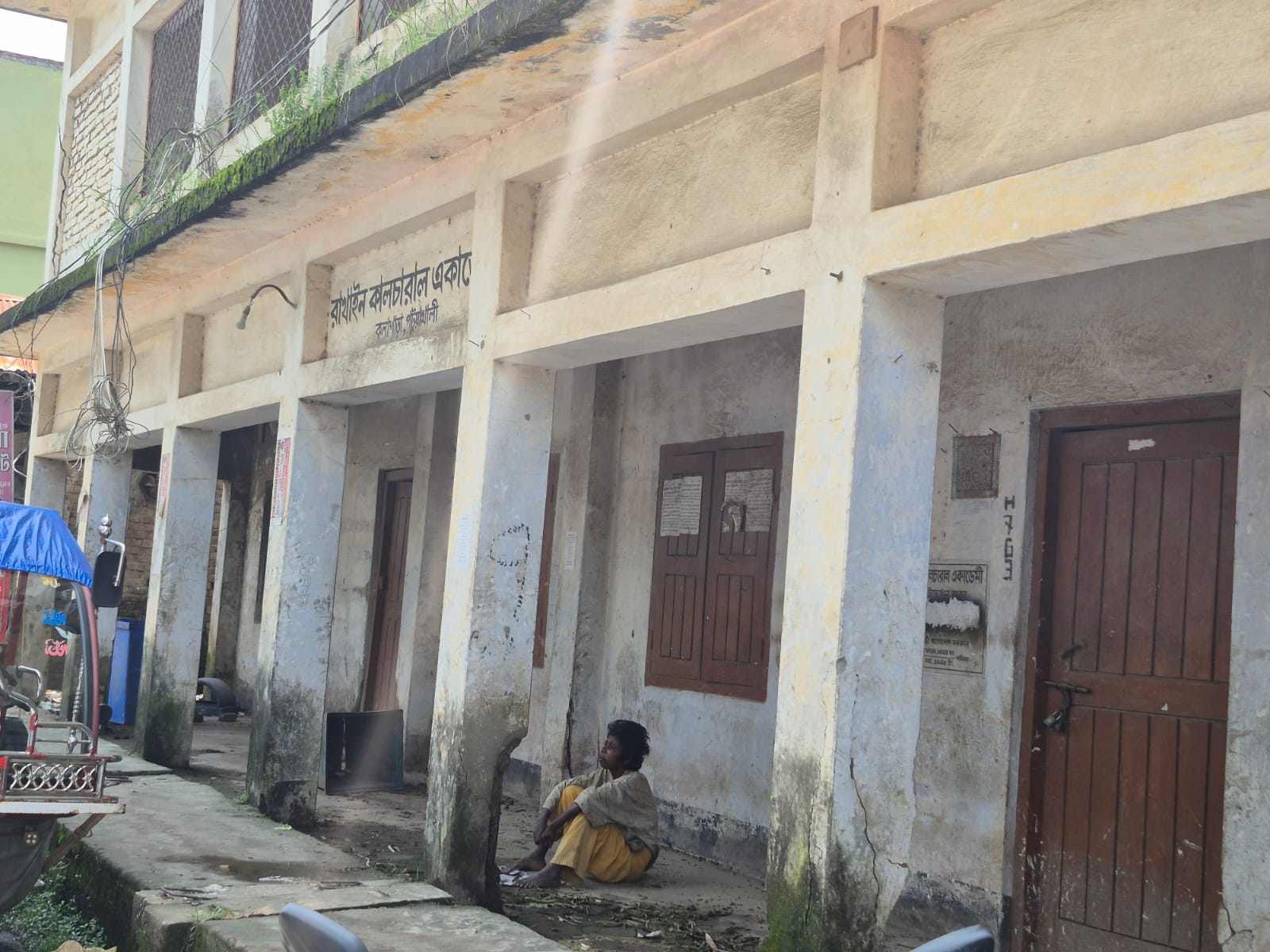
Over a decade ago, the government constructed a Rakhine Cultural Academy in the Kalapara-Kuakata area to keep their music, traditional weaving, and dances alive.
Today, that building sits locked, dusty, and abandoned. Mathus says, due to bureaucratic indifference, it has remained shuttered for nearly 12 years.
“The place where our children were supposed to learn our traditional dances, our alphabet, and our flutes is rotting behind heavy iron locks,” he says. “It feels like a monument to our forgetting.”
Forgotten letters, lost words
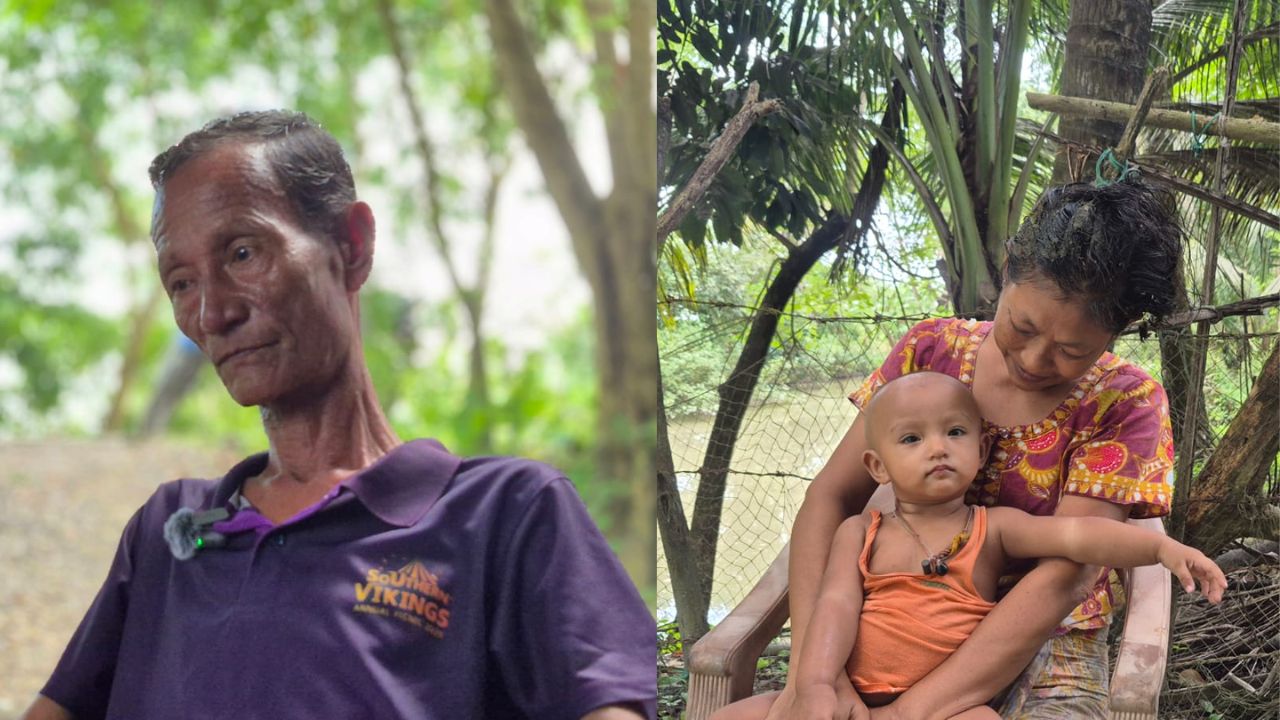
Babu Chamol, 32, grew up watching his father teach children how to write the elegant, curving letters of the Rakhine script.
Now, Chamol watches that written legacy slip away.
Because there are no mother-tongue primary schools and almost no certified teachers, young Rakhine children are taught exclusively in Bengali.
While they still speak a few words of Rakhine at home, most cannot read a single letter from their ancestors’ books.
“Our language is turning into a whisper,” Chamol says, his voice heavy with concern. “Children can still talk to their grandmothers, but they cannot read our history, our poems, or our prayers. In another generation, the written word will be dead.”
Lost in translation: When words cost ancestral soil
Language isn’t just a tool for conversation; in coastal Bangladesh, it has meant the difference between holding onto one’s home or losing it entirely.
Maung Miya Rakhine, who works with Caritas Barishal, remembers the devastating human cost of this linguistic divide.
Following the catastrophic 1970 cyclone, the government created early storm-warning systems through the Cyclone Preparedness Programme (CPP). But every siren and radio alert was broadcast exclusively in Bengali.
“Our elders didn’t understand the Bengali words coming over the loudspeakers,” Maung Miya says.
“They had no idea a monstrous wave was coming. Families waited until the sky turned black and the water was at their knees, fleeing in absolute panic with just their babies in their arms and a few chickens under their coats.”
In the chaos, metal trunks containing handwritten land deeds, colonial tax receipts, and family property papers were left behind to wash out to sea.
Those lost papers invited disaster.
With deeds gone and surviving elders unable to read complex administrative Bengali, dishonest land grabbers moved in.
Through forged papers and manipulated legal records, thousands of acres of ancestral Rakhine land were quietly signed away.
Researcher Pavel Partha documented this pattern: when elderly Rakhine villagers went to government offices to claim their ancestral boundaries, officials routinely turned them away, claiming the original land books had been ruined by floods.
Even sacred grounds have not been spared.
Pramila Rakhine, working with Caritas in Dhaka, notes that while some riverside cremation grounds (shoshan) were swallowed by rising waters, others were claimed by local power-brokers who used forged thumbprints to snatch the land from grieving families.
“Whether you are wealthy or poor, every family needs that ground to say goodbye to their loved ones,” Maten says. “When you aren’t even sure if you can cremate your parents without someone dragging you to court, the grief breaks you twice.”
A home can be rebuilt; can a culture?
Once, 20 to 30 people would gather around a single courtyard to share a meal.
Today, some homes have only two or three people left. Festivals that once drew hundreds have grown quieter as young people leave for Dhaka, Chattogram or other countries in search of work.
The villages remain, but many of the people and traditions that gave them life are disappearing.
For the Rakhain community along Bangladesh’s southern coast, the struggle is not just against rising tides, saltwater or storms. It is a struggle to hold on to their roots.
Putul may move her home again as the sea advances.
Choten’s family may turn to other livelihoods, and Maten’s children may build new lives elsewhere.
But a lost village, an ancestral burial ground, childhood trees, a shared meal or a festival filled with laughter cannot easily be recreated somewhere else.
Sonia Akhter, a clinical psychologist at Moner Bondhu, warns that displacement and declining cultural practices can deepen loneliness, despair and fears of losing one’s identity.
Writer, Researcher and Disaster Management Expert Gowhar Nayeem Wara says the losses must be understood beyond land and livelihoods to include education, language, culture, social security and political representation.
Both emphasise the importance of community support and keeping cultural traditions alive.
Ultimately, protecting the Rakhain community means more than saving homes.
It means ensuring that future generations can still speak their language, celebrate their festivals and feel connected to their ancestral land.
People can build new homes elsewhere, but once a community loses its memories, traditions and sense of belonging, rebuilding them may be far harder than rebuilding a house.
The story was produced by Earth Journalism Network (EJN).