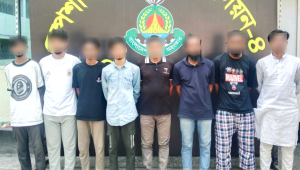
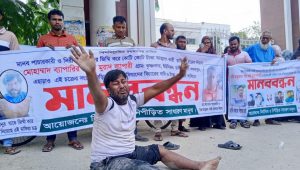
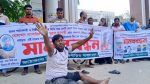
Individuals involved in harassing Nobel laureate and former chief adviser to Bangladesh’s interim government, Dr Muhammad Yunus, at John F Kennedy International Airport have gone into hiding in New York.
The incident occurred on the afternoon of Monday, when activists from the Awami League-an organisation banned in Bangladesh-blocked Dr Yunus’s path at JFK Airport, labeling him a “terrorist” and “police killer”. Based on video evidence, key individuals identified among the harassers include Imdad Chowdhury, Sakhawat Hossain Chanchal, Tanvir, and Mijanur Rahman Chowdhury.
The Bangladesh Consulate in New York has contacted local law enforcement agencies, although no lawsuit has been filed as yet. Meanwhile on 13 October morning (local time), the Bangladesh Embassy in Washington informed the US Department of State about the harassment and the blocking of Dr Yunus’s path.

Press Minister of the Bangladesh Embassy in Washington, Golam Mortoza said that diplomatic measures are being carried out following instructions from the Foreign Ministry in Dhaka. Mortoza confirmed speaking directly with Dr Yunus, who reassured him that he is well.


Commenting on the incident, Dr Yunus said, “What happened at the airport is the exact character of fascists. Nothing civilised can be expected from them. I will continue my work. I am well”. Dr Yunus had not requested any protocol from either the Bangladesh Embassy or the New York Consulate for his trip, and neither mission was aware of his travel plans.
In Dhaka, State Minister for Foreign Affairs Humaiun Kobir said during an evening briefing at the Foreign Ministry that Bangladesh has communicated with US authorities to take strict action against those responsible.
Kobir mentioned that US law enforcement agencies have been asked to review video footage, identify those involved, and take legal action.
Condemning the assault, Kobir stressed that the government has not taken the harassment lightly and called it unacceptable, adding that “only terrorists can carry out such a cowardly attack.”