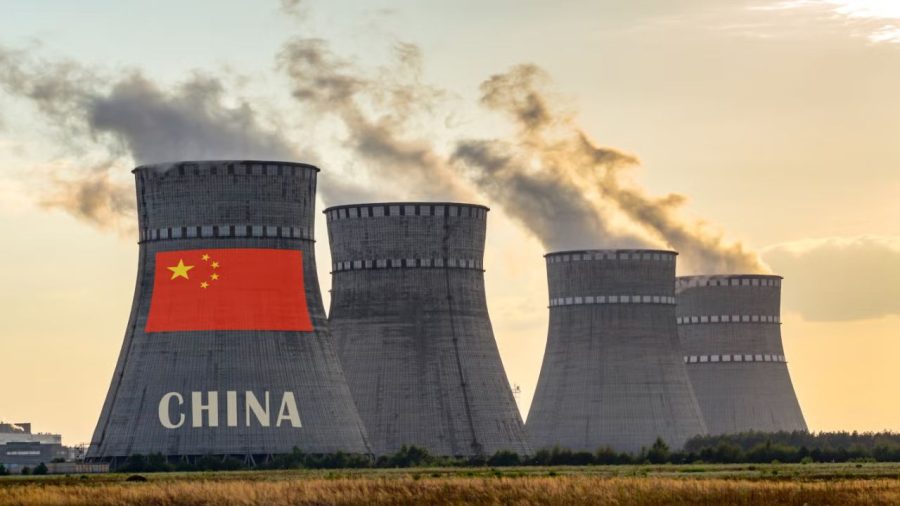



China has proposed building a 100-megawatt small nuclear power plant near the planned Chinese Economic Zone in Mongla, Bagerhat, in what could become Bangladesh’s first project using Small Modular Reactor technology.
The plant would primarily supply electricity to the economic zone, with surplus power sold to Bangladesh and fed into the national grid.
The proposal comes as Bangladesh looks to broaden its nuclear energy programme beyond the 2,400MW Rooppur Nuclear Power Plant being built with Russian assistance.
It also follows a recent memorandum of understanding with the United States on the peaceful use of nuclear energy.
Small Modular Reactors, or SMRs, are designed to be smaller and more flexible than conventional nuclear plants. China, Russia and the United States are among the countries developing the technology.
Science and Technology Minister Faqir Mahbub Anam told TIMES that Bangladesh had taken an initial decision to explore SMRs and was in talks with several countries.
“We need to learn more about SMRs. We are interested in them. But we will make a decision after understanding them better,” he said.

The minister, however, said the specific Chinese proposal for Mongla had not yet reached him.
The plan was discussed in the second week of August at a meeting between the Bangladesh Atomic Energy Regulatory Authority and a Chinese delegation.
Eight representatives from Bangladesh and eight officials from the state-owned China National Nuclear Cooperation Overseas Limited attended the meeting.
Four Chinese experts presented different aspects of SMR technology and sought Bangladesh’s position on such a project.
An official who attended the meeting told TIMES that preliminary discussions included Bangladesh providing land free of cost.




The government would also consider waiving import duties on machinery and other equipment needed for the plant.
Bangladesh also proposed employing local workers so that they could gain expertise in the technology.
It also asked China to build a bridge over the Mongla River.
An official of the Bangladesh Atomic Energy Regulatory Authority said the proposed plant could help meet the economic zone’s electricity demand.
“We will not be able to supply electricity there [to the Chinese Economic Zone]. So, if China sets up an SMR, it will benefit both countries,” the official said.
The site has already been at the centre of changing investment plans.
In 2015, during the Awami League government, Bangladesh signed a memorandum of understanding with India to develop an economic zone on 110 acres near Mongla Port under an Indian line of credit.
The Muhammad Yunus-led interim government later cancelled the agreement after the Indian company failed to complete the land development work within the stipulated two-year period.
After the BNP government came to power, Dhaka and Beijing signed a new memorandum of understanding during Prime Minister Tarique Rahman’s visit to China in June.
Under that agreement, the China-Bangladesh Mongla Port Economic Zone is to be developed on the same 110-acre site.
The Mongla proposal is separate from another Chinese financial offer involving nuclear power.
The science and technology minister had earlier said several US companies had held talks with the government but had not submitted financial proposals.
He said one Chinese company had made a financial offer, but the government considered it unusually high.
That offer was unrelated to the proposed Mongla SMR project.
Rooppur fuel shipment arrives
The remaining uranium fuel for the first unit of the Rooppur Nuclear Power Plant reached the project site in Ishwardi, Pabna, on Saturday under tight security.
The consignment arrived at Hazrat Shahjalal International Airport at 11:44pm on Friday and was received by officials of the Bangladesh Atomic Energy Regulatory Authority.
Three lorries carrying the fuel left the airport after 7am on Saturday under army protection and travelled by road to Rooppur.
Security was tightened in Ishwardi and surrounding areas during the transport operation.