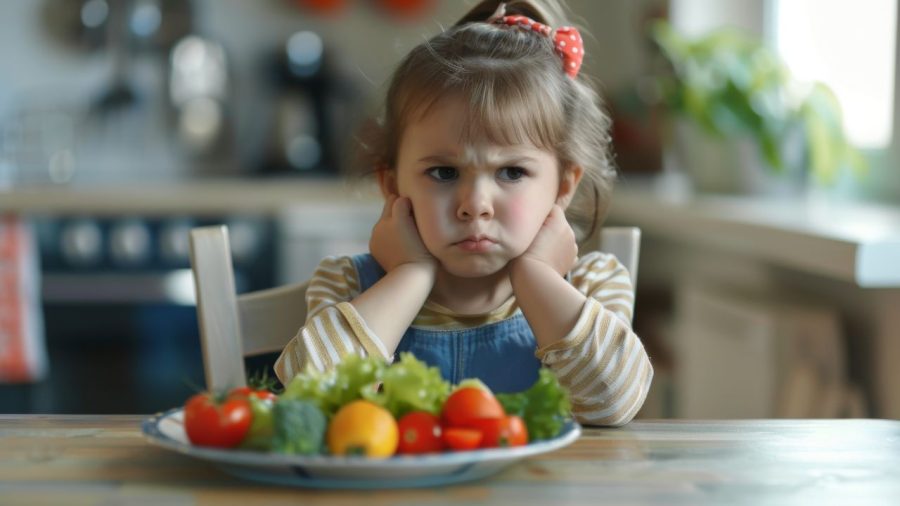

Small changes in the way children experience food every day can have a lasting influence on their dietary choices later in life, according to scientific research.
Getting children to eat enough vegetables remains a common challenge for parents, with parenting forums and chat groups frequently featuring questions such as, “Is it normal that my child only eats beige foods?” Researchers, however, have identified several evidence-based strategies that parents can use at home to encourage healthier eating habits, reports BBC.
Children naturally develop an early preference for sweet tastes, as breast milk itself contains natural sugars that give it a sweet flavour. This can make the transition to solid foods such as broccoli or spinach challenging, despite the importance of a varied diet rich in fruits and vegetables.
Poor nutrition during childhood can negatively affect cognition, concentration, behaviour and academic performance. Meanwhile, rising childhood obesity rates are associated with long-term health complications and poorer educational outcomes.
Start early with repeated exposure
Researchers have identified six practical, science-backed strategies to address these challenges, starting with frequent exposure to a variety of vegetables during early childhood.
Marion Hetherington, professor of biopsychology at the University of Leeds in the UK, said the preschool years offer the most effective opportunity to improve children’s liking of vegetables.

“If you don’t start to increase children’s vegetable exposure by five years of age, it’s [almost] too late… That’s a really a hard message, but the fact is if they’ve missed out on all of that exposure, it’s not impossible, but it’s hard work,” Hetherington said.
Studies show that children generally need to be exposed to a new food repeatedly—between five and 15 times, depending on the child—before accepting it. Infants below one year may need only three to four exposures, while preschool children aged three to four often require more because they tend to show higher levels of food neophobia, or an aversion to trying new foods.
Research also suggests that a mother’s diet can reach the foetus through amniotic fluid, helping shape an infant’s food preferences even before birth.
Serve vegetables before other foods
The second strategy is to serve vegetables at the beginning of a meal, when children are likely to be hungriest. Telling children explicitly that a food is good for them can also backfire, as they are more likely to choose foods described as “tasty” rather than “healthy”.



Serving vegetables first removes competition from higher-calorie foods. “Kids will often eat the thing they like the most… And then by the time they reach their peas, they don’t want them anymore,” Hetherington said.
Encouraging children to eat vegetables first can also help prevent overeating, according to Barbara Rolls, professor of nutritional sciences at Pennsylvania State University in the US.
Vegetables can also be incorporated into breakfast, such as mushrooms and spinach in an omelette or courgettes in breakfast muffins. A 2023 trial conducted across eight UK childcare centres found that children ate vegetables for breakfast more than 60 per cent of the time they were offered.
Change the balance on the plate
The third strategy involves changing meal ratios by increasing the portions of healthier foods while reducing high-calorie ingredients.
Parents can do this by expanding vegetable side dishes or grating vegetables such as carrots and courgettes into sauces. Studies show that people tend to consume a similar volume of food even when the ratio of meat to vegetables is changed.
Increasing the amount of fruit and vegetables on a child’s plate by 50 per cent directly increases their consumption. Offering preschool children a choice of different vegetables at mealtimes can also encourage vegetable intake while reducing consumption of unhealthy foods.
Make healthy food visually appealing
The fourth strategy is to change the visual presentation of food, which can significantly influence children’s eating behaviour.
Children tend to be drawn to familiar and appealing arrangements. Presenting food artistically or cutting fruit and vegetables into fun shapes, such as butterflies, flowers or teddy bears, can make them more appealing. Keeping healthy snacks visible and within easy reach can also encourage children to choose them.
Research found that children aged 10 to 13 ate and selected more vegetables when they were served in a single container with pre-portioned servings rather than on several plates. Preschool children, meanwhile, consumed 36 per cent more vegetables when food was presented on divided plates with separate sections.
Let children see healthy eating at home
The fifth strategy focuses on family mealtime habits. Parents who regularly model healthy eating can help make those dietary behaviours normal for their children.
By contrast, children whose parents eat fast food, skip breakfast or consume unhealthy snacks are much more likely to copy those habits. A study of schoolchildren in New Zealand found that children whose parents had healthier diets consumed fewer cakes, chocolates and other savoury snack foods.
Eating together at least three times a week is associated with a healthier body weight, improved eating patterns and a greater likelihood of healthy eating. A longitudinal study also found that regular family mealtimes were associated with higher fitness levels and lower soft drink consumption.
Avoid pressure and let children explore
The sixth and final strategy is to build a positive relationship with food without applying pressure.
Pressuring children to eat particular foods can result in lower enjoyment of food and a less healthy diet. Similarly, rewarding children with high-fat or high-sugar treats can increase their preference for those foods.
Instead, parents can allow children to explore food by touching, smelling and closely examining ingredients such as beetroot, chickpeas and pak choi without expecting them to taste them. Research suggests this approach can reduce food neophobia, making children more open to and willing to try unfamiliar foods later.