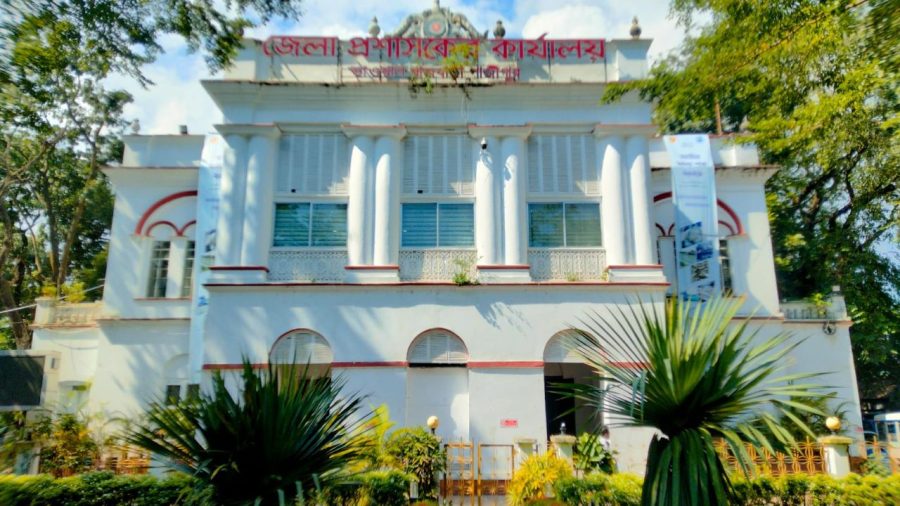

Once known for its sal forests, farmland and rural communities, Gazipur has transformed into one of Bangladesh’s most important industrial zones, driven by millions of workers, entrepreneurs and expanding factories.
The district’s proximity to Dhaka has been a major factor behind its industrial growth. Better road connectivity, easy transportation of goods and availability of a large workforce made Gazipur an attractive destination for investors, particularly from the 1980s with the rapid expansion of the readymade garment sector.
Industrial growth spread across Tongi, Konabari, Gazipur Sadar, Kaliakair and Sreepur, with factories producing garments, pharmaceuticals, ceramics, food products, plastics, electronics and other goods. The expansion has turned the once-green region into a major centre of manufacturing and economic activity.
The rise of industries has also transformed local lives. People from different parts of the country migrated to Gazipur in search of jobs, leading to the growth of residential areas, markets, transport networks and service businesses around factories.

The garment sector remains at the heart of Gazipur’s industrial identity. Factories in the district make a significant contribution to Bangladesh’s apparel exports, while millions of workers play a key role in supporting the national economy. The industry has also created opportunities for local businesses and small entrepreneurs.
However, Gazipur’s industrial journey has expanded beyond garments. Pharmaceutical, ceramic, food, chemical and plastic industries have grown in different parts of the district, while Kaliakair has emerged as a promising area for technology-based investment.
Behind this transformation is the contribution of Gazipur’s people — factory workers, entrepreneurs, transport workers, small traders and professionals. Their combined efforts have shaped the industrial city that locals proudly describe as a place where “people create wealth, industry and production”.




Gazipur became a separate district on 1 March 1984 after independence. Since then, improvements in communication, education and industry have increased its economic importance. The district is also home to major educational institutions, including National University and Dhaka University of Engineering and Technology, contributing to knowledge-based development.
Despite rapid industrialisation, Gazipur faces challenges including the loss of farmland and water bodies, industrial pollution, traffic congestion, unplanned housing and pressure on forests. Experts say planned industrial expansion and environmental protection are essential for sustainable growth.
Gazipur Deputy Commissioner Md Nurul Karim Bhuiyan told TIMES that the district’s transformation from Bhawal’s heritage to a modern industrial city reflected Bangladesh’s economic progress.
“On one side, there is history and heritage, and on the other, industry and employment. The combination of the two is shaping the new Gazipur,” he said.
He said the district administration maintained regular coordination with industrial owners, particularly to strengthen garment production and exports. Support would continue to expand the industrial sector, create employment and attract new investment, he added.
Gazipur-1 lawmaker and Mayor Mojibur Rahman told TIMES that the district’s industrialisation was contributing not only to Gazipur’s economy but also to the national economy.
“Government support must continue to sustain the industries that have developed in Gazipur. Factories should remain operational, new investment should be encouraged and employment opportunities should increase,” he said.
He stressed the need for coordination among industrial owners, workers and the government to ensure the continued growth of the industrial sector.
From the land of Bhawal’s forests and royal heritage, Gazipur has emerged as a symbol of labour, industry and production — becoming one of the key engines of Bangladesh’s economy.