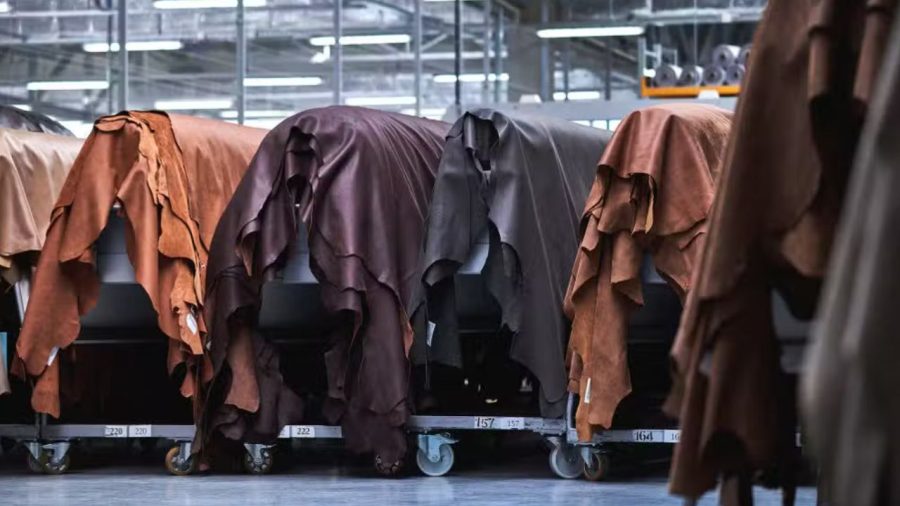

The government has unveiled a coordinated reform plan to revive the leather sector, offering a ‘graceful exit’ for long-term investors who are unable or unwilling to make further investments, while making Leather Working Group (LWG) certification mandatory and shifting focus to finished leather exports.
Commerce Minister Khandaker Abdul Muktadir announced the measures at a policy dialogue titled ‘Advancing Bangladesh’s Leather Sector: Challenges, Opportunities and Reform’ at BRAC Centre in Dhaka’s Mohakhali on Thursday.
The decision to relocate tanneries from Hazaribagh to Savar’s Hemayetpur was correct, he said, but weaknesses in implementation and management had damaged the industry.
Under the reform plan, investors who have invested for a long time but are now unable to make further investments will be given an exit option, creating space for new entrepreneurs and investors.
Future tannery operations must ensure 100 per cent compliance, and LWG certification will be mandatory to enhance international market acceptability.
Instead of exporting raw hides, the government aims to process them domestically and export shoes, bags and high-value leather goods to build a ‘Bangladesh Leather’ brand.

On the Central Effluent Treatment Plant (CETP) at Savar, one of the sector’s biggest challenges, the minister said a new world-class CETP would be built. The existing CETP is also being considered for renovation. Currently, only 14,000-15,000 cubic metres of waste is effectively treated against the projected capacity of 25,000 cubic metres.



Large tanneries will be required to establish their own Effluent Treatment Plants (ETPs). Small tanneries will coordinate with the central CETP system to ensure 100 per cent compliance.
Several factories will be established to produce tallow, bone powder and other usable products from solid tannery waste. This would transform the Savar tannery industrial area into an integrated waste management industrial zone.
Initiatives are being taken to expand trade facilities for leather and leather goods in Japan, South Korea and Europe. Plans are also in place to encourage major Spanish and Italian leather industry firms to invest in Bangladesh.
A skill and design development centre for leather and other industries is targeted to be operational in Savar by 2027.
The minister said the government aimed to bring the leather industry back to a strong position in the global market through skill development, design capability enhancement, environment-friendly production, investment incentives, ETP installation and resolution of bond-related complexities.
Australian Deputy High Commissioner Clinton Pobke attended as special guest. Flaxa President Syed Nasim Manzur, SANEM Executive Director and Dhaka University Economics Professor Selim Raihan, along with businessmen, tannery and footwear entrepreneurs, workers’ representatives and development partners, also participated in the discussion