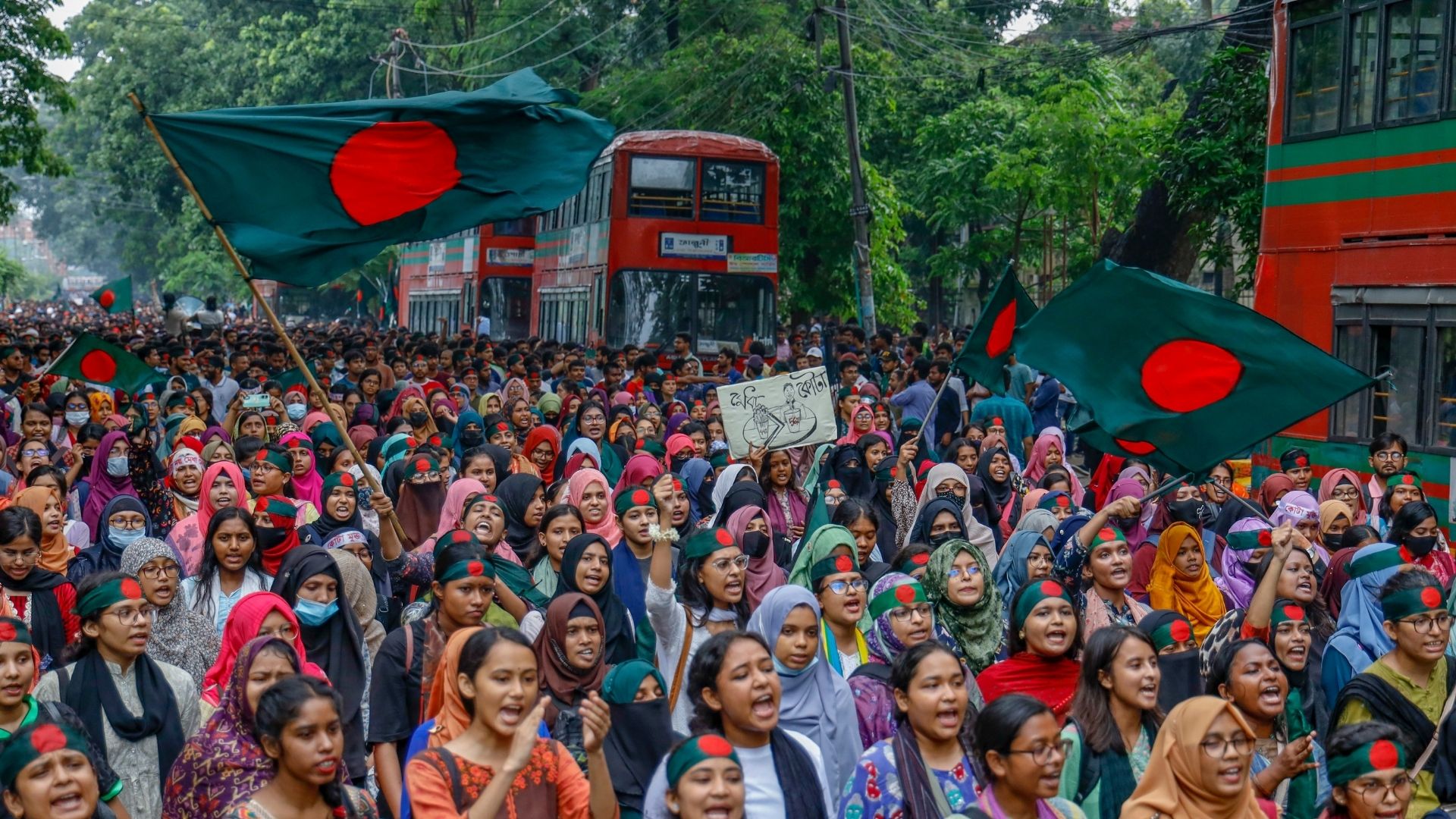



When a reporter from The Diplomat tracked down Tawhidul Haque Siam this April, one of the organisers behind the July uprising at Begum Rokeya University in Rangpur, he found a man speaking in “a tone entirely different from the hopeful young activist” interviewed in 2024.
Siam was, by then, among the movement’s own foot soldiers being arrested – not by the authoritarian government they had helped remove, but by the one that replaced it. It is one of the starker illustrations of a question researchers, psychiatrists and the students themselves have spent two years trying to answer: What did witnessing state violence, organising a revolution largely through encrypted apps, and burying classmates actually do to a generation’s psychology?
The clinical picture is stark. A hospital-based study of 217 injured survivors of the crackdown, published in the journal Cureus, found 82.5 per cent met the threshold for depression and 64.1 per cent for post-traumatic stress disorder using validated psychiatric screening tools, rates far above general population baselines.
But a separate, qualitative study published this January complicates the assumption that trauma tracked neatly with physical injury. Researchers conducted in-depth interviews with 35 protesters aged 17 to 28 who took part without being physically harmed and found meaningful psychological and physiological distress among them too, echoing a pattern documented after the Arab Spring uprisings, where psychological strain among young activists tended to intensify rather than fade once the protests ended, particularly as promised institutional change failed to arrive on schedule.

That same qualitative study identified three recurring themes among the protesters it interviewed, and each maps closely onto what students are still saying publicly two years later.
The first is disillusionment and political mistrust. “Like many uprisings before it, July changed the leadership but not people’s lives,” said international relations student Mahin Monowar. “One party left power and another took its place.” Law student Rezwan Ahmed Rifat offered a similarly mixed verdict, crediting the movement with restoring some democratic space while faulting it for failing to deliver institutional reform or justice for past abuses, a frustration Transparency International Bangladesh’s own household survey data now backs up, recording that citizens’ experiences of corruption in public services have risen, not fallen, since the political transition.




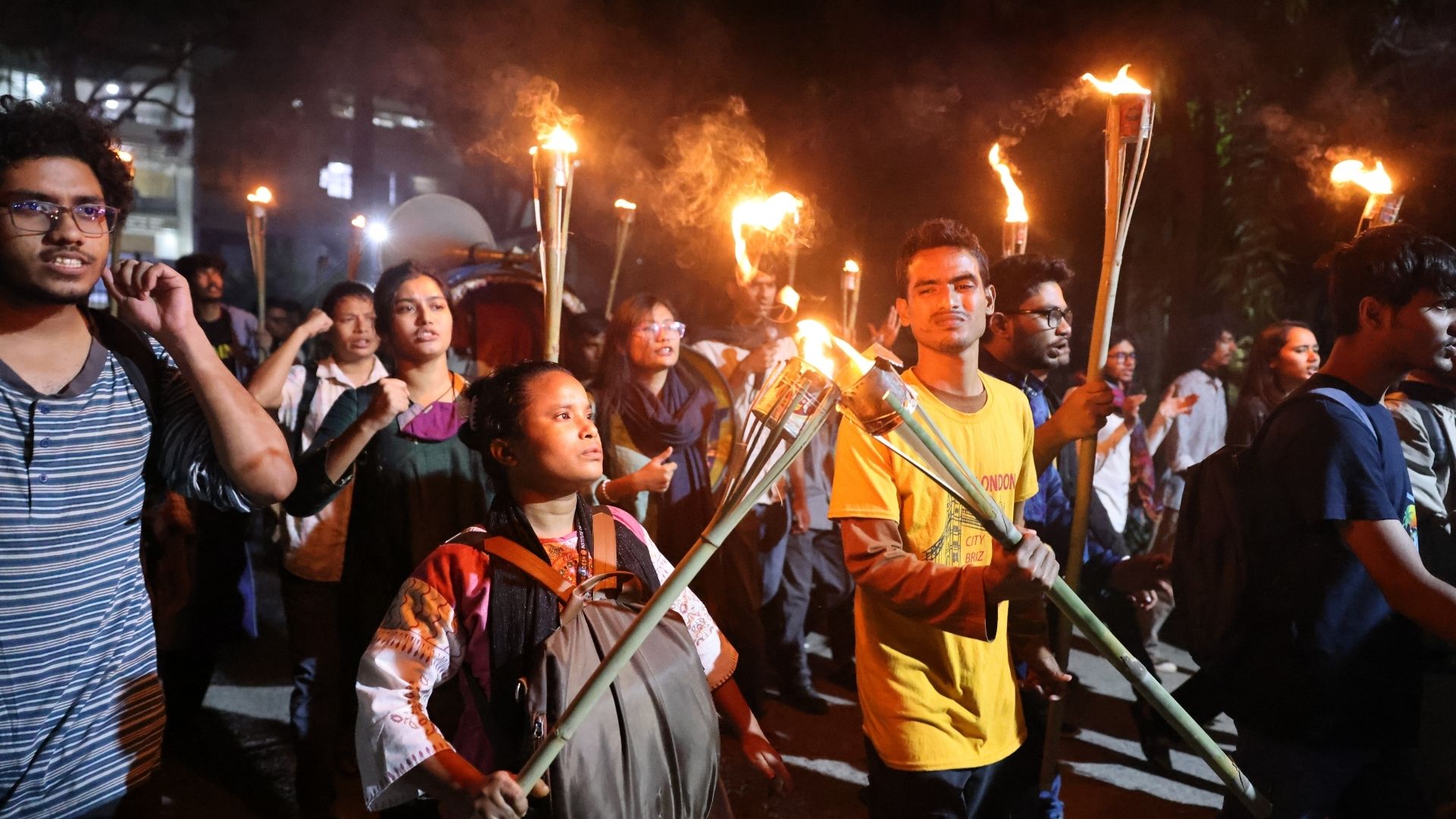
The second theme is trauma that doesn’t require a visible wound: The quiet, harder-to-name distress of having watched friends shot at, arrested, or killed, even from a position of relative physical safety. Clinicians studying the uprising’s aftermath have warned this category of survivor is easy for a health system to overlook precisely because there is no injury to treat.
The third is something closer to its opposite: Civic awakening. One widely shared reflection published in The Daily Star described the uprising as a mirror, forcing a generation to confront “the times we had chosen silence over confrontation, cynicism over hope”, and argued that having watched collective action topple an entrenched government, many young Bangladeshis emerged with a durable, if cautious, belief that organised action can still work.
Part of what made that belief durable was how it was built. When the government shut down mobile internet and blocked Facebook, Instagram and Messenger during the crackdown, Telegram remained the platform authorities were slowest to fully restrict, turning it into critical, if precarious, organising infrastructure for a movement forced to coordinate faster than the state could shut it down.
For a generation that came of age learning to organise a nationwide uprising through an encrypted app while assuming surveillance was possible at any moment, that experience appears to have left behind not just political awakening but a lasting, more guarded relationship with digital communication itself.
The identity shift has not landed evenly. Rights advocate Shabnam Akter has said many women who were highly visible during the protests have since withdrawn from public life altogether, driven out by coordinated online harassment. Dhaka University student Sheikh Tasnim Afroze Emi echoed the pattern, describing a rise in online abuse and mob behaviour that has left many of the same women who marched at the front now feeling less safe speaking publicly than they did in 2024.
What emerges from the research and the testimony alike is not a single verdict, more cynical or more hopeful; more anxious or more engaged, but a generation holding several of those states simultaneously.
Researchers behind the qualitative study landed on a description that captures it better than any single adjective could: Bangladesh’s young protesters, they concluded, are “psychologically vulnerable yet politically adaptive.” Two years on, with families of the dead still waiting for justice and organisers like Siam now defending themselves against the state they built, that description hasn’t needed revising. It has just kept being tested.