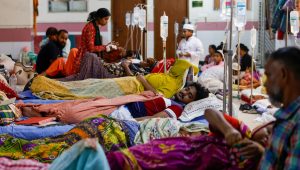



Even two months after the completion of the emergency measles-rubella (MR) vaccination campaign, pressure from measles patients has not eased at the country’s major hospitals.
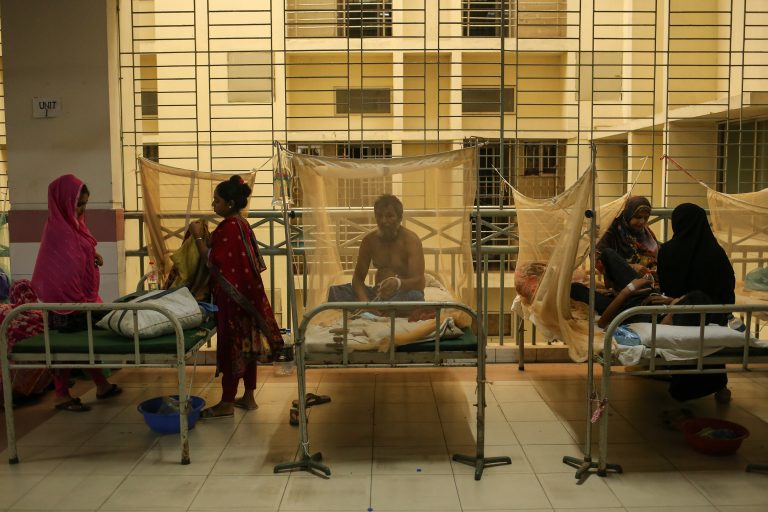
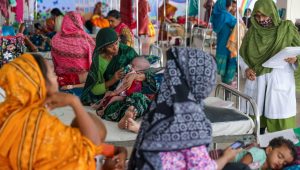
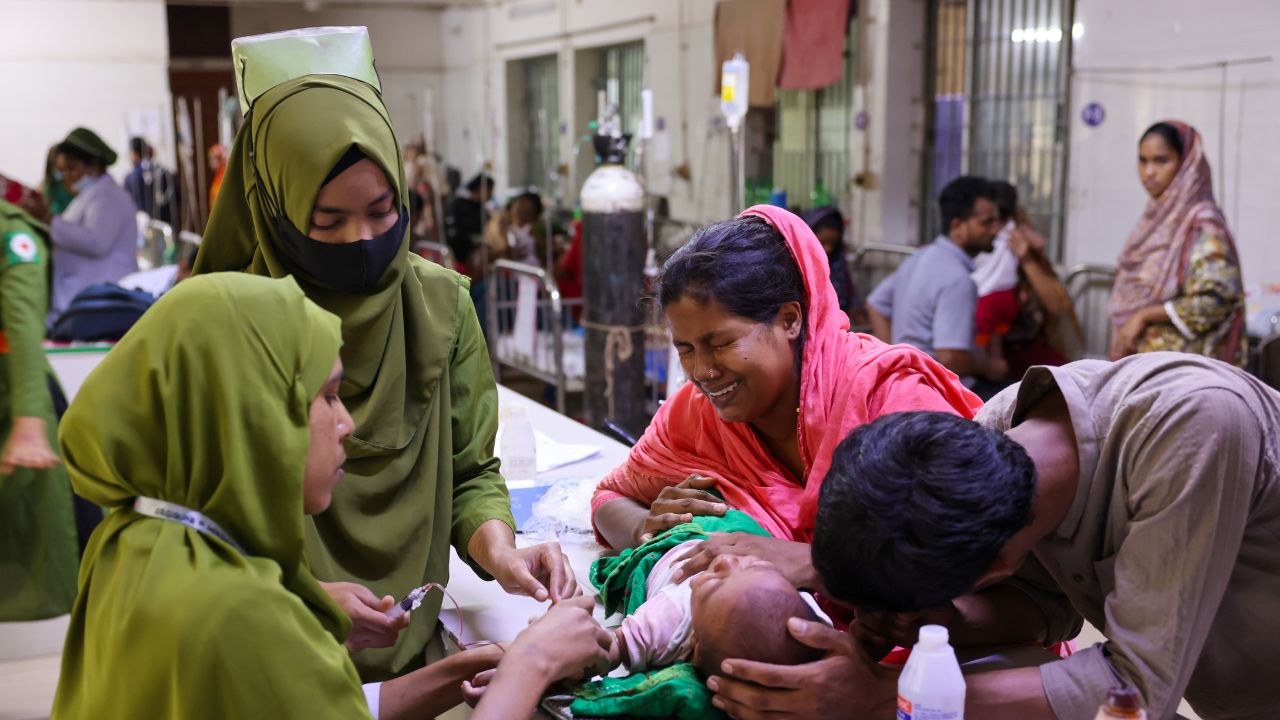
Paediatric wards remain crowded with children suffering from new infections as well as post-measles complications.
New patients are still being admitted every day to Dhaka Medical College Hospital, DNCC Covid-19 Dedicated Hospital and Bangladesh Shishu Hospital and Institute.
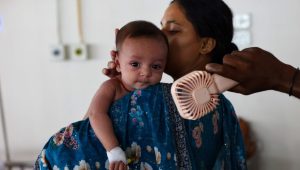
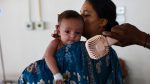
According to doctors, it will still take time for the outbreak to come under complete control. Eight-month-old Maliha lay in her mother’s arms with an oxygen mask covering her face and a feeding tube inserted through her nose.
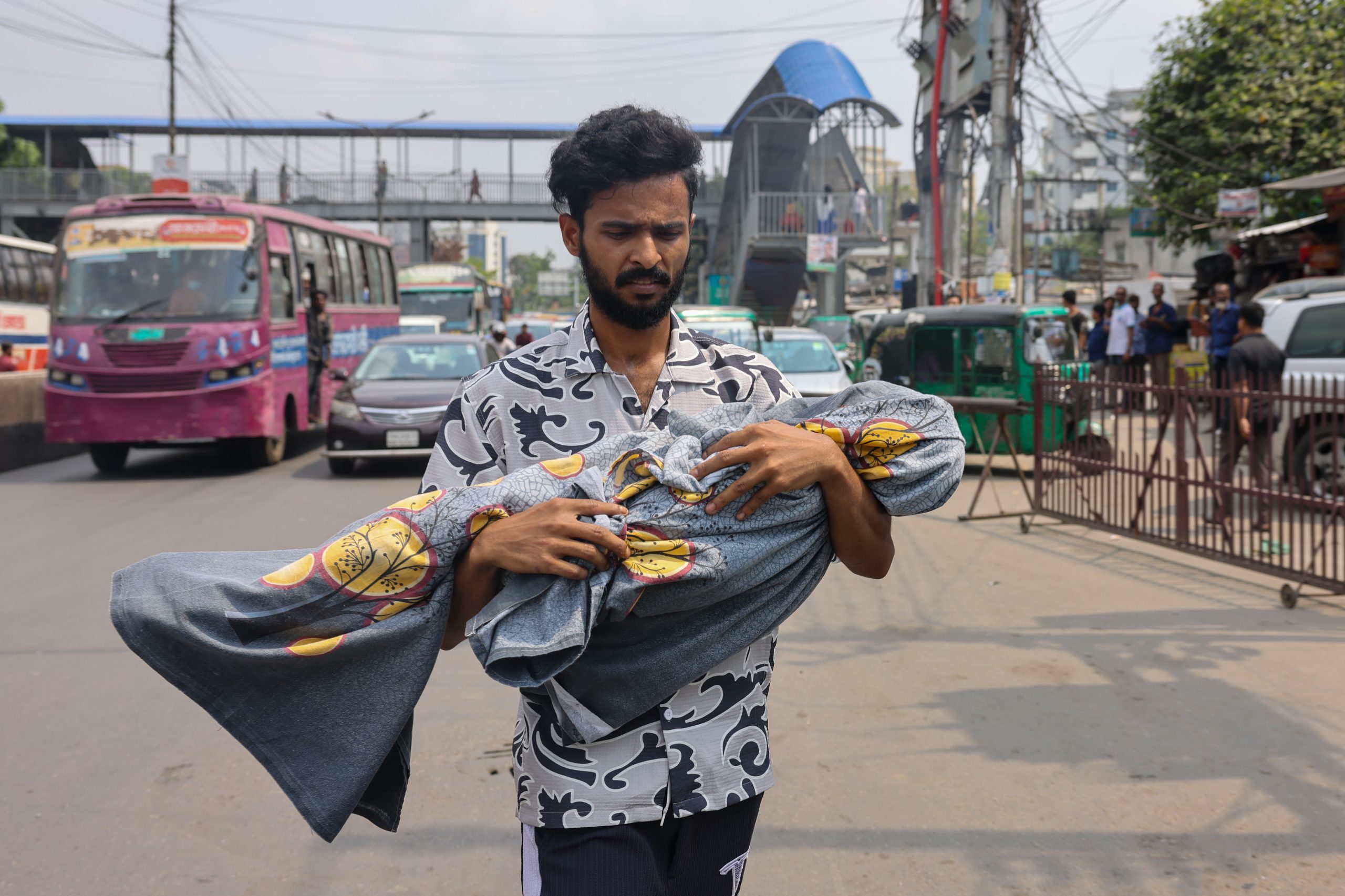
Although the reddish measles rashes across her tiny body had mostly faded, her battle with fever and pneumonia was not over.
Beside her, her father Sohanur Rahman sat holding a plastic bucket, while her mother Rubina Begum wiped her daughter’s body with a wet cloth.
Since 5 July, their days and nights have been passing in a specialised measles cabin at Dhaka Medical College Hospital.

“After birth, she did not receive her regular vaccines. Later, when the measles outbreak increased in the country, she received the vaccine under the special MR vaccination campaign. But doctors said she may have already been infected before that,” Sohanur told TIMES of Bangladesh.
Stories like Maliha’s are not unusual in the measles ward at Dhaka Medical College Hospital.
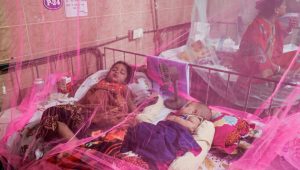
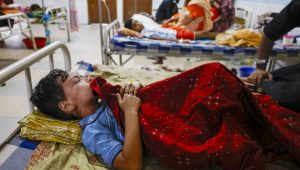
In a small cabin, six beds are arranged in two rows. Due to a lack of space, children have also been placed on mattresses on the floor between the rows of beds.
Nearly every bed has two patients. Some children are wearing oxygen masks, some are receiving nebulisation, while others are suffering from complications such as pneumonia or diarrhoea.
The scene at the hospital indicates that although the nationwide vaccination campaign has ended, the measles outbreak continues to put pressure on hospital wards.

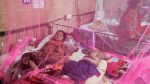

On July 31, six suspected measles patients were admitted to Dhaka Medical College Hospital. Three patients were discharged after treatment within the previous 24 hours, while the remaining three continued to receive care. No deaths were reported during the period.
“We refer children in critical condition to Shishu Hospital or the DNCC hospital in Mohakhali. Those who do not require intensive care are admitted here if beds are available,” said Tanzila Islam, a doctor responsible for the children’s ward.
Amid the pressure on hospitals, the government said 18,543,993 children aged between six and 59 months received vaccines during the emergency measles-rubella (MR) vaccination campaign held in April. According to government data, the achievement rate was 105%.
The government launched the national measles-rubella vaccination campaign on 5 April, and it ended on 20 May — two months ago. However, children infected with measles are still arriving, Tanzila said.
“Every day, patients who developed measles despite receiving the vaccine are coming in. Although children develop immunity against measles within two to three weeks after receiving the vaccine,” she said.
According to government data, 111,674 people were admitted to hospitals across the country with measles symptoms between 15 March and 01 August.
The biggest pressure is now being seen at the capital’s DNCC Covid-19 Dedicated Hospital, where only measles-infected children are currently being treated.
Hospital authorities said On July 31, the DNCC Covid-19 Dedicated Hospital recorded 103 suspected measles cases and admitted 71 new patients within 24 hours. During the same period, 88 patients were discharged after completing treatment.
The hospital’s administrative officer Asif Haider told TIMES of Bangladesh, “We still have space to admit patients. However, new patients are arriving every day.”
On July 31, Bangladesh Shishu Hospital and Institute reported 20 suspected measles cases in the previous 24 hours. None had been laboratory confirmed. 20 patients were discharged during the same period. The hospital reported no deaths from either suspected or confirmed measles cases.
Monthly statistics show that the highest number of admissions was recorded in June, when 534 children were hospitalised. In the first half of July alone, another 132 children were admitted, indicating that the outbreak has not yet been fully brought under control.
Shishu Hospital information officer Bashir Uddin said, “Since children from across the country come here when they fall sick, some children recover while new patients are admitted every day.”
However, field-level experience suggests that a significant portion of patients currently arriving at hospitals are not suffering from new infections but from post-measles complications.
Specialist physician at Bangladesh Shishu Hospital Md Atikul Islam told TIMES, “Previously, 30 to 40 measles patients were admitted at a time, but now the number has fallen to around 15. However, many children currently admitted are suffering from post-measles complications such as pneumonia, cough, breathing difficulties and diarrhoea.”
He said some areas of the country still have populations outside vaccination coverage. Therefore, it cannot yet be said that new infections have completely stopped.
Halimur Rashid, director of the Disease Control Branch of the Directorate General of Health Services, told TIMES,
“The measles situation is gradually improving. The number of infections is declining every day. However, it is not possible to say exactly when the outbreak will end completely.”
He also expressed optimism that the ongoing Vitamin A Plus campaign would play a positive role in controlling measles and help reduce the overall burden of the disease.