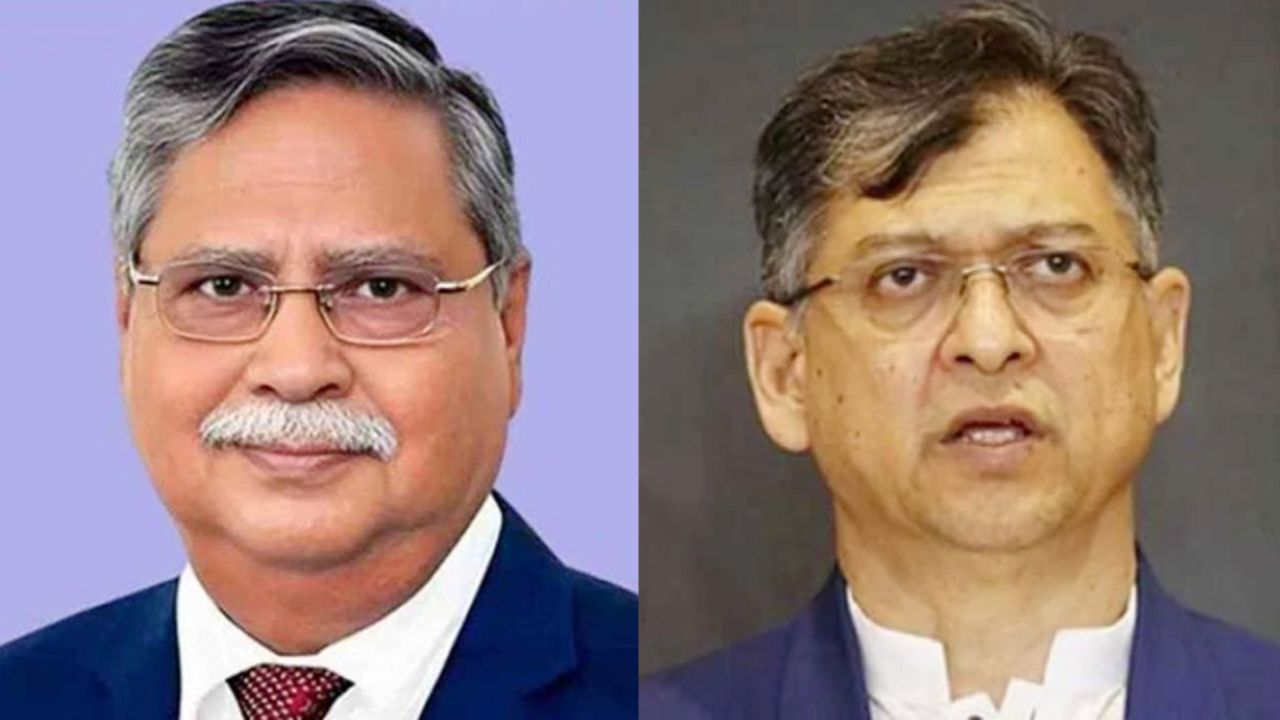

Home Minister Salahuddin Ahmed has said the Constitution provides an opportunity for the President to resign if he wishes to step down due to health reasons or any other matter.
However, he said the government has no information about any such move and has not taken any steps in this regard.
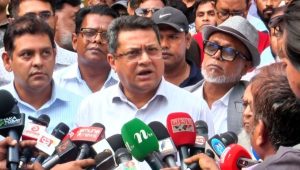
The home minister made the remarks while responding to questions from journalists at the Secretariat on Thursday afternoon.
Asked about speculation over the President’s resignation, Salahuddin Ahmed said, “Rumours about the President’s resignation are just rumours. If it becomes an actual event, we will look into it.”

He said if the President wants to leave office due to health issues or any other reason, there is a constitutional provision for doing so. However, he added that he had no information regarding any possible resignation by the President.
The home minister said that if the President decides to resign, he would have to submit a resignation letter to the Speaker as per the rules. The matter would then be settled through the subsequent constitutional process.



Mohammed Sahabuddin took oath as the 22nd President of Bangladesh on 24 April, 2023. He was elected unopposed as the Awami League nominee. According to the Constitution, his five-year term is scheduled to end in April 2028.
Bangladesh’s political landscape underwent a major change after the student-led mass uprising on 5 August, 2024, which resulted in the fall of the Awami League government. At the time, Sheikh Hasina resigned as prime minister and left the country.
Later, President Sahabuddin played a key role in major political processes, including the dissolution of Parliament and the formation of the interim government.
Following the mass uprising, student leaders involved in the movement demanded the President’s removal. Organisations linked to the July movement also carried out various programmes, including a siege of Bangabhaban, demanding his resignation.
The interim government led by Muhammad Yunus did not take any initiative to remove him. It was reported that the BNP, a major political party, did not want Sahabuddin to resign at the time due to concerns over a possible constitutional vacuum.
However, on 12 December, 2025, during the tenure of the interim government, Sahabuddin said he wanted to resign midway through his term after the February election. He also said he felt insulted by the behaviour of the Muhammad Yunus-led interim government.
Later, after the BNP-led government took office, Sahabuddin said in an interview with a newspaper on February 24 this year that he would remain in office if the government wanted him to continue, otherwise he would resign voluntarily.