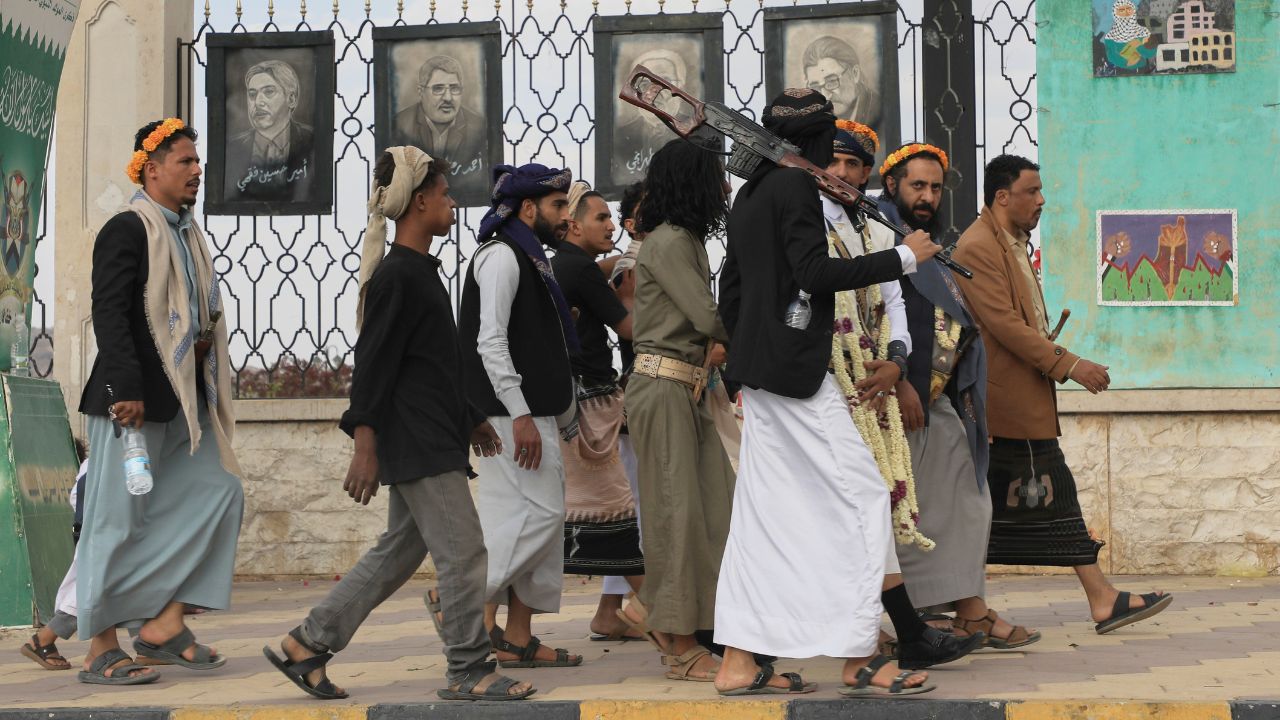

Yemen faces renewed fears of a return to full-scale conflict after Saudi Arabia and Iran-backed Houthi rebels exchanged airstrikes, threatening a fragile truce that has largely held since 2022 after nearly a decade of war, according to AP.
The confrontation began on Monday when the Houthis launched missiles and drones towards Saudi Arabia’s Abha International Airport, following airstrikes on Sanaa International Airport that the rebels blamed on Riyadh.
No casualties were reported, but the exchange marked the most serious clash between the two sides in years, raising concerns that Yemen could be pulled back into a wider regional conflict linked to tensions between Iran and its rivals.
Yemen’s civil war erupted in 2014 when the Houthis captured Sanaa and large parts of the north, forcing the internationally recognised government to flee. A Saudi-led coalition intervened the following year to restore the government, leaving the country divided between Houthi-controlled northern areas and southern regions largely held by government forces.

The latest escalation was triggered by a dispute over an Iranian aircraft carrying a Houthi delegation to Tehran for the funeral of Iran’s Supreme Leader Ayatollah Ali Khamenei.
The Houthis accused Saudi Arabia of attempting to block the flight from reaching Yemen. They said Saudi forces struck Sanaa airport on Monday to prevent the aircraft from landing, forcing it to divert to another airport where it landed safely. Saudi officials did not immediately respond to requests for comment on the reported strikes.
Yemen’s internationally recognised government leader Rashad al-Alimi said the authorities had rejected an Iranian request to allow the Houthi delegation to return. He accused the rebels of receiving the flight “outside the legal and sovereign frameworks governing civil aviation”.




On Tuesday, Houthi military spokesman Brig. Gen. Yahya Saree said the group was prepared to respond to any violation of Yemen’s airspace. In a statement on Telegram, he also claimed that Houthi forces had shot down a Saudi reconnaissance aircraft in Al Bayda province in central Yemen.
Analysts said the dispute goes beyond the Iranian flight and reflects a broader struggle over control of Yemen’s airspace and sovereignty.
Ahmed Nagi, a senior Yemen analyst at the International Crisis Group, said Saudi Arabia and the internationally recognised government viewed the flight as an attempt by the Houthis to challenge existing arrangements.
The Saudi-led coalition imposed an air and sea blockade on Yemen in 2015 as part of efforts to pressure the Houthis. Allowing an international flight to operate without coalition approval was seen by the rebels as a step towards ending restrictions on Sanaa airport and asserting greater control over aviation.
“The Houthis were testing a new red line. If they succeeded, they could become more emboldened, raise their demands, and seek to cross additional red lines,” Nagi said.
Farea al-Muslimi, a research fellow at London-based Chatham House, said Saudi Arabia had so far shown restraint during the wider US-Israeli confrontation with Iran. However, he said Riyadh was less likely to remain on the sidelines if it believed its influence in Yemen, which shares a border with Saudi Arabia, was under threat.
It remains unclear whether the latest strikes will trigger a wider escalation or remain an isolated incident. Abdel-Bari Taher, a Yemeni political analyst, said the country’s fragile security and economic situation created conditions for renewed conflict and regional rivalry.
“The region now is in a state of an all-out confrontation,” he said, adding that Yemen remained vulnerable because it was divided among competing armed groups and lacked full control over its maritime and airspace.
The conflict also risks drawing Yemen deeper into the broader regional confrontation. The Houthis have launched numerous missile attacks against Israel and have previously targeted ships in the Red Sea, disrupting international trade routes.
Taher said Iran could use its Houthi allies to strengthen its position in negotiations with the United States. With an interim ceasefire already under pressure as Washington and Tehran contest influence over the Strait of Hormuz, fears are growing that Yemen could once again become a major battlefield.