
Iran buried its slain supreme leader Ayatollah Ali Khamenei on Thursday at the Shrine of Imam Reza in Mashhad, the country’s holiest site, after a week of mass processions, rallies and mourning ceremonies staged across Iran and Iraq following the strike that killed him on 28 February, reports Reuters.
The funeral, held as Tehran faces renewed conflict with the United States after weeks of truce, unfolded with Khamenei’s son and successor, Mojtaba Khamenei, still absent from public view because of serious injuries suffered in the same attack, according to senior sources in Tehran.
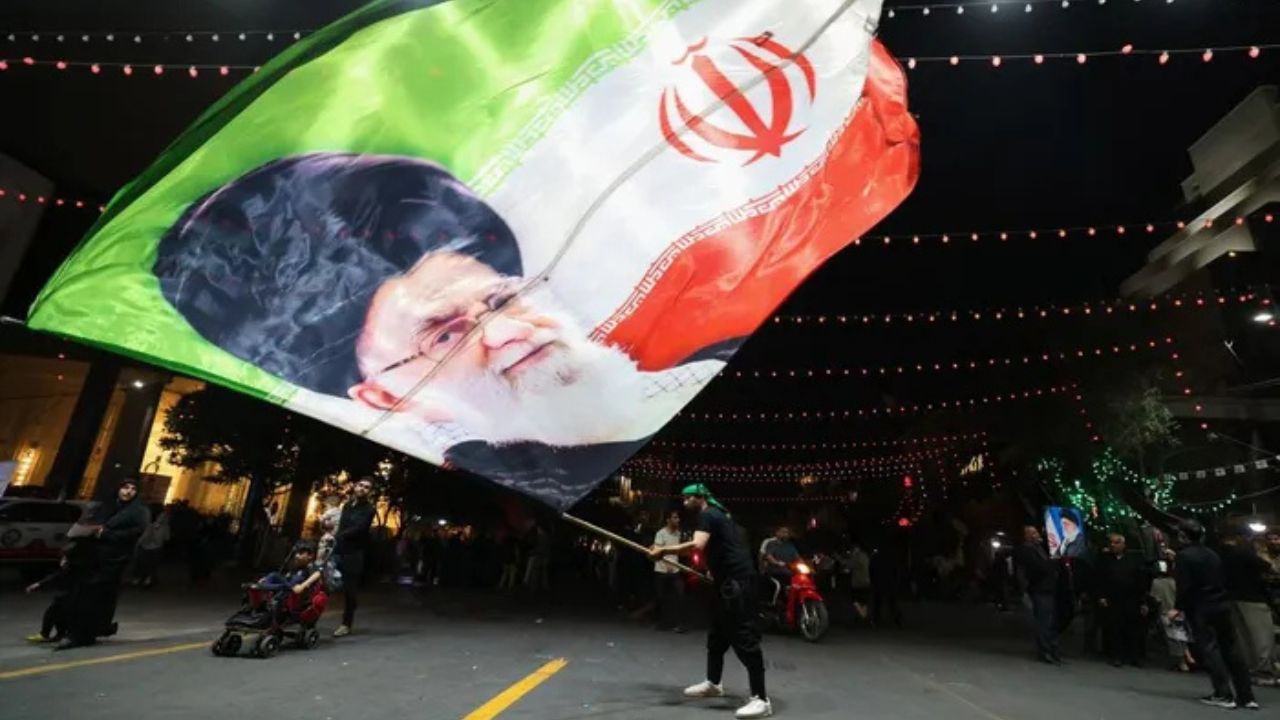
Crowds filled the streets of Mashhad on Thursday morning as Khamenei’s coffin was brought to the northeastern city. The golden dome and minarets of the shrine shone in the morning sun as mourners waved Iranian flags, portraits of the late leader and placards carrying revolutionary slogans.
Over the past week, Khamenei’s remains, together with those of four family members killed alongside him, were carried through Tehran, the clerical centre of Qom, and the Iraqi shrine cities of Najaf and Karbala. At each stop, large crowds gathered to the sound of Shi’ite laments and chants praising the Islamic Republic.

Iran’s clerical leadership had encouraged a large turnout, seeking to project the strength and ideological fervour of the theocratic state after months of conflict with its most powerful adversaries, the United States and Israel.
But the funeral also came at a moment of deep uncertainty for the Islamic Republic. Although Iran has survived the months-long blitz, it faces major internal challenges, while Khamenei’s 37-year legacy remains bitterly contested at home and abroad.
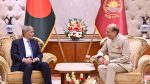

Mojtaba Khamenei, who was proclaimed supreme leader by a clerical assembly a week after his father’s death, has not appeared in public since the war began. He has issued written statements, but authorities have released no photograph, video or voice recording of him.
Senior sources in Tehran have said Mojtaba is recovering from severe facial and limb injuries sustained in the strike, but is not yet fit for public appearances. Security services are also seeking to limit his exposure amid fears of further US attacks.
As mourners waited in Mashhad for the funeral cortege, some chanted slogans demanding revenge against US President Donald Trump for Khamenei’s killing. “I swear by the blood of the Supreme Leader, Trump, we will kill you!” they shouted, while women held placards reading “Kill Trump”.
Martyrdom holds a central place in Shi’ite theology, and Khamenei’s death at the hands of foreign enemies has fed into a religious and political tradition deeply embedded in the Islamic Republic’s identity.
The burial comes months after the latest wave of nationwide protests against clerical rule. The unrest, fuelled by anger over a sanctions-hit economy, was crushed by security forces, who killed thousands of demonstrators in a campaign of repression that echoed earlier episodes of state violence.
Analysts say Iran has emerged from the war strategically strengthened, with its hold over the vital Strait of Hormuz intact. Yet the conflict has caused widespread damage, adding pressure to an economy already weakened by sanctions and mismanagement.
Khamenei was appointed supreme leader in 1989, a decade after the Islamic revolution. Over nearly four decades, he concentrated political, military and economic authority in his office, steadily reducing the influence of elected presidents and parliament.
That consolidation was carried out alongside the Islamic Revolutionary Guard Corps, whose power grew sharply during his rule. Mojtaba Khamenei’s elevation came with the backing of the Guards, now widely seen as the dominant force shaping Iran’s political and strategic direction.