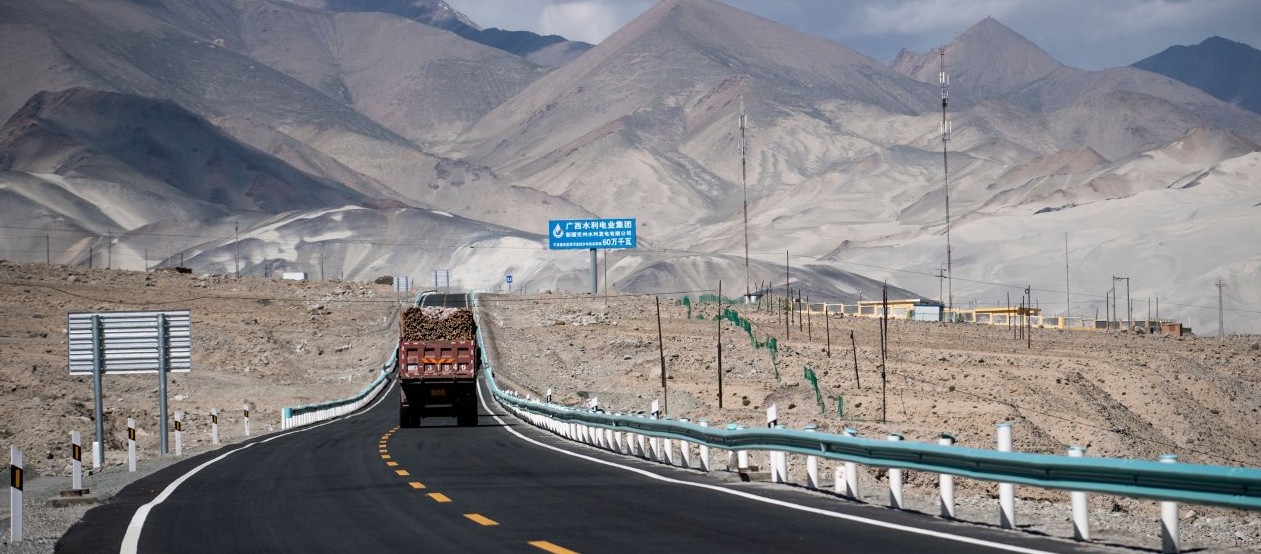



International development finance has been transformed with China’s growing status as a world economic power. In 2013, China launched the Belt and Road Initiative (BRI) to fund road, rail, port, bridge construction, power stations, industrial parks, and digital infrastructure in Asia, Africa, Latin America, and Europe. China’s Debt Trap Diplomacy (DTD) has raised concerns among most developing countries, while these nations have welcomed Chinese investments to fill infrastructure gaps. This argument continues that China intentionally extends loans to less financially capable countries and expects to eventually acquire strategic assets or gain geopolitical power.
The term debt trap diplomacy entered the global lexicon after Sri Lanka’s Hambantota Port. Sri Lanka was unable to pay the debt on the port project in 2017 and thus granted a 99-year lease to a Chinese state-owned company. Hambantota was seen by many as an example of China’s so-called debt-for-debt diplomacy. When it comes to experience beyond Sri Lanka’s borders, there is a significant difference between BRI countries. Maldives’ external debt is a high proportion of loans from the Chinese government, which has raised concerns about the country’s fiscal sustainability. But successive governments have continued to engage with Beijing and actively expanded economic relations with India and other development partners.
Malaysia is another case in point. The new government post the 2018 general elections has looked at several Chinese-backed infrastructure projects, such as the East Coast Rail Link. Kuala Lumpur was able to renegotiate project costs and financing, rather than ending cooperation. It was noted that the bargaining power of recipient governments is greater during agreement revision when institutions are strong. The situation is more complicated in Laos. The large debt load of the China–Laos Railway has significantly increased public debt. The long-term economic benefits of the railway will be significant, including a boost in regional connectivity. But the sustainability of the debt burden and the country’s potential to generate economic returns to service the debt remain a concern.
In Kenya, the Chinese-built Standard Gauge Railway (SGR) project is meeting with mixed reactions. The project has enhanced the transportation and logistics system, but critics have raised concerns about the amount of borrowing justified by the benefits to be derived. Yet despite these simplistic assumptions, Kenya has not lost its strategic assets, thereby distinguishing itself. Djibouti is a special case in the conflicts. China has invested heavily in ports, logistics, and transportation networks. China has revolutionised its port, logistics, and transportation systems. They built their first military base outside its borders in Djibouti and have been reinforcing the idea that economics can be a tool for achieving other aims. However, Djibouti also hosts military bases of other countries, indicating that at times, small states have multiple interests or several nation-states simultaneously, to fully benefit from strategic and economic dividends.

The six cases together disclose the salient fact that China’s overseas lending is not a one-size-fits-all. Some projects have had a significant impact on development, while others have created vulnerabilities due to debt. In some cases, the financial distress was caused by the recipient countries’ governance issues, not by the Chinese government’s loans. In other instances, the selection of inappropriate projects, unrealistic revenue projections, and inadequate feasibility studies were all responsible.
This indicates that DTD cannot be considered either a universally used method or an outright myth. Rather, it is a strategic narrative that is contestable, both geopolitically and empirically. But it would also be a mistake to ignore the entire range of concerns about Chinese lending. There’s no politics-free infrastructure finance. When there are large investments, long-term economic relationships, and institutional linkages, strategic influence is established. China also hopes that its economic footprint will complement its efforts to strengthen its foreign and geopolitical influence.




Bangladesh has become one of China’s closest development partners in the South Asian region. Bridges, tunnels, power plants, industrial parks, and transport facilities have been built with Chinese investment. The range of cooperation under the Belt and Road Initiative is continually expanding, and new projects such as the China–Myanmar–Bangladesh Economic Corridor and the Teesta River Comprehensive Management Project illustrate the enhanced bilateral cooperation.
Bangladesh is well-positioned to take advantage of the excellent opportunities in this regard, given China’s investment. The development of quality infrastructure enhances industry competitiveness, promotes regional connectivity, attracts foreign investment, and supports long-term economic development. The modernisation of infrastructure is an integral part of supporting the country’s economic transformation on the path to graduation from LDC status.
International experience indicates that the government of the infrastructure borrower, rather than the lender, has a greater influence on the viability of the borrower’s infrastructure investment. The most appealing financing offers may be too costly if projects are not economically viable, transparent, and effective. Therefore, Bangladesh needs a judicious approach towards choosing future mega projects. All investments should be considered only after undertaking comprehensive economic feasibility studies, environmental studies, social impact assessments, and independent cost-benefit analyses. The selection of infrastructure should be in line with Bangladesh’s National Development Agenda, rather than based on the availability of funds.
Infrastructure governance should be based on clarity. Agreements for loans, tendering processes, project expenses, repayment terms, and implementation processes should remain open to parliament, public scrutiny, and independent auditing. Improved transparency in governance contributes to public confidence and also makes Bangladesh financially secure in the future. Diversification is also a crucial factor. Bangladesh should increase its partnership with China and strengthen its relationships with Japan, India, the United States, the European Union, the Asian Development Bank, the World Bank, and other international Financial Institutions. Multiple funding sources mean greater country leverage and less dependence on a single partner.
Balance becomes more important in the broader geopolitical context. Competition in the Indo-Pacific is heating up between China and the USA, and infrastructure projects are receiving increased focus. Bangladesh should not be coerced into viewing all investment through a nationalistic lens in the framework of great-power rivalry. Foreign partnerships, on the other hand, should not be assessed by their simplicity but rather by their contribution to national development, economic resilience, and strategic autonomy.
Sri Lanka, the Maldives, Malaysia, Laos, Kenya, and Djibouti have proven that the results depend on home institutions, governance, project selection, fiscal discipline, and diplomatic negotiation. The policy implication for Bangladesh boils down to this. The investment made by China should not be feared for geopolitical reasons and should be accepted with caution. The country should support infrastructure cooperation that aligns with national interests and projects based on good governance, sustainable financing mechanisms, project appraisal, and multilateral partnerships.
Bangladesh’s most critical action is to remain neither under the control of other powers nor subjected to their domination, but to remain a wise, independent, and responsible economic diplomat. China’s investments are a necessary tool for sustainable development, and if used wisely, they will not become a vulnerability. The final way to protect against any possible debt trap is to enhance internal governance, transparency, and national decision-making processes.
The writer is a Professor, Department of International Relations, University of Chittagong, Bangladesh. Director, Hong Kong Research Centre for Asian Studies-Bangladesh Centre (RCASBC). Email: [email protected]