




The recent escalation in Iran-U.S. tensions is an old, but always recurring international political manoeuver. There is renewed hope for diplomacy, as it is reported that Washington and Tehran have reached a temporary accord to halt attacks and move towards negotiations over the Strait of Hormuz in Doha. There is a good amount of realism, though, that plays down the optimism. Peace remains precarious, and some mistrust persists, while threats of military action continue to hover over the negotiating table.
As the ongoing conflict demonstrates, diplomacy without trust can often be fragile. Both sides signed a memorandum of understanding in mid-June to stop hostilities and set up a process for wider talks. But within weeks of that ink drying, both sides had begun an arms race, and hostilities had flared anew, thanks to misunderstandings, miscalculations, or politics.

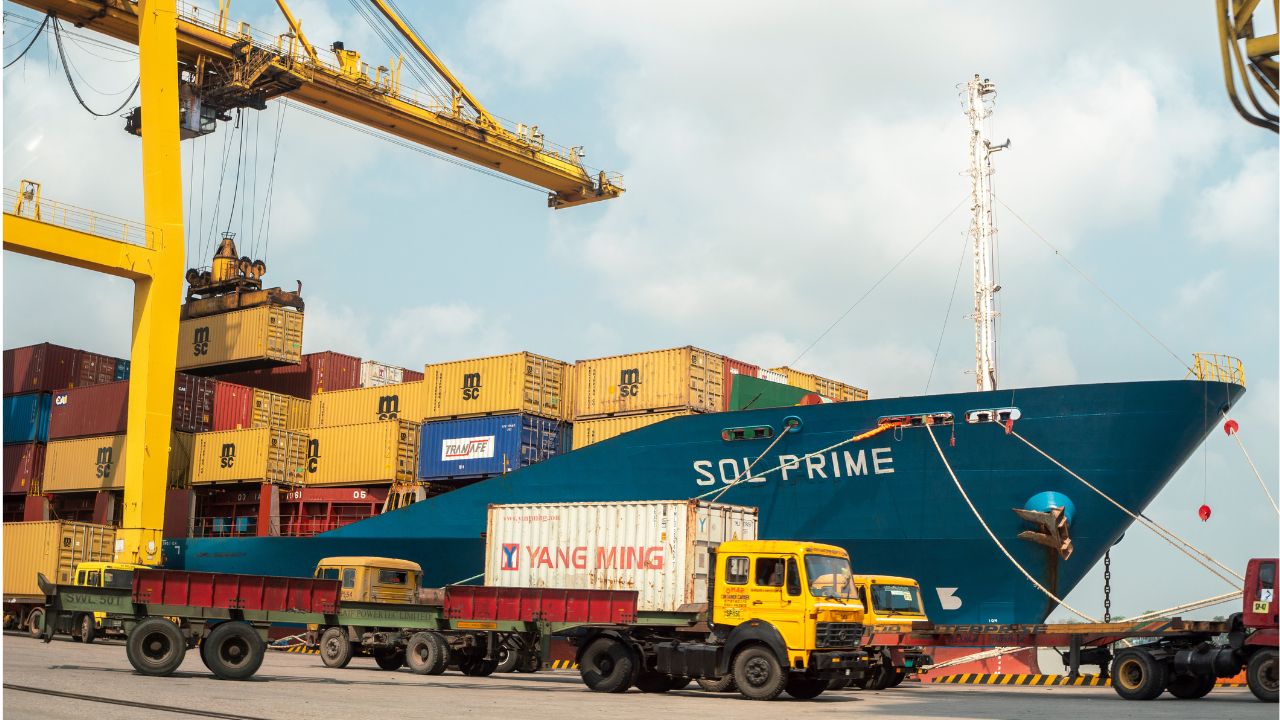
The Strait of Hormuz is at the very heart of the conflict. Almost 20% of the world’s traded oil passes through this strait, connecting the Persian Gulf to global trade. Any disruption has an immediate impact on energy prices, international shipping, insurance considerations, and economic confidence.

Recent incidents of attacks on commercial shipping vessels, followed by retaliatory attacks by the United States and counterattacks from Iran, once again highlighted the vulnerability of international trade in the region. Oil prices reacted immediately when they realised that there was a risk of disruptions to the oil supply chain. Uncertainty has high economic costs, and shipping remains moderate. Fares are rising, premiums are increasing, and businesses are beginning to fret about potential supply disruptions worldwide.
A welcome decision both governments made is to suspend military operations and meet in Qatar, one to be taken with caution. Officials with knowledge of the talks say that both sides will continue to work on commercial navigation and technical talks on maritime security and other political issues. The talks, which were moved from Switzerland to Doha, indicate a need to hold more fundamental discussions before moving to more comprehensive ones.
But there’s a tremendous credibility gap in diplomacy. Political leaders still issue military threats while stating they are willing to talk. President Donald Trump has threatened another military strike against Iran if it strikes again. In the interim, Iranian leaders state that the nation’s ‘national sovereignty’ and ‘regional interests’ are unalterable. This type of rhetoric can be very appealing to domestic audiences, but it can also kill any trust in the negotiation process.
This is one of the primary paradoxes of conflict management today. Governing bodies have been meeting routinely during the war. Military pressure is seen as strengthening the bargaining positions, while diplomacy is hoping to avoid the catastrophic costs of a protracted war. But if military operations are underway while negotiations are taking place, each such action will reduce confidence, heighten the likelihood of a counterstriker’s response, and further limit political space for understanding and accommodation.
The regional powers, particularly the Gulf states, are closely monitoring the situation as their own economy and security are on the line. Qatar’s hosting of the upcoming negotiations underscores the rising value of regional mediation. Likewise, Oman, Switzerland, and neutral countries remain active in maintaining key diplomatic channels to prevent a full-scale diplomatic breakdown. China heavily depends on continuous energy imports from the Gulf. Energy price fluctuations remain an issue for Europe. Asian manufacturing hubs depend on robust maritime transport links between the Middle East and the Indo-Pacific. But the apparent struggle between Washington and Tehran soon becomes an international economic issue.
Negotiating, assaulting, and counter-assaulting continue, which illustrates the illusory nature of coercive diplomacy. Military power shapes the ‘rules of the game’ on the battlefield but does not necessarily lead to enduring political settlements. But diplomacy alone will more often than not fail if there are no steps to build trust on which it can be based; each side will suspect the other’s motives.
The possibility of a sustainable peace can therefore be achieved only through more than just a ceasefire. First, they must have a robust military communication system in place; otherwise, there is a risk of miscommunication that could lead to an escalation. This is reported to be the development of direct coordination channels for maritime traffic, recognising the need, but implementation has been delayed due to political commitments. Second, it is necessary to extend maritime security in the Strait of Hormuz to involve more cooperation with the rest of the world as well. The right of sovereignty must be upheld, but freedom of navigation also plays a role in international law and is an economic interest of world trade. Encouraging regional stakeholders to adopt measures to help reduce further incidents and miscommunication. Third, the process of negotiations has to move away from crisis management and beyond the underlying cause of the continuing political conflict. These concerns of maritime security, the sanctions imposed, and the regional influence, plus the nuclear-related concerns, can be separated for a short time only.
The challenge for big powers is to foster mediation processes to contribute to regional peace rather than geopolitical rivalry. International organisations can participate in the ongoing political process through political discussions and technical negotiations on maritime safety, humanitarian cooperation, and economic confidence-building activities.
Mistrustful wars have seldom brought peaceful military victories in history. Instead, prolonged conflicts have a high humanitarian, economic, and political cost on all concerned. Every missile fired, every commercial vessel threatened, and each retaliatory strike adds to the risk of unforeseen escalation over which neither side can have final control.
This is not a solution, it’s a chance to the existing ceasefire. Diplomatic momentum may be established through temporary agreements, but long-lasting peace requires long-term political commitment. The interests of both countries are better served when they can achieve a balance between them than by constant conflict in the region.
The Strait of Hormuz should not be a war zone for geopolitical rivalries, but a channel for international trade. The negotiation process remains rough, compromise remains costly, and confidence is far from established. The other possibility, however, a constant round of negotiation, attack, and counterattack, only brings more instability, economic disruption, and the ever-present likelihood of a wider regional war.
The only time diplomacy works is when people stop talking about peace and start talking about how to avoid the next war. Out of this vicious circle will come political courage, strategic patience, and an awareness that lasting security can’t be achieved through violence and war. The Doha talks are yet another chance. Whether it will be a true turning point or yet another stall will depend on the amount of goodwill both sides are willing to show by making dialogue their top priority, not conflict, as more blood will be shed.
The writer is a Professor, Department of International Relations, University of Chittagong, Bangladesh. Director, Hong Kong Research Centre for Asian Studies-Bangladesh Centre (RCASBC). Email: [email protected]


